
The Divine Pilgrimage
Pilgrim’s Journal — Uffington — The White Horse
Pilgrim’s Journal
This is the second entry in the Pilgrim’s Journal, the companion reflections to the pilgrimage films.
The film captures the journey as it unfolded. This journal entry reflects on the deeper moments that couldn’t fit inside the video.
Yesterday the pilgrimage began in London, where an unexpected series of detours led me to the banks of the Thames and a small green marble hidden in the mud.
Today the journey continues.
The destination lies far older than the city I left behind — a figure carved into the hills of Oxfordshire more than three thousand years ago.
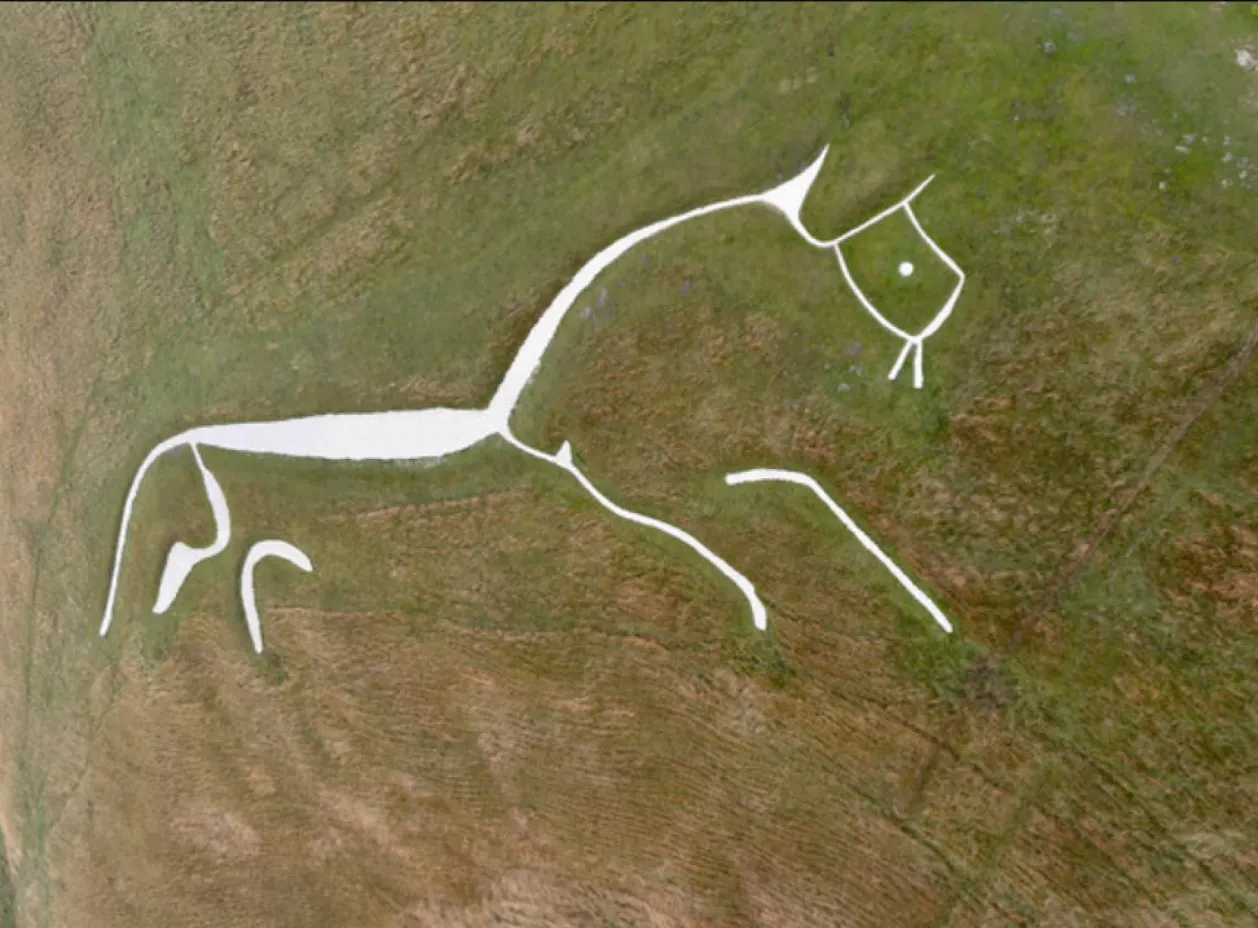
The Uffington White Horse.
The Offering
The morning after London, the marble still sat on the table where I had left it the night before.
A small green sphere.
A gift from the Thames.
I turned it once in the light, smiling again at the tiny face hidden inside the glass — the little O.M.G. that had closed the first day of the pilgrimage.
Today the journey would continue.
Carved into the chalk hills of Oxfordshire sometime around 1000 BCE, the Uffington White Horse has watched over the landscape for three millennia. Unlike many ancient monuments, it is not built from stone.
It is cut directly into the earth.
The word used historically for this process is scouring — the act of repeatedly clearing away the grass to reveal the chalk beneath. Generation after generation tending the figure so it remains visible.
A living glyph in the hillside.
And today, February 17th, marked the beginning of the Year of the Fire Horse.
The timing had been intentional.
Months earlier I had planned to visit the White Horse on this very day, sensing it would be a fitting moment to walk the Ridgeway and honour the ancient figure carved into the land.
The Uffington White Horse is not only one of Britain’s oldest hill figures — it is also carefully aligned with the sun. At certain times of year the rising light moves directly across the chalk form, illuminating the horse as though awakening it from the hillside itself.
That solar relationship felt deeply appropriate for the beginning of the Fire Horse year — a moment symbolically tied to vitality, movement, and elemental force.
Walking to the horse on this day felt less like a coincidence… and more like stepping into a rhythm already written into the land.
Before leaving, however, I knew I wanted to bring something with me.
Not a grand gesture.
Just a small offering.
The first thing that came to mind was something I had found years earlier.
A tiny iridescent wing.
It was delicate and translucent, catching the light in subtle colours. I had discovered it years ago and kept it carefully ever since, never quite knowing what it was meant for.
Whenever I looked at it, it felt almost otherworldly.
As though it had not entirely belonged to the human world.
And then I remembered something my mum had once said.
When I found a small antique glass bottle some time ago, she laughed and told me it must once have contained fairy dust.
The comment had amused me at the time.
But now the idea suddenly felt perfect.
The wing needed a vessel.
Something small.
Something enchanted.
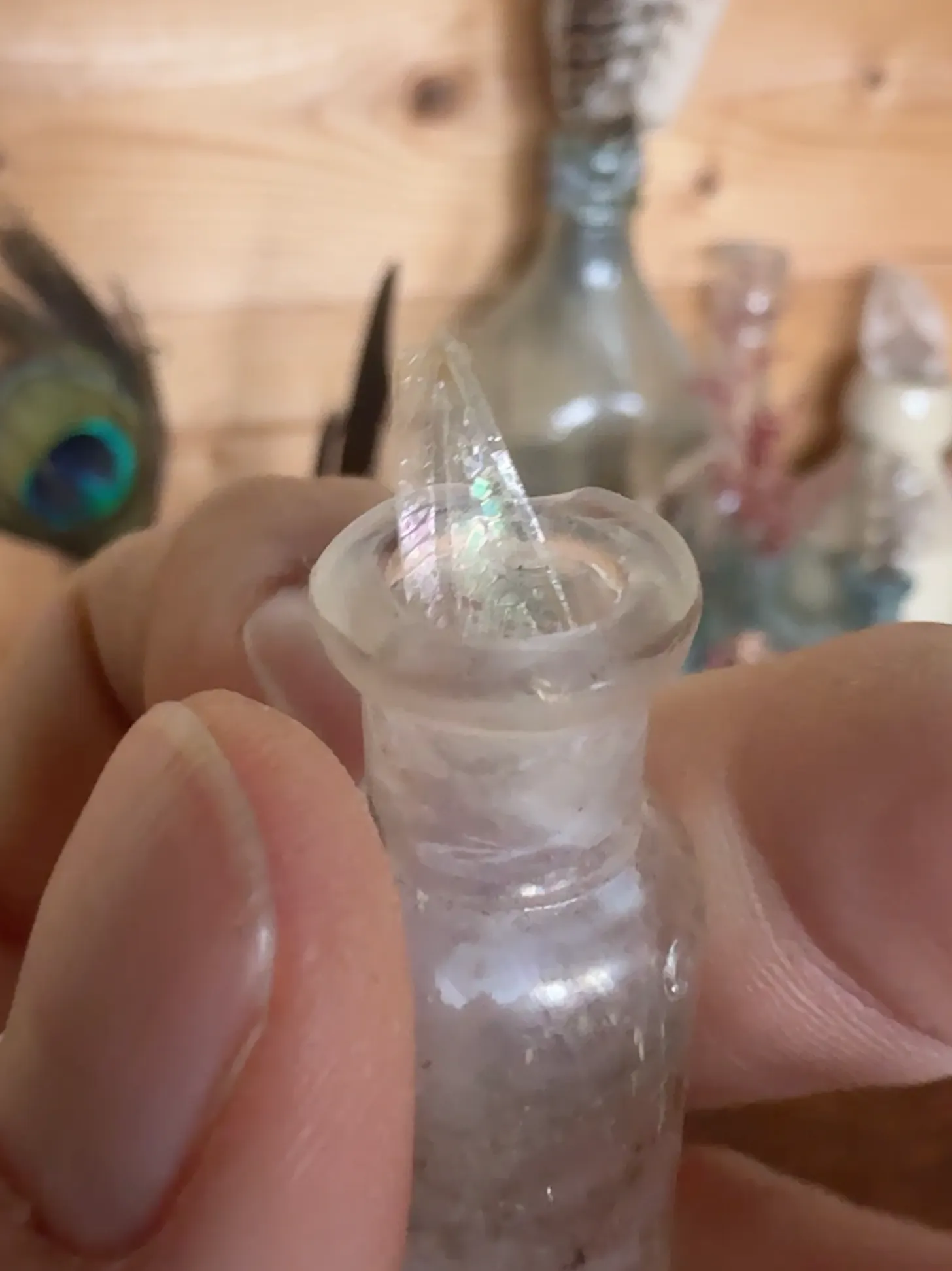
So I gently placed the wing inside the little bottle.
The fairy-dust vessel had found its purpose.
Old glass, like the marble from the river, holds tiny frozen breaths inside it — bubbles of air captured forever when the molten glass first cooled.
Small time capsules of breath and fire.
I placed the bottle inside a miniature wooden chest.
Alongside it, I added two other small relics.
A dried rose and a single petal from the infinity rose used in a Venus ritual earlier that year.
They were not grand offerings.
Just quiet objects that carried meaning.
Tokens gathered along the path.
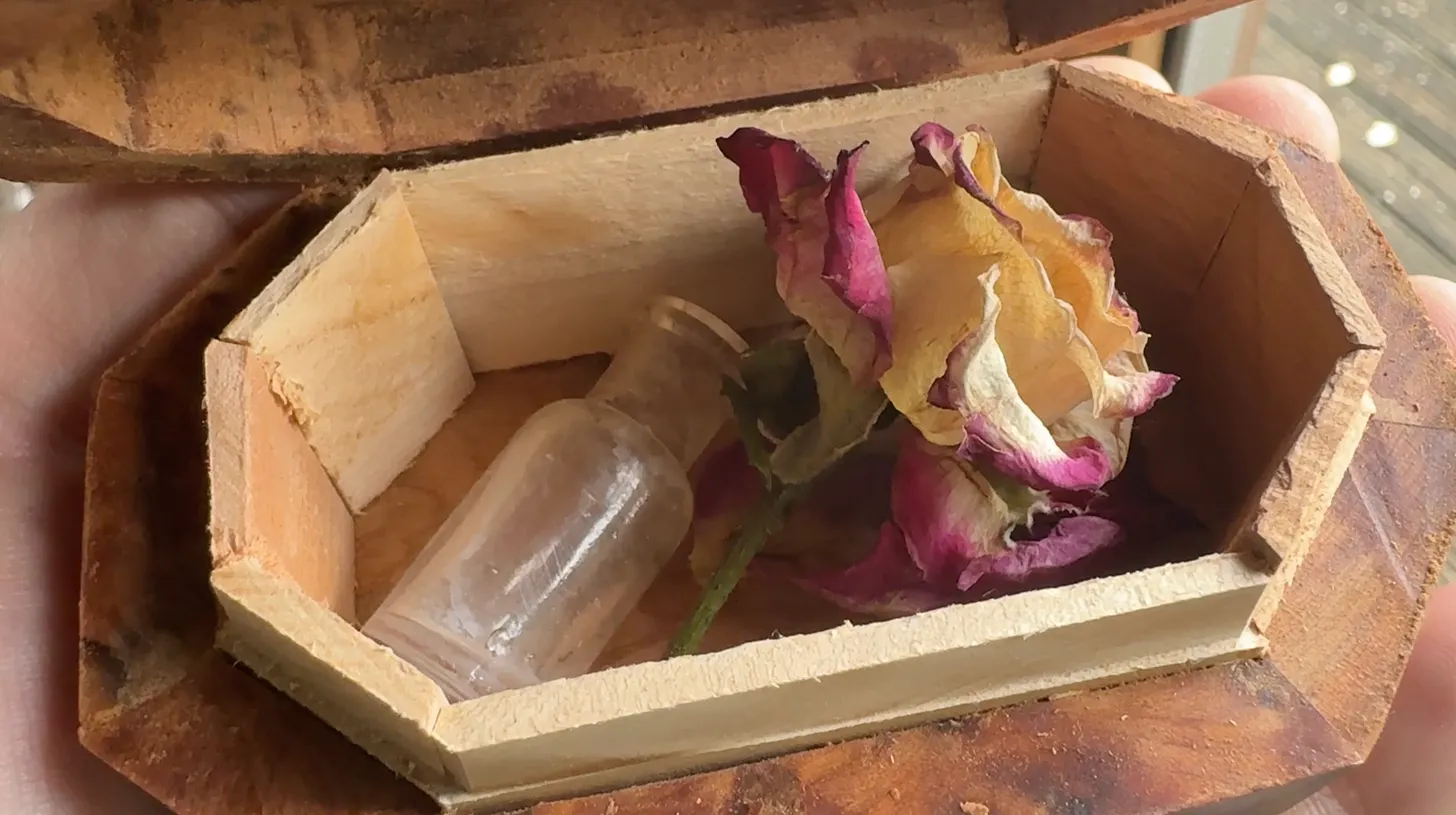
Together they formed a small bundle of intention — something to carry with me to the hill.
When the chest was closed, I slipped it gently into my bag.
The White Horse was waiting.
The Road
Soon after leaving the house, the pilgrimage continued in a rather cheerful vehicle.
My little yellow Mini.
I’ve often called her my ray of sunshine, and this journey carried a quiet sense of farewell. Soon I would be collecting a van in Glasgow — the beginning of a wandering pilgrimage life across Britain — and the Mini’s long adventures with me were coming gently to an end.
I would be leaving Woodland Glade behind.
Trading a rooted life for the open road.
The Mini and I had travelled many miles together, but this journey marked a turning point. Before long, I would be setting out across the country in what I had begun to think of as the pilgrim’s wagon.
And the Mini would be parting ways with me.
So this felt like one last outing together.
One last mini-adventure.
As I pulled onto the motorway, the radio flickered on.
And almost immediately, a song came through that made me reach instinctively for my phone to record it.
One of those moments.
The kind where the timing feels oddly personal.
The song was “A Change Would Do You Good.”
I laughed out loud.
Because the timing could hardly have been more perfect.
My life was changing completely — leaving Woodland Glade, letting go of familiar ground, and beginning a wandering pilgrimage around the UK in the pilgrim’s wagon.
A change would do you good, indeed.
The road wound through the countryside as the day slowly unfolded, and more than once I found myself smiling at the gentle theatre of the journey.
Eventually the road carried me into the village of Faringdon, where I had planned to stop for lunch at a place that felt delightfully appropriate:
The White Horse Pub.
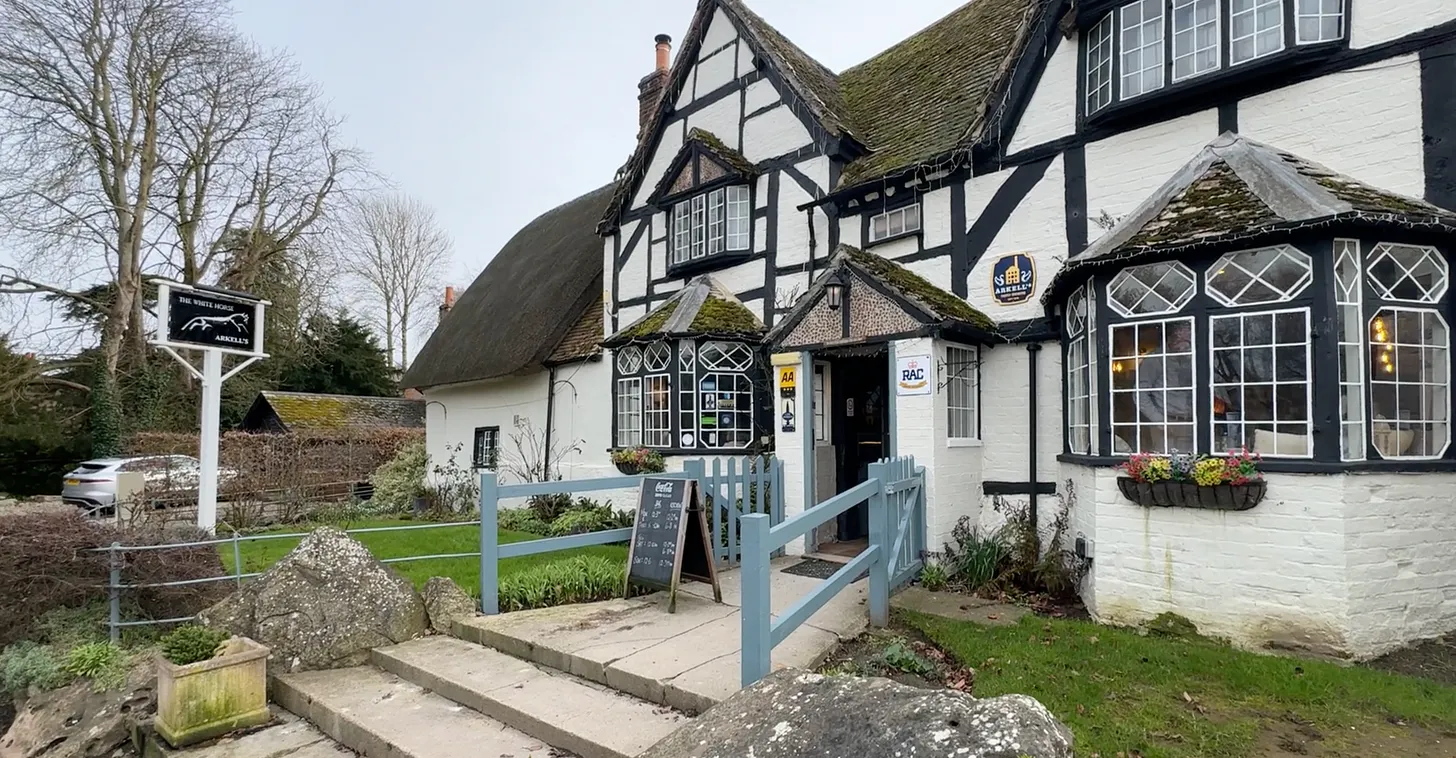
Before sitting down to eat, I took a short walk through the quiet country lanes nearby, enjoying the crisp air and the gentle stillness of the afternoon.
That’s when something rather extraordinary happened.
At first I heard it.
A deep mechanical roar building somewhere beyond the rooftops.
Low.
Powerful.
The sound alone was enough to make the hairs on the back of my neck stand up.
For a moment I couldn’t see anything — just the growing thunder in the sky above.
And then suddenly, with astonishing force, an enormous aircraft burst into view just above the roofline of a nearby house. Then another.
They were military transport planes — Hercules aircraft — flying incredibly low across the countryside.
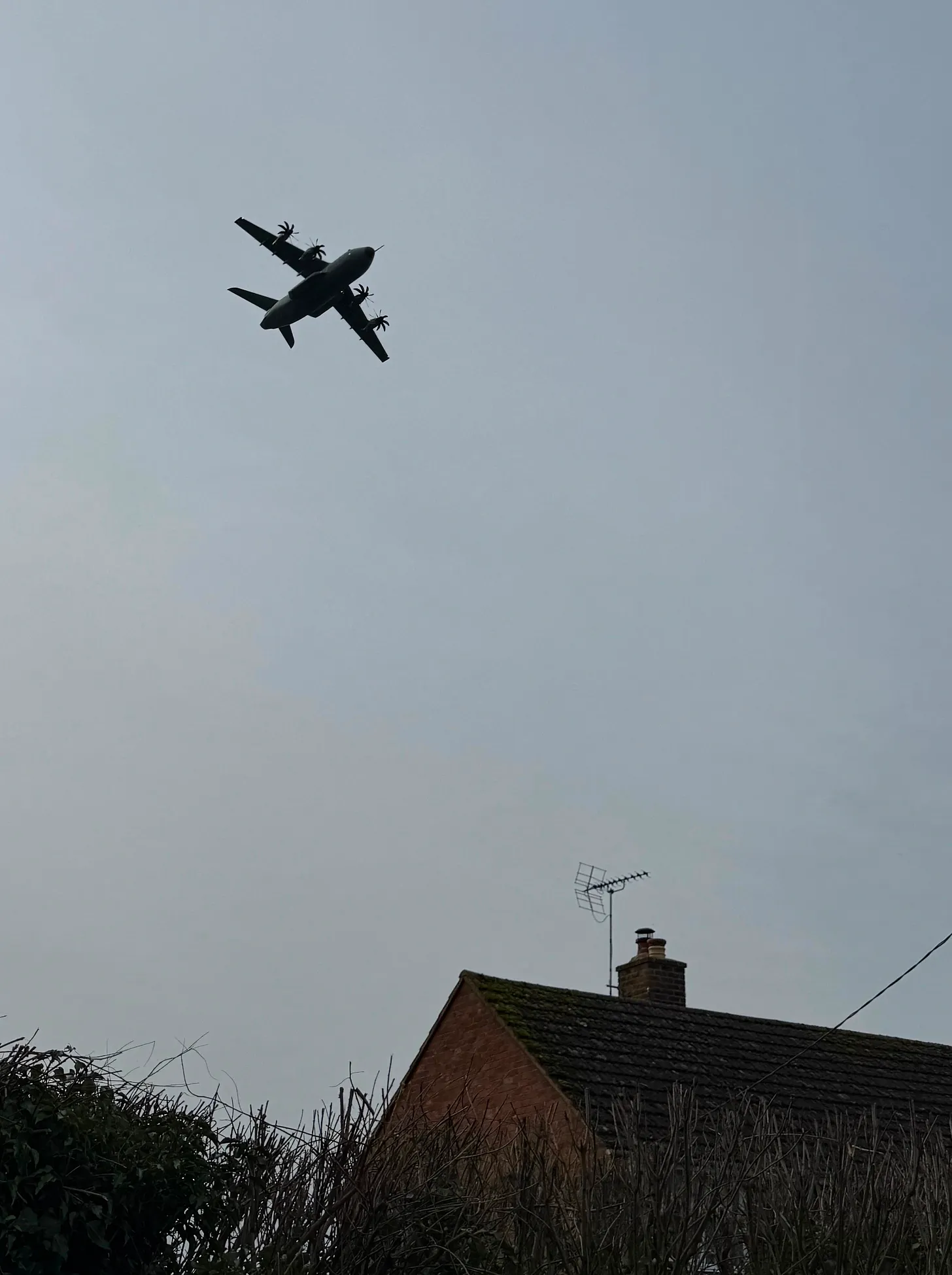
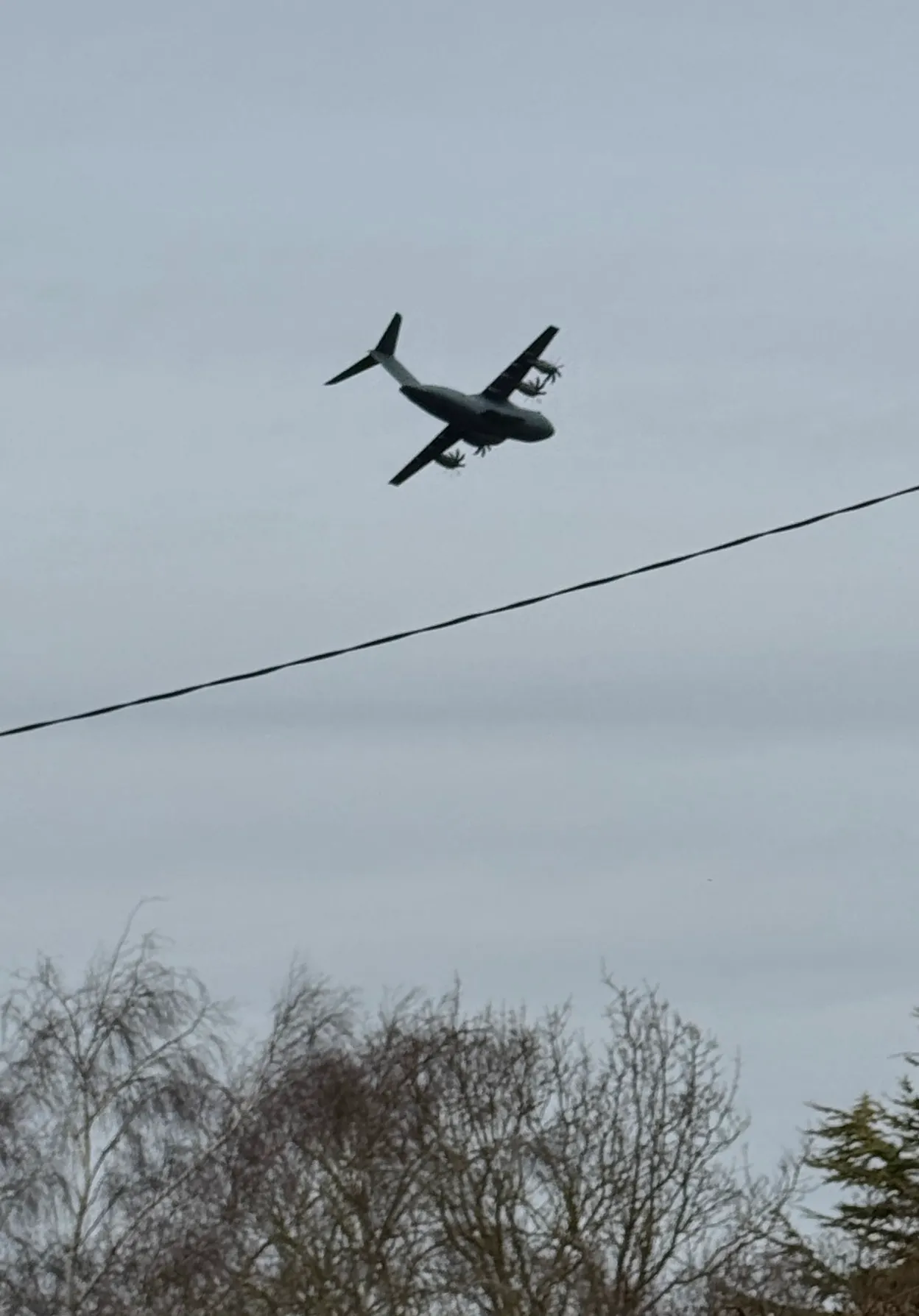
The sound was immense.
For a split second it was almost frightening.
The sky itself seemed to vibrate.
And then just as quickly as they had appeared, the planes thundered past and were gone.
I stood there for a moment in stunned silence, watching the sky return to calm.
Later I couldn’t help smiling at the symbolism.
In Greek myth, Hercules is the great hero of endurance — the one who undertakes impossible labours and emerges transformed.
Every pilgrimage carries something of that spirit.
A journey outward that slowly becomes a journey inward.
A crossing of landscapes that mirrors a crossing of the self.
Perhaps the roar of those aircraft was nothing more than coincidence.
Or perhaps it was a playful reminder from the sky:
The hero’s journey had begun.
Soon after, I stepped inside the pub for lunch, still smiling quietly to myself.
The journey, it seemed, had its own itinerary.
The Hill
After lunch, I drove the final stretch of road that winds gently upward toward White Horse Hill.
The countryside opened out around me — wide rolling fields, hedgerows, and distant horizons where the land seems to breathe in long, slow curves.
When I reached the car park, the first greeting came almost immediately.
Two magpies.
They appeared from the small stand of trees beside the parking area, hopping between the foliage at ground level.
Two for joy, I thought to myself, smiling.
It felt like a good omen.
The radio was still quietly playing — another perfectly timed lyric drifted into the air:
“And I never thought I’d feel this way...
the way I feel about you.”
Later, while writing this journal entry, I followed the thread of that moment a little further.
The song was “It Must Be Love.”
The version on the radio had been the well-known cover by Madness, but when I searched the lyrics I discovered the original recording by Labi Siffre.
Listening to it for the first time, I found myself unexpectedly moved.
One line in particular seemed to echo the quiet poetry of the day:
“How can it be that we can
say so much without words?
Bless you and bless me —
bless the bees and the birds.”
It made me smile.
Two magpies for joy...
...and, as it turned out, very soon after — two red kites.
From the car park, the path toward the White Horse begins almost immediately, rising gently across the hillside before climbing toward the ridge.
There are several ways to approach the figure, but I chose the longer path.
Partly for the view.
Partly because pilgrimage always seems to ask for patience.
The wind moved steadily across the downs as I walked, carrying the faint scent of grass and chalk beneath the open sky.
After a short while, I turned to take in the panorama behind me.
And that’s when I saw them.
Two red kites rising above the distant horizon.
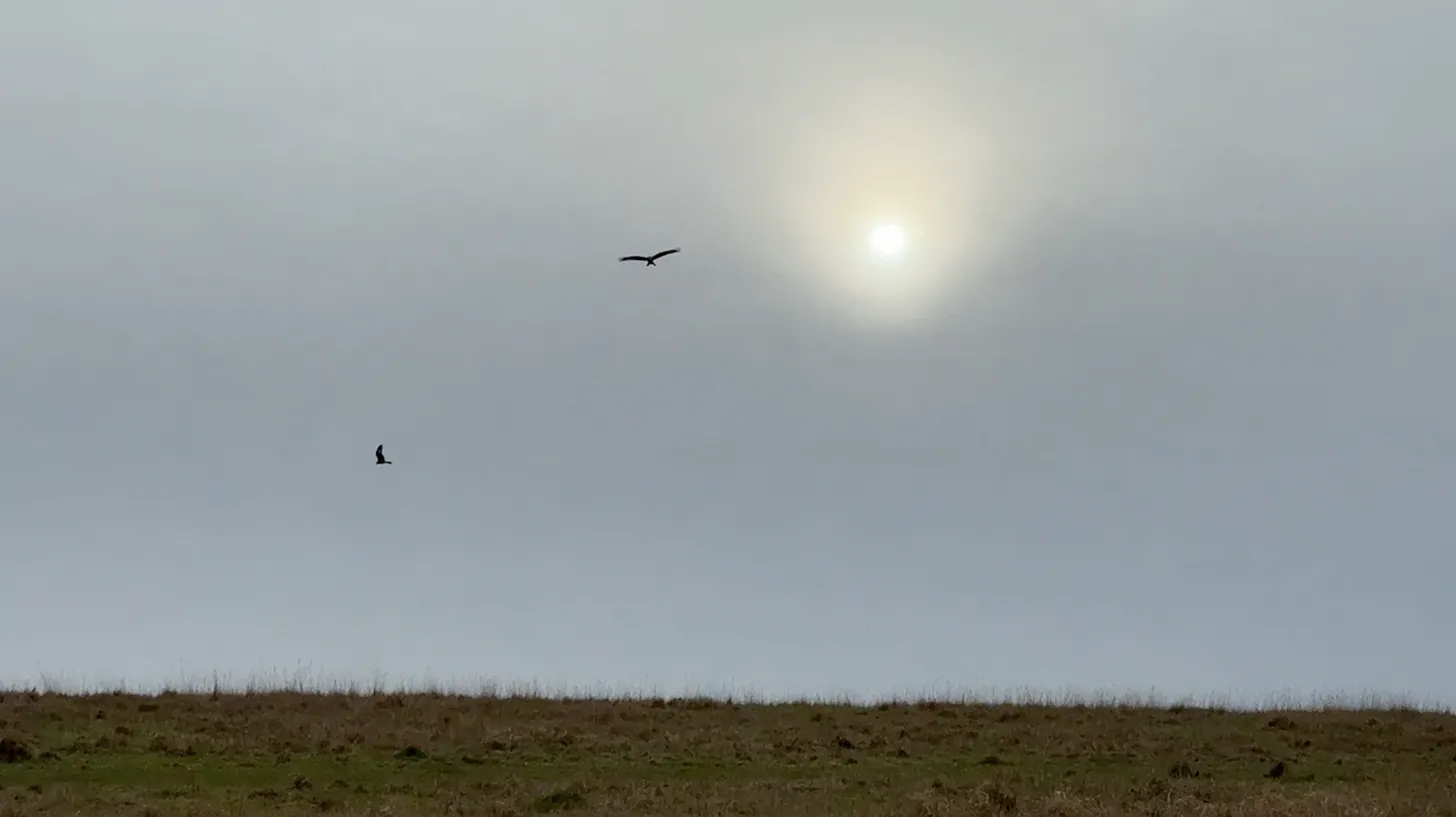
I lifted my camera and began recording.
The moment felt cinematic.
The birds glided effortlessly upward on invisible currents of air.
Then one of them drifted directly overhead.
As it passed above me, it turned gently and began flying toward the hill.
Toward the horse.
Instinctively I zoomed the camera to follow its flight.
And there —
The White Horse revealed itself.
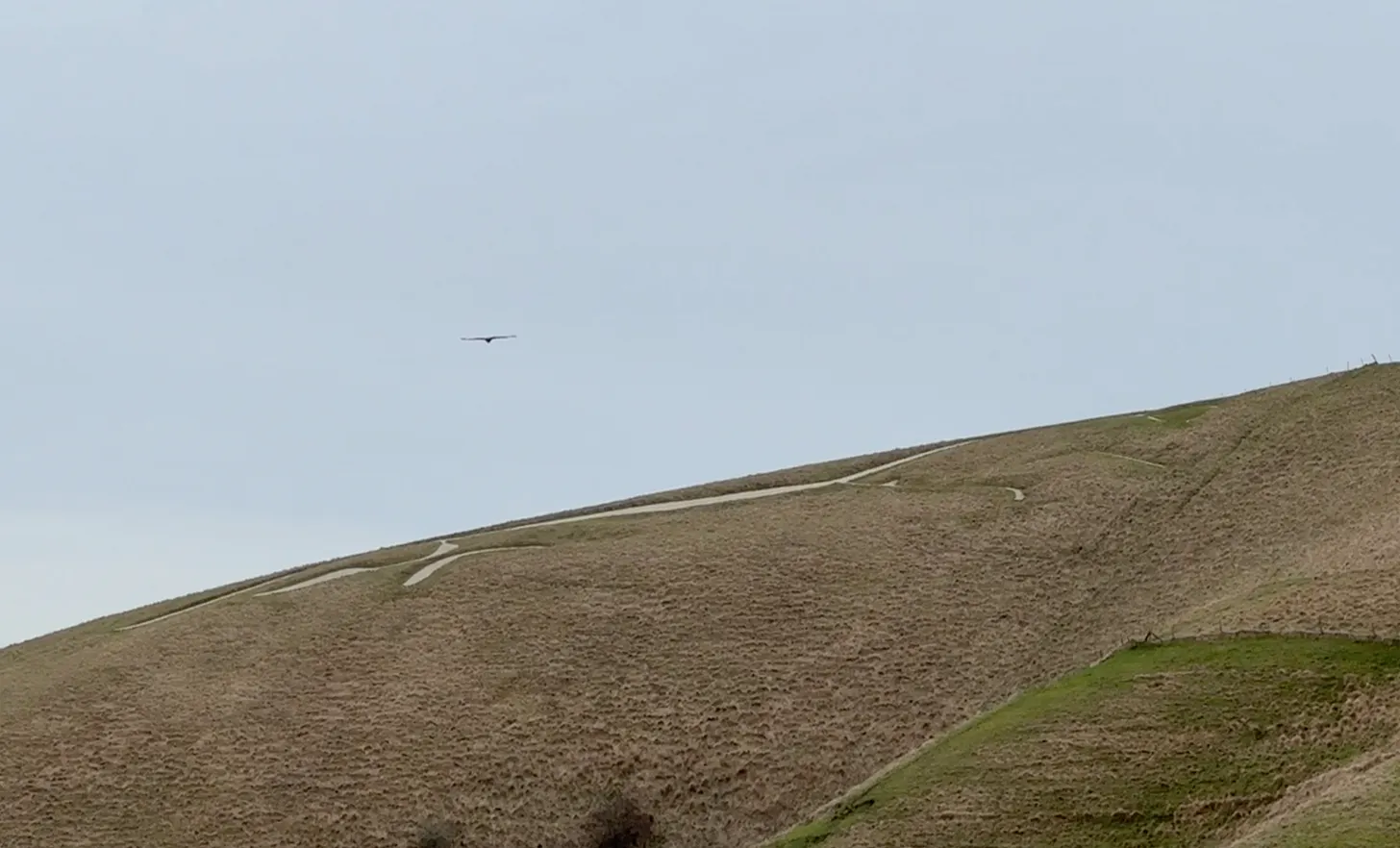
A pale, flowing figure cut into the chalk hillside below the ridge.
The kite glided across the sky above it, circling once… then twice.
For a moment I simply stood there watching.
Birds of the sky.
Circling a horse of the land.
It felt like a welcome.
Or perhaps an introduction.
The pilgrimage had reached the hill.
The Rose
I continued along the path, moving slowly around the hillside as the White Horse stretched across the slope ahead.
As I followed the path along the ridge, something ahead caught my eye.
At first it looked like a small patch of colour in the grass.
When I drew closer, I realised what it was.
A single red rose.
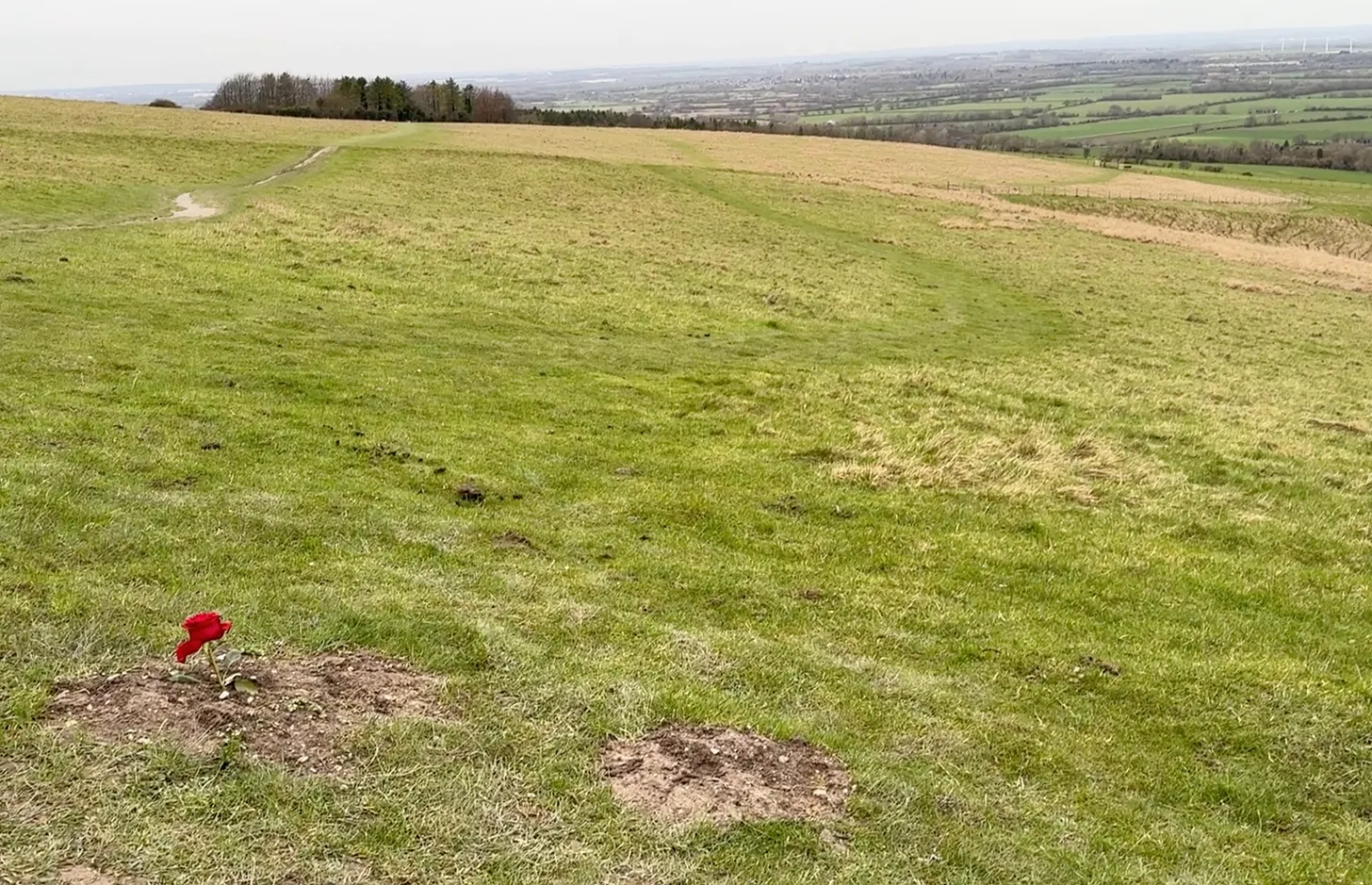
Someone had planted it upright in the ground, its stem nestled into a small mound of earth.
I lifted the camera and began filming as I approached.
But as I moved closer, something unexpected happened.
The moment suddenly felt… overwhelming.
The symbolism arrived all at once.
The rose.
The bookmark with the rose I had found beside the Thames the day before.
The golden heart hidden behind the red tassel.
The Venus rituals earlier that year.
The pentagram threads that had quietly accompanied the pilgrimage from the very beginning.
For a moment I had to sit down.
The landscape seemed to pause with me.
Just then, somewhere behind me, a car engine began revving loudly.
The sound grew more insistent, and then fell away.
I took a breath and stood again, steadying myself before stepping closer to the rose.
Camera rolling, slowly I moved toward it.
As I zoomed the lens in, the rose began filling the frame.
Red petals against the dusty remnants of molehill.
And just as the flower filled the entire screen —
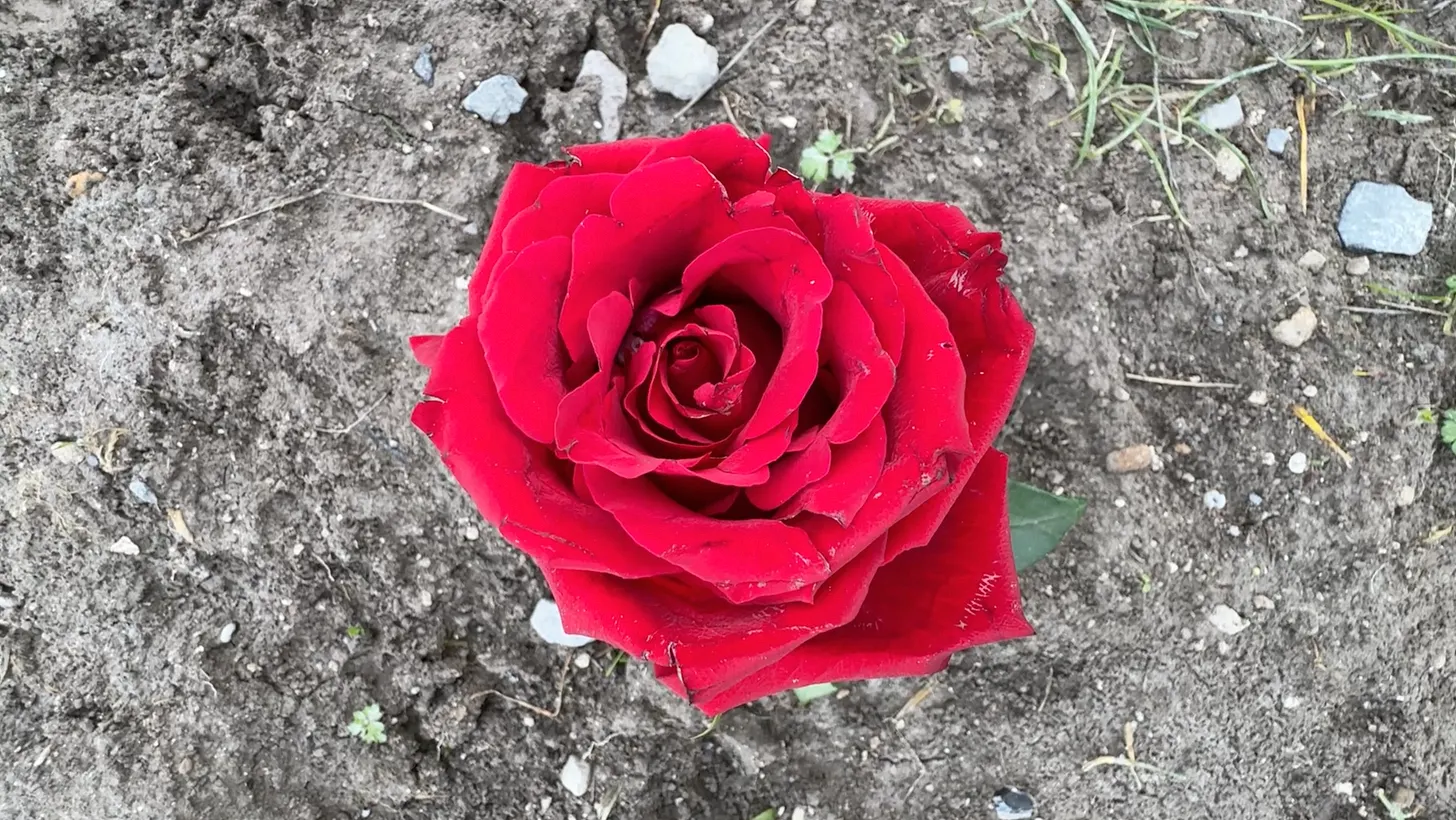
The engine roared again.
Louder this time.
The revs climbed sharply as the driver accelerated away down the road.
The timing was almost theatrical.
At that moment, Venus had only just returned to the evening sky, reappearing after her passage through the sun’s glare.
The morning star becoming the evening star once more.
And here on the hillside stood a single red rose.
A quiet emblem of that ancient planetary rhythm.
I lowered the camera and laughed softly to myself.
The pilgrimage had clearly decided to continue speaking in symbols.
And it seemed the language of the day was still unfolding.
Ahead of me, the path crossed the road and continued upward toward the horse itself.
So I followed.
Curious to see what the hill might reveal next.
The Knight
I passed through a gate and continued walking upward.
Just a few steps inside, something caught my eye.
At first I thought it was a coin lying on dirt path .
A small circle of metal, almost hidden in the chalk dust.
Curious, I bent down to pick it up.
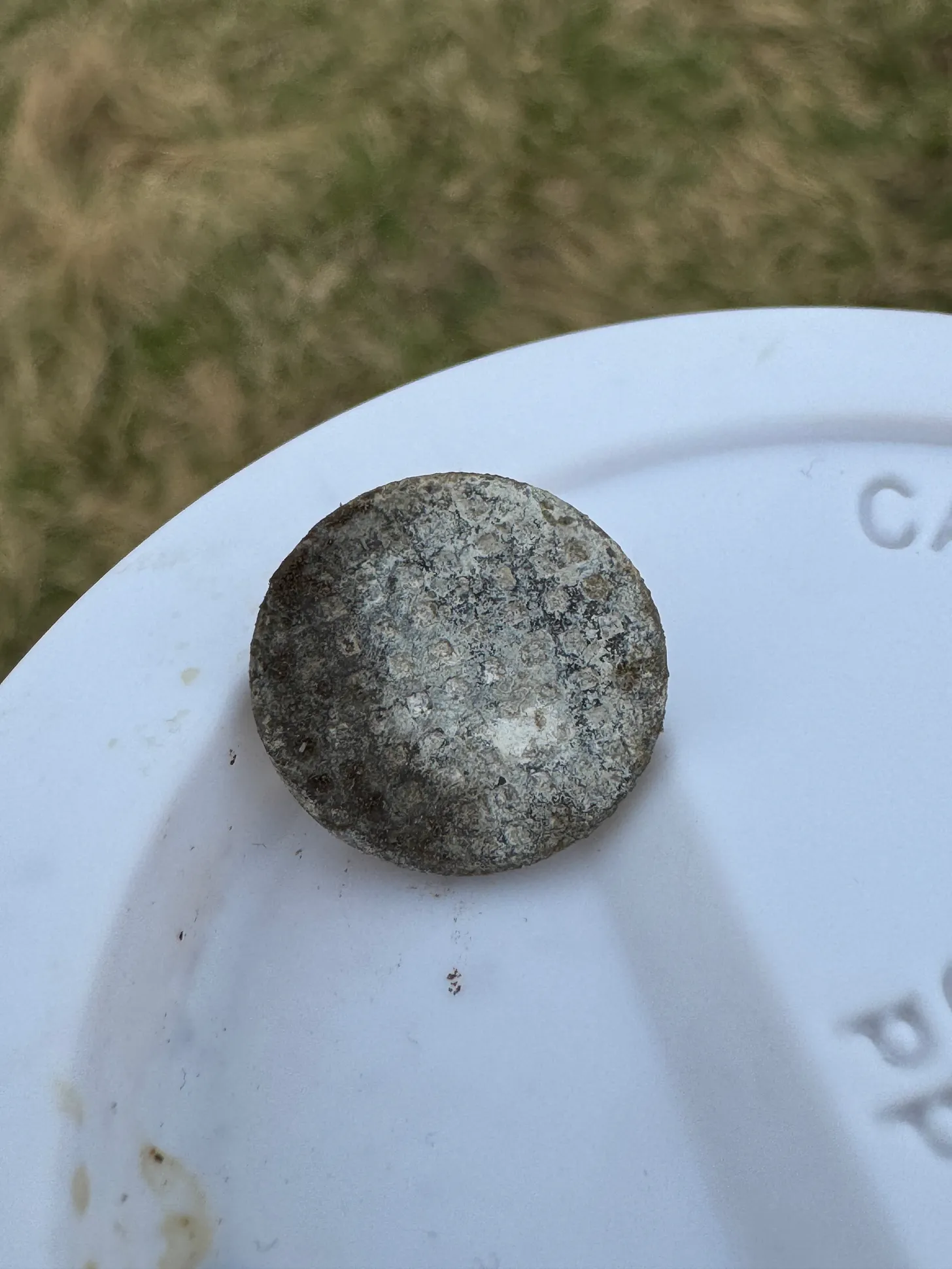
It wasn’t a coin after all — just a metal stud, most likely from someone’s shoe or piece of clothing.
A small, ordinary object.
But in that moment, standing there on the hillside, it immediately reminded me of something else.
A shield.
The kind a wandering knight might carry.
I laughed out loud.
After all, the timing was wonderfully poetic.
This was the very day the Year of the Fire Horse had begun.
And here I was, quite literally climbing toward the ancient White Horse carved into the hill.
If ever there were a day to imagine oneself a knight approaching a mythic steed, this seemed like it.
So for a brief moment I allowed the image to exist.
Pilgrim.
Knight.
Wanderer on the hillside of Albion.
A small shield discovered at the gate.
The White Horse waiting above.
Of course, I knew perfectly well it was just a lost metal stud.
But pilgrimage has a way of awakening the imagination.
The land begins to speak in symbols.
And sometimes the most ordinary objects become invitations to play within the myth of the moment.
I slipped the little token into my pocket.
The hill was opening around me now — wide sky, sweeping chalk slopes, wind moving through the grass.
Soon I reached the summit.
And there, at last, I stood beside the White Horse itself.
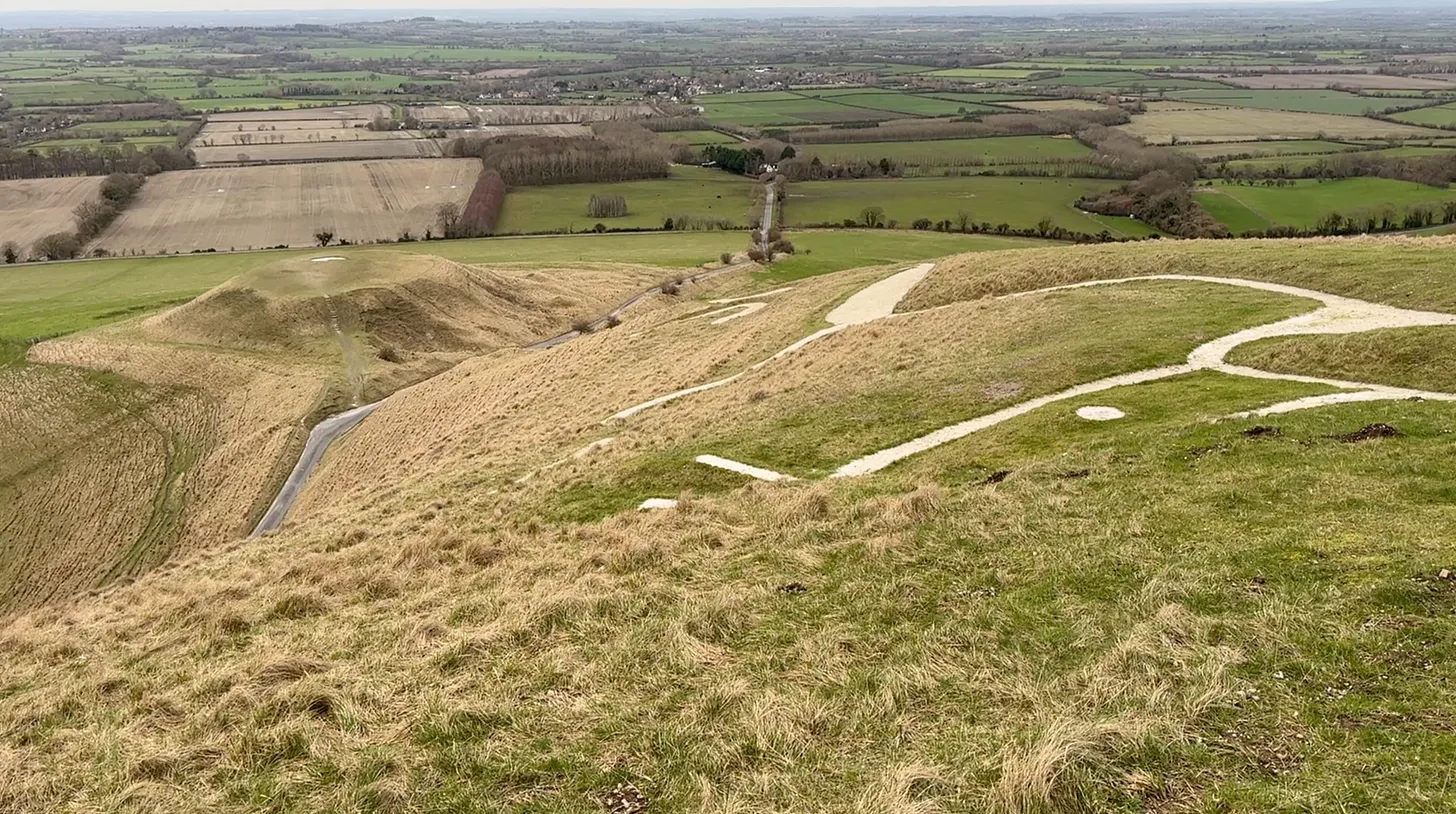
Three thousand years of people climbing this hill to look out across the downs.
I stopped walking.
And simply took it all in.
Wind.
Chalk.
Sky.
The horse etched into the living earth.
Dragon Hill
After spending some time beside the White Horse, I began to wander slowly along the ridge.
The chalk figure stretched across the hillside behind me, luminous against the grass, its flowing form somehow both simple and impossibly elegant.
From the horse, the path gently descends toward a smaller rise nearby.
Dragon Hill.
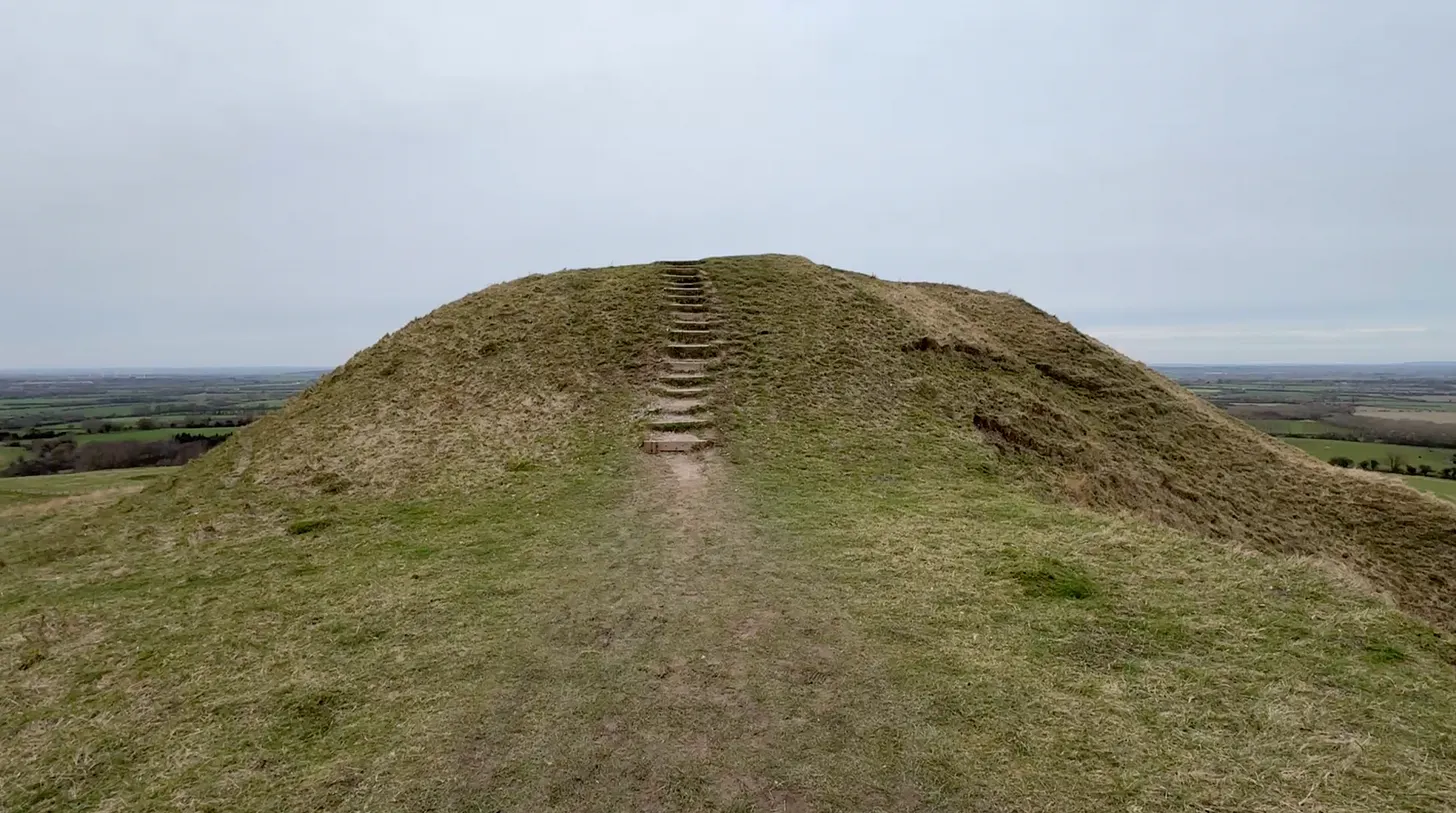
The name carries a story that has been told for centuries.
According to local legend, this is the place where St George slew the dragon, the creature’s blood supposedly poisoning the ground so that nothing would ever grow upon the spot.
It is a powerful tale.
But standing there on the hillside, the story felt strangely out of place.
Like a later layer placed over something much older.
The White Horse itself predates that legend by thousands of years.
And the Ridgeway beneath my feet — often called Britain’s oldest road — has carried travellers across this landscape since long before the dragon-slayer myth was cast upon the imagination.
Even so, I felt drawn to the hill.
Something about it called quietly.
So I followed the path downward and then began climbing again toward its summit.
The ascent was short, but when I reached the top the view opened dramatically in every direction.
And suddenly I understood something.
From Dragon Hill, the White Horse is perfectly visible.
The entire chalk figure stretches across the hillside.
For anyone standing here in ancient times, the horse would have been part of the ceremony of the place — a presence in the landscape, visible across the slope as gatherings unfolded.
I could easily imagine fires burning here.
Rituals marking the turning of seasons.
Celebrations aligned with sun and moon.
Dragon Hill did not feel like the place of a slain creature.
It felt like an ancient platform.
A ceremonial hill.
Older than the stories later attached to it.
I imagined people gathering to watch beneath the open sky.
As I stood there taking in the view, something small in the grass caught my attention.
A tiny shape glistening in the light.
I stepped closer.
It was a small white felt heart.
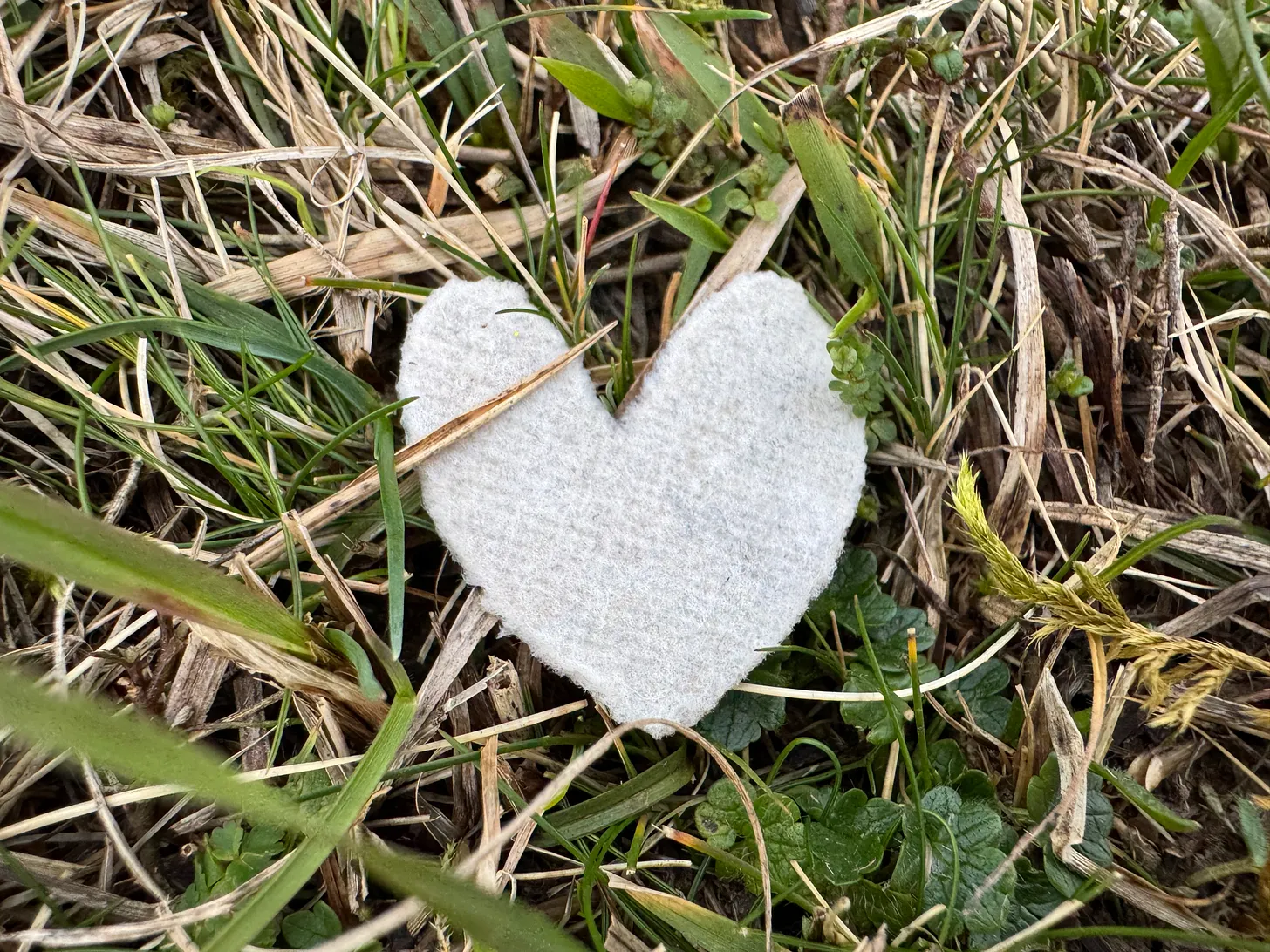
Soft, simple, almost childlike.
I picked it up and placed it gently on my glove, holding it out toward the landscape.
Instinctively I turned so that the heart sat in the foreground while the White Horse stretched across the hill behind it.
For a moment I simply stood there smiling at the quiet poetry of it.
Then, as I began to move again, something else shimmered in the grass a few steps away.
At first I lost the exact spot where I had seen it.
But then the light caught it again.
A small crystal stone lying partly hidden among the blades of grass.
I bent down and picked it up.
It was smooth and cool in my hand.
And unmistakably shaped like a heart.
The camera continued recording while I simply held it there in awe, taking in the coincidence of the moment.
Two hearts.
Discovered one after the other on Dragon Hill.
Later I would learn the name of the stone.
Dragon’s Blood Jasper.
A dragon’s blood heart.
Found on Dragon Hill.
And I couldn’t help wondering about the person who had left it there.
Some dragon-loving kindred soul, placing a small offering into the landscape with quiet intention.
Whoever they were, I hoped they might somehow know the joy their gesture had carried forward.
That it had been seen.
That it had been received with wonder.
That its meaning was continuing to unfold.
First the white heart.
Then the dragon’s heart.
Purity and power.
Light and blood.
Together.
Earlier, when I first found the white felt heart, I had briefly wondered why it had appeared here rather than beside the White Horse itself.
But the answer felt obvious.
They were not separate places.
Dragon Hill sits within the wider landscape known as White Horse Hill.
Two presences.
One body.
The hill of the dragon.
The hill of the horse.
Companions in the same ancient landscape.
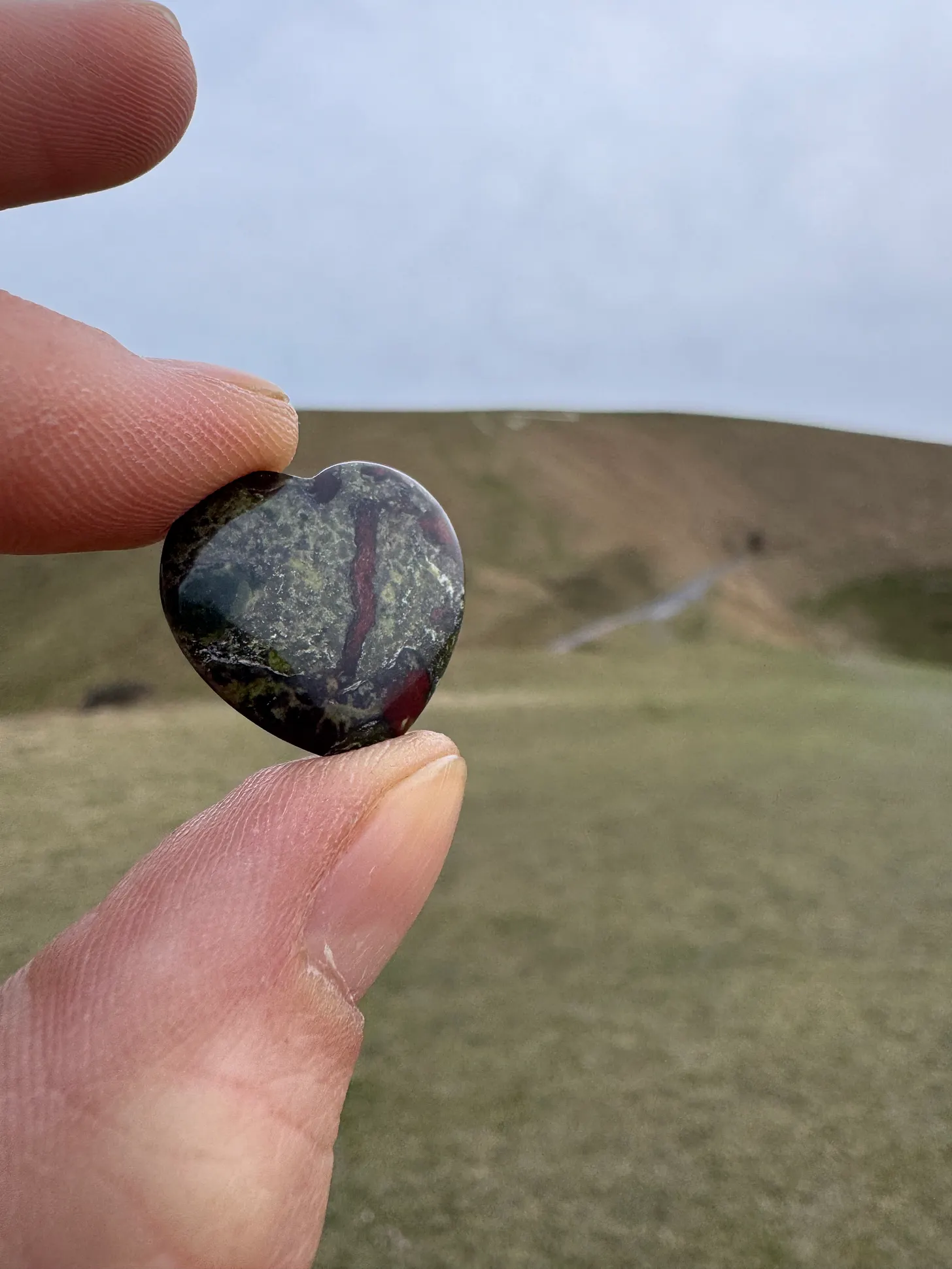
I held the stone up toward the horse for a moment before gently placing it into my pocket for safekeeping.
The hill had offered its gifts.
And the path was calling me onward.
Enough Is Enough
I began descending from Dragon Hill slowly, still holding the quiet sense of wonder that had settled around the moment of the two hearts.
The wind moved softly across the grass as the steps curved downward.
Just before reaching the path that led back toward the White Horse, I passed a small hawthorn tree standing at the threshold.
Something beneath it caught my eye.
A small wooden disc lay on its side.
At first glance it looked like a token — perhaps once threaded with string and hung as a decoration from the branches above.
I stepped closer and picked it up.
Written across the wood in simple lettering were the words:
“Enough is enough.”
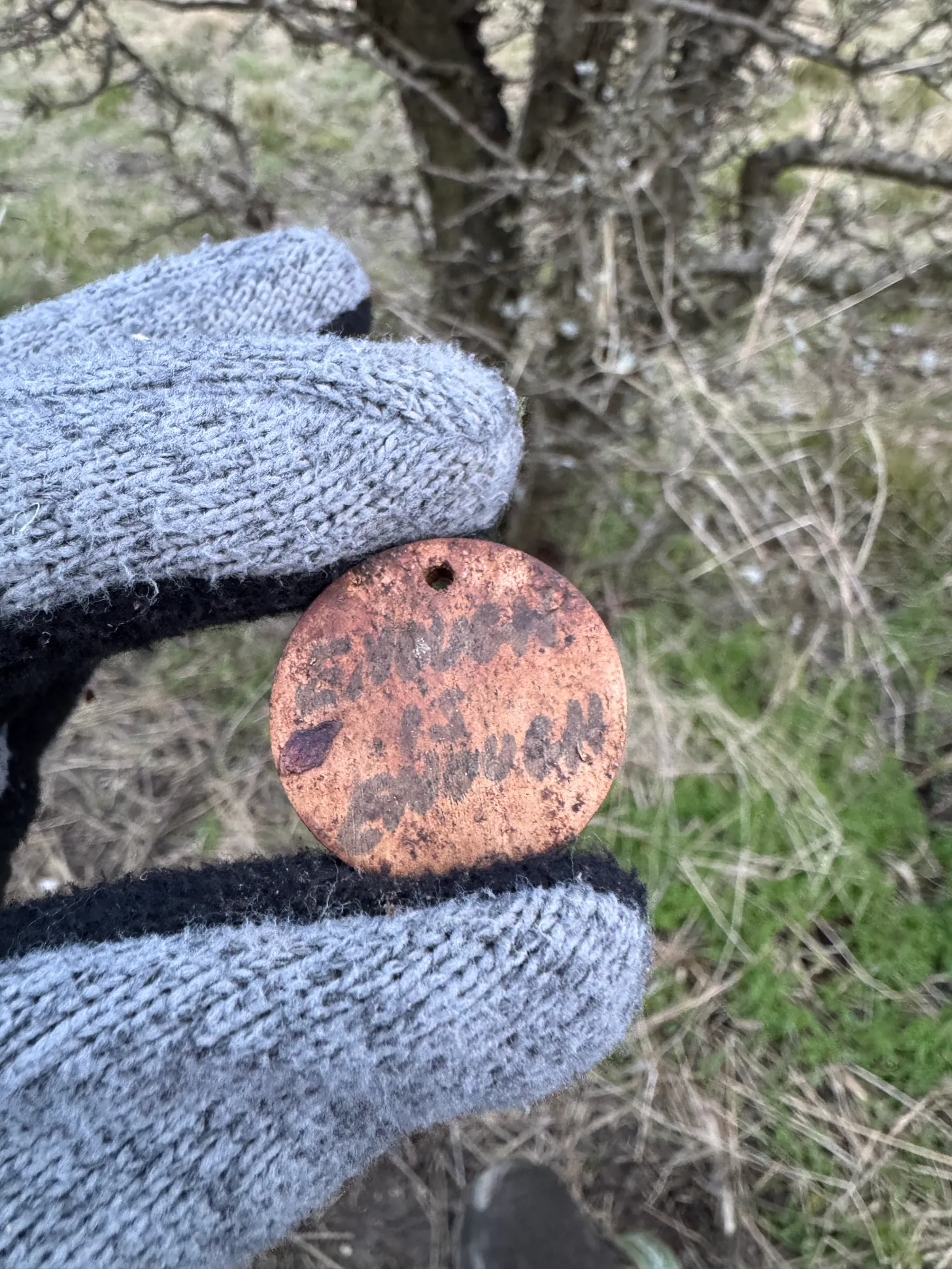
I laughed out loud.
The timing felt impeccable.
After the white heart.
After the dragon’s blood heart.
It felt as though the hill itself was gently announcing that there was nothing else to be found.
You’ve received what you came for.
And yet the message seemed to carry another layer as well.
Dragon Hill, after all, is famous for a very particular story — the medieval tale of St George slaying the dragon.
But that story has always felt like an overlay to me.
A later narrative cast across a landscape that had already been sacred for thousands of years.
Standing there beside the hawthorn, the symbolism felt quietly beautiful.
According to the legend, the dragon’s blood poisoned the earth so that nothing would ever grow there.
And yet here stood a hawthorn tree.
Alive.
Rooted.
Thriving.
Someone had clearly tended it.
Cared for it.
Perhaps even planted it deliberately.
A small act of defiance written into the land itself.
And hanging from that tree — or once hanging, at least — a simple declaration:
Enough is enough.
Perhaps the old dragon-slayer story has said everything it needs to say.
Perhaps the land is ready for a different story now.
I slipped the wooden disc into my pocket alongside the other small tokens of the day.
Yet even as I did, I felt the quiet sense that it would not remain with me forever.
Some objects travel with the pilgrim.
Others simply accompany the story for a while before returning to the land that offered them.
I suspect this one may yet find its way back to the hawthorn — perhaps strung one day with a red thread of Venus’s blessing, hanging where the wind can read its message.
The message had been received.
And with that quiet sense of completion, I began walking back toward the White Horse.
There was still one final offering to make before the day was done.
The Final Gesture
I climbed back toward the White Horse slowly, the wind moving steadily across the hillside as the evening light softened around the ridge.
A simple rope marked the boundary around the chalk figure itself.
It was little more than a string, really — but it felt important to respect it.
The horse had already revealed itself from a distance.
I felt no need to step directly onto it.
Instead, I wandered a little further along the hill until I found a small exposed patch of chalk just beyond the boundary.
It felt like the right place.
I sat down and opened the small wooden chest I had carried with me.
Inside were the quiet objects I had gathered that morning:
The tiny glass bottle with the wing inside it.
The dried rose.
The infinity petal.
I removed them gently and placed the rose into the earth beside the chalk.
Next came the petal from the infinity rose — a small fragment from a Venus ritual earlier in the year.
Two simple gestures.
Nothing elaborate.
Just a moment of gratitude offered back to the land.
Finally, I lifted the tiny bottle and tilted it toward the ground.
Inside, the iridescent wing rested where I had placed it that morning.
Delicate.
Still glistening with colour.
Then, in a moment, it was released to the wind.
The wing lifted immediately, carried away on the breeze across the hillside.
Gone.
A gift returned to the unseen currents of the place.
Only afterward did I realise something amusing.
In the quiet focus of the moment, I had forgotten to press record.
The offering itself had not been captured.
But I felt so peaceful that it must have been meant to be that way.
Some moments belong entirely to the spirit of the place.
This one, it seemed, had chosen to remain unseen.
Before leaving, I collected a tiny pinch of chalk from the exposed ground.
I didn’t yet know what it might be used for.
But it felt right to carry a small piece of the hill forward into the journey.
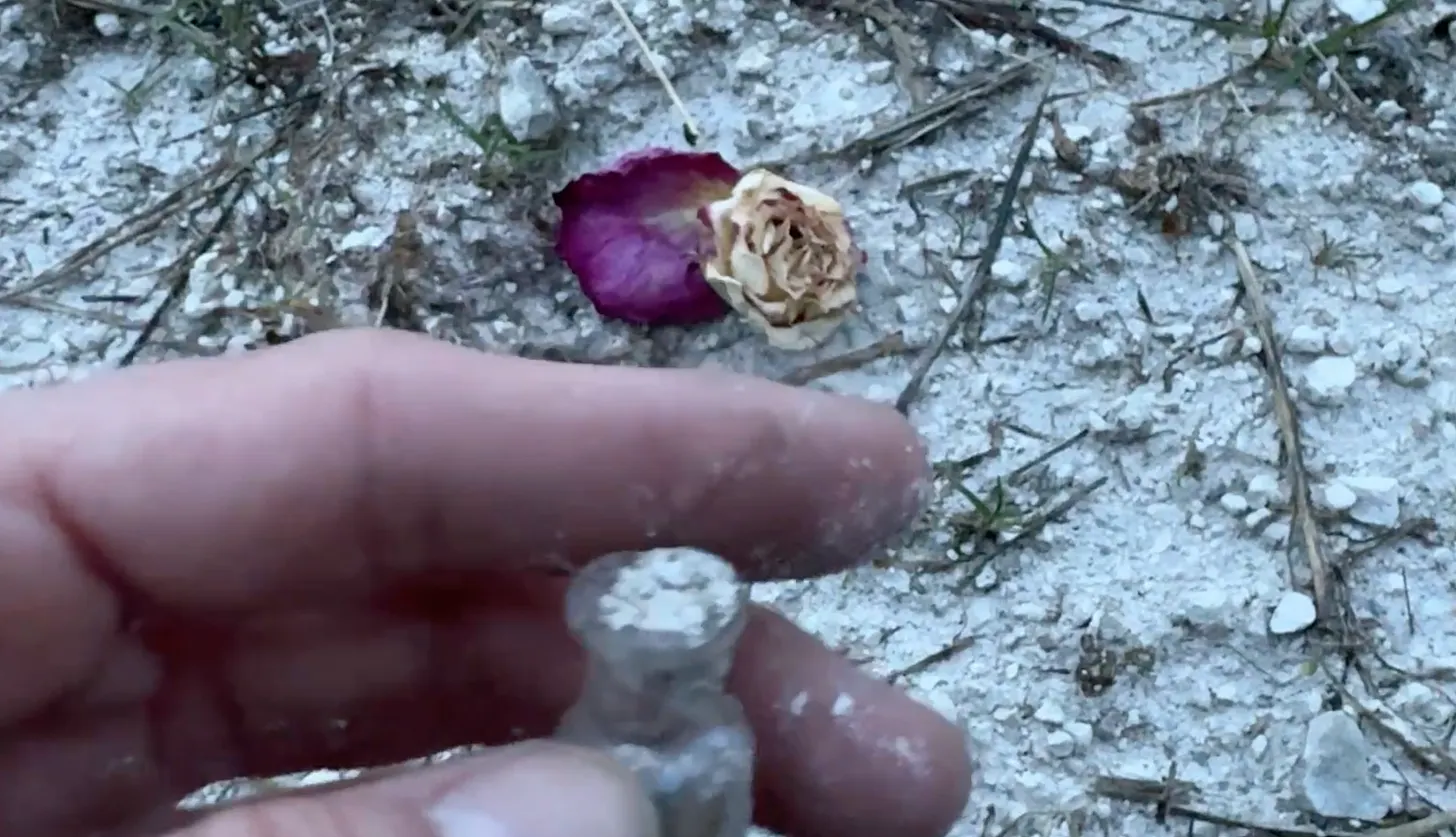
As I began walking away, I suddenly remembered the rose.
I hadn’t filmed that either.
So I turned back briefly and recorded the flower resting in the chalk where I had placed it.
And only then did another small symmetry reveal itself.
The day had begun with a rose planted in the ground.
And now it ended the same way.
Only this time, the rose was mine.
“Why is it there?” I had asked, quietly awestruck, hours earlier.
Now I giggled softly at my own question.
The walk back to the car felt almost dreamlike.
The wind had softened.
The light was fading.
And as dusk settled over the ridge, I turned once more for a final look.
The White Horse glowed faintly against the hillside.
Three thousand years watching the land.
Still running.
Still waiting.
My heart beat slowly in my chest.
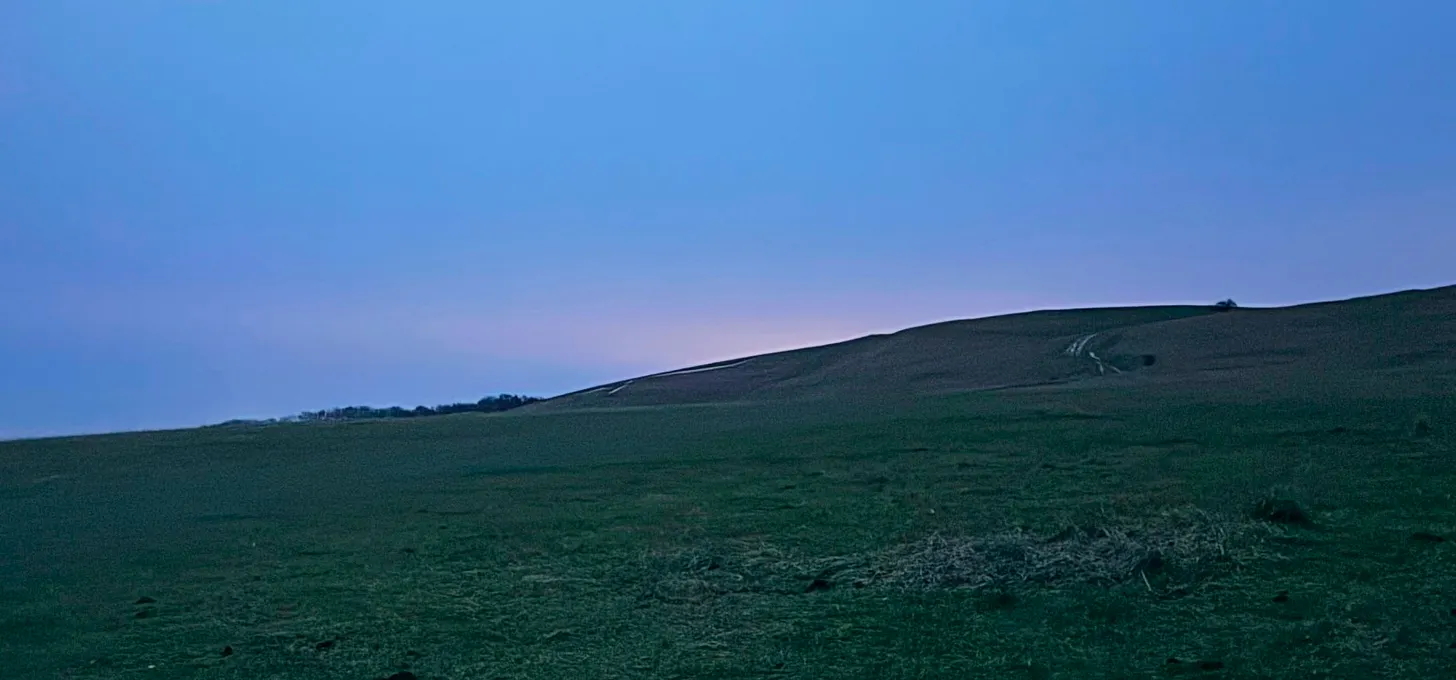
Day two of the pilgrimage had come to its close.
And already, the next step of the journey was beginning to take shape.
Soon I would be travelling north — to Glasgow — where the pilgrim’s wagon was waiting. ✨
Next in the Pilgrim’s Journal
Next the journey continues — this time by air — as I travel north to collect the pilgrim’s wagon.
Glasgow — The Pilgrim’s Wagon.