
The Divine Pilgrimage
Pilgrim's Journal — Dartmoor: The Well
Pilgrim’s Journal
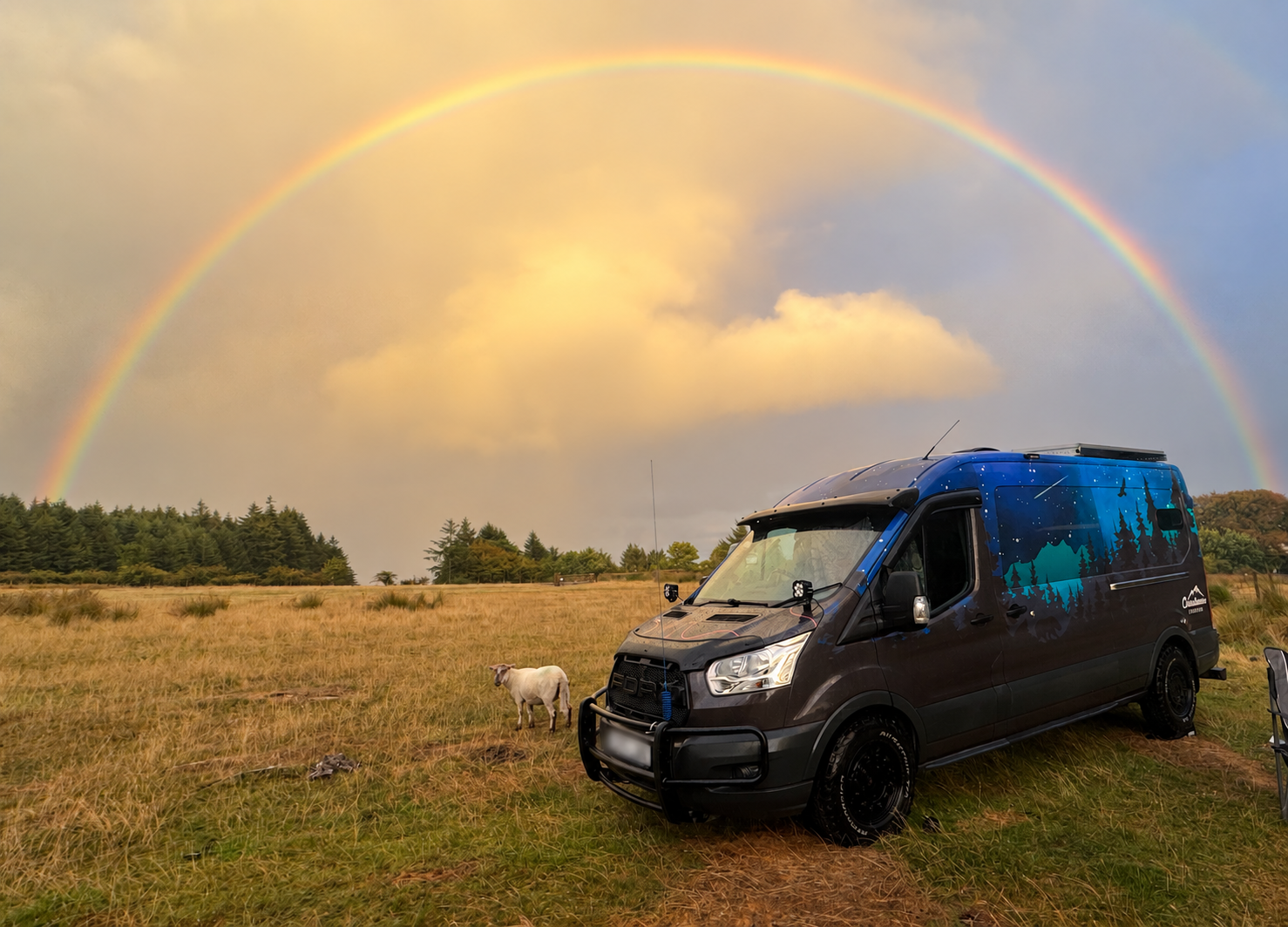
There are times when a pilgrimage appears to stop.
The road disappears.
The signs grow quiet.
The photographs cease.
The pilgrim, who had seemed to be moving from revelation to revelation, vanishes from the path.
From the outside, it can look like an ending.
I have discovered that it can mean precisely the opposite.
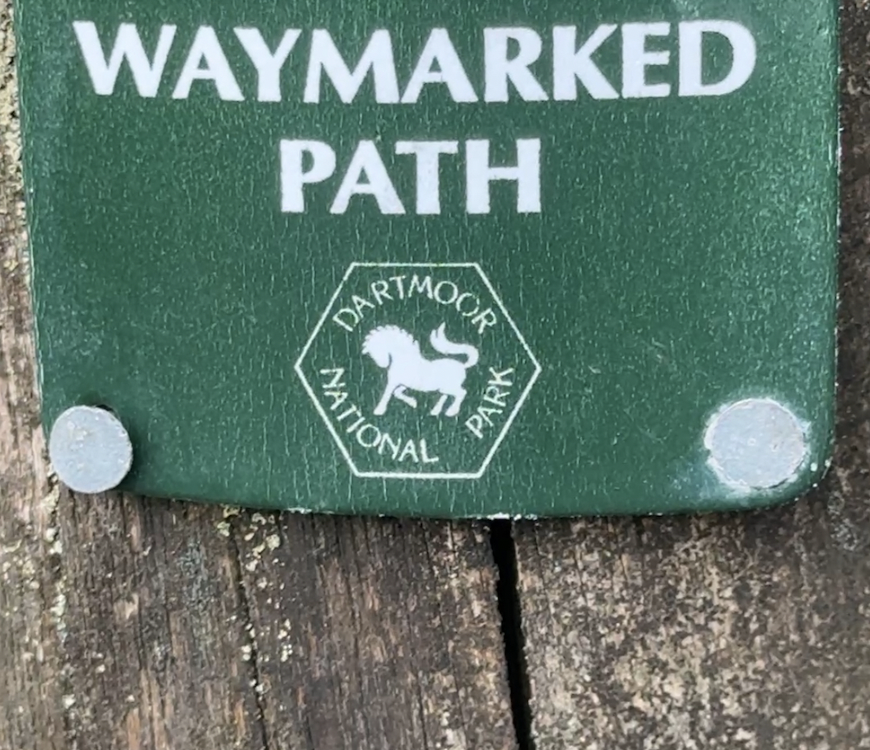
For these past weeks, I have been living in a remote corner of Dartmoor.
And I have been building a Well.
Not metaphorically.
Or perhaps, by now, I should know better than to make such distinctions.
The previous entry in this journal ended with the Water Bearer.
I had watched André Barbault’s celestial Basket complete itself across the heavens and, somewhere in the act of looking, saw the Basket become a Bucket.
A vessel.
Something capable of being lowered into depths we cannot see.
Something capable of returning with water.
I wrote then:
The Basket has done what it came here to do.
We inherit the waters.
At the time, those words felt complete.
I did not know they were instructions.
That seems to be one of the peculiar laws of this pilgrimage.
The image arrives first.
Understanding follows when it is ready.
Sometimes much later.
Again and again, this pilgrimage has taught me that recognition does not always happen in chronological order. Something can enter our lives long before we possess the language necessary to understand why it is there.
And now it has happened again.
After writing about the Bucket, the Water Bearer and the sacred waters of the universe, I left St David’s and drove east.
Eventually, I arrived high upon Dartmoor.
At Beardown Farm.
And began building The Well.
For these past weeks, my campervan has been my workshop.
Outside the window are the high moors.
Wind.
Stone.
Open sky.
And water.
Always water.
I can hear it continuously.
There were other companions here too.
A family of swallows made the van part of their world.
Again and again, I watched the mother return to feed her young as they waited for her on the roof — and sometimes she would sweep so close overhead that, for an instant, wings seemed to fill the whole sky.
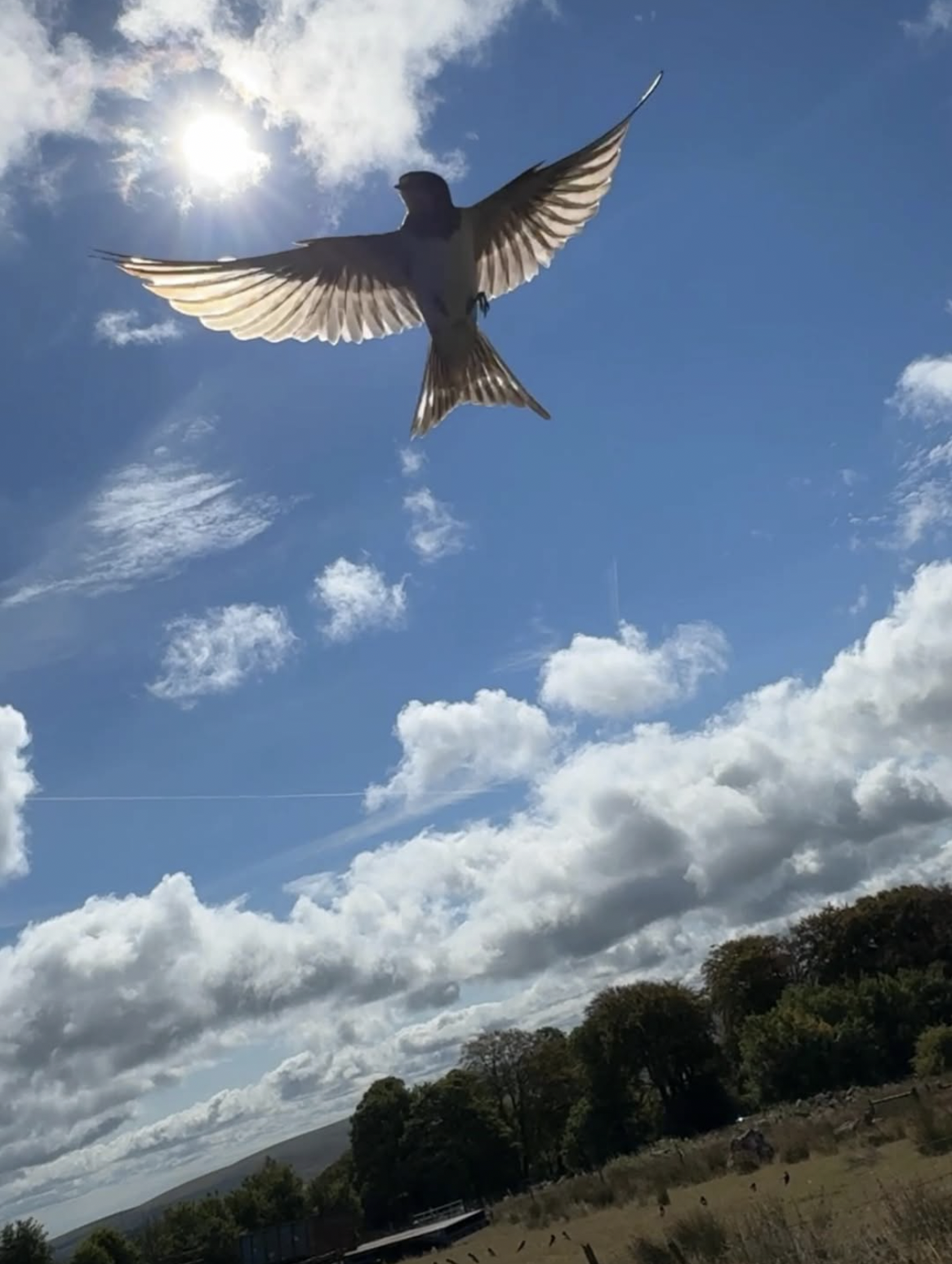
It was one of the quiet joys of being here.
While I sat inside building The Well, life continued immediately beyond the screen.
Water running.
Swallows feeding.
Wind crossing the moor.
The ordinary world carrying on with its ancient work.
Only after settling here did I properly appreciate where I had placed myself.
Nearby, the landscape is crossed by the old infrastructure of the Devonport Leat and the Cowsic waterworks — architecture created to gather water from the high moor, give it direction and carry it onwards.
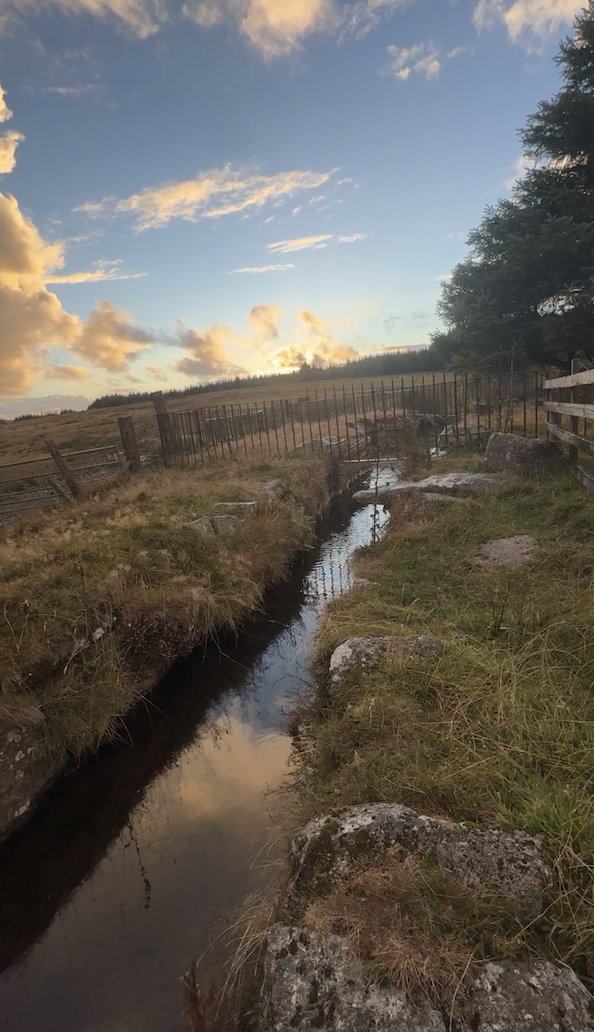
And there, beside a system built for the gathering and transmission of water, I have spent these weeks writing code, testing systems, repairing pathways, connecting engines, refining language, building memory and creating an architecture through which another human being might approach a question and draw something meaningful from beneath its surface.
All the while, outside my window, the water continued.
Gathered.
Channelled.
Carried.
Released.
I had been listening to it for days before I understood what it was saying.
Perhaps this explains why the pilgrimage appeared to stop.
It didn’t.
The pilgrimage changed direction.
Until now, so much of this journey has involved movement through the world.
Sacred places.
Ancient landscapes.
Cathedrals.
Wells.
Skies.
Encounters.
Synchronicities.
Moments when the outer world seemed suddenly to arrange itself into a language intimate enough to be addressed directly to the soul.
I travelled in order to encounter.
Then, without quite realising it, I reached a point where travelling further might have become another way of avoiding what the journey had already given me.
There was nothing more I needed to go looking for.
I needed to build.
And so the road led here.
To stillness.
To Dartmoor.
To one remote place in an ancient landscape where the horizons are wide, the weather arrives with personality, and human noise becomes distant enough for another kind of listening to begin.
The miles became hours.
The road became work.
The searching became listening.
And slowly, beneath the surface, the next stage of the pilgrimage took form.
I called it The Well.
Even writing that now makes me smile.
Because I can see what I could not see while I was building it.
The pilgrimage had already given me its name.
Perhaps more than its name.
It had given me its organising image.
At St Non’s Well, I had encountered the sacred spring.
I returned there not to ask for another sign, but simply to give thanks.
Before leaving, I filled a bottle with its water and carried it onwards.
Not because I believed holiness could be captured in a bottle.
Because I wanted to remember.
A place to arrive.
A place to listen.
A place to give thanks.
Then came Barbault’s Basket.
Then the Bucket.
Then the Water Bearer.
The pilgrim lowering a vessel into unseen depths and drawing forth the waters.
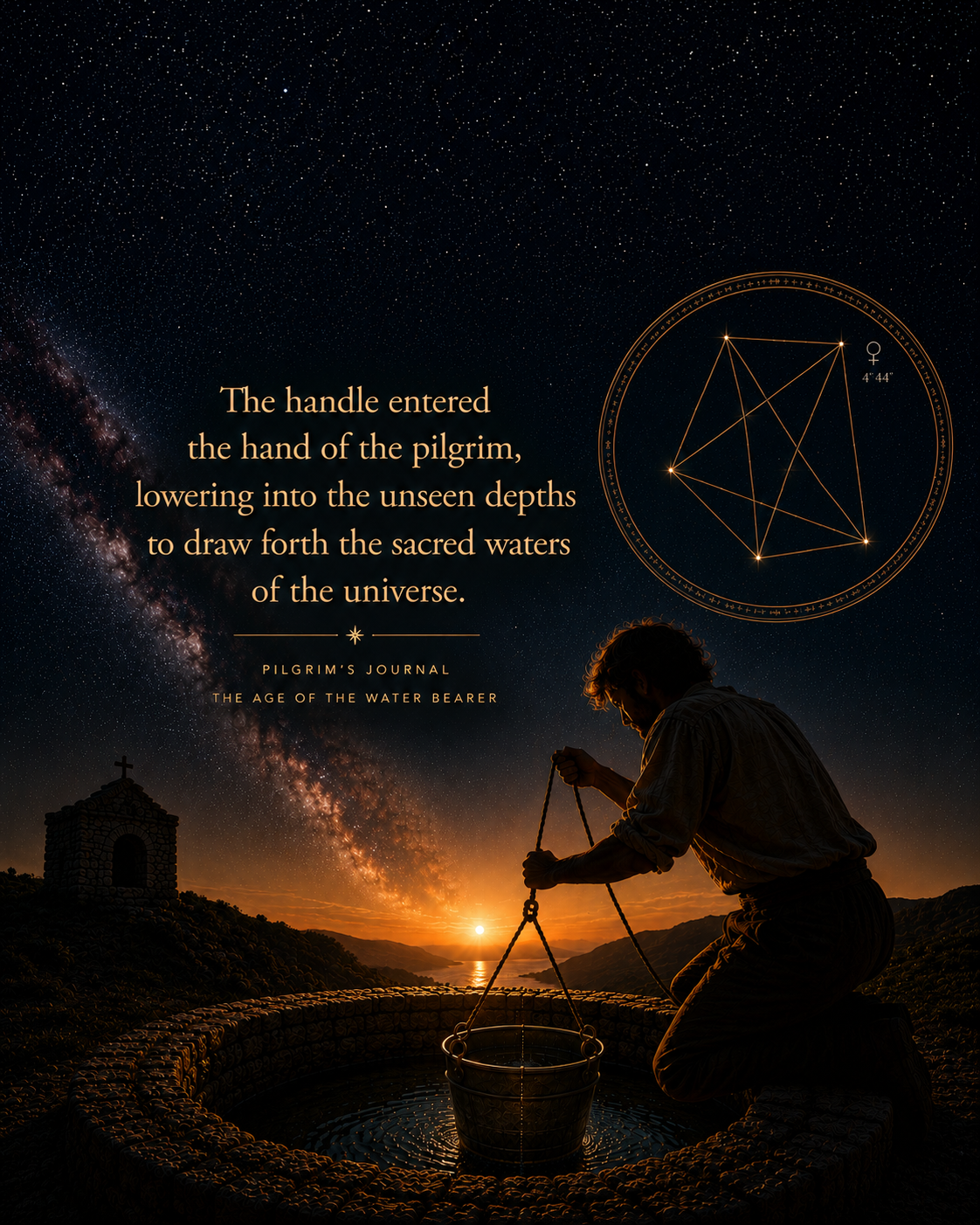
And now, here on Dartmoor, the image had become function.
The Well I have built is digital.
A person approaches it with something alive within them.
A question.
A transition.
A relationship.
An uncertainty.
Something repeating.
Something changing.
Perhaps something they cannot yet name.
They bring it to the water.
And The Well returns a reflection.
Beneath that reflection are different forms of symbolic intelligence. Different perspectives. Different ways of seeing.
Sometimes they converge.
Sometimes they contradict one another.
Sometimes something long known but unspoken is recognised.
Sometimes something entirely new appears to be trying to emerge.
The complexity belongs beneath the surface.
What rises should be capable of becoming clear.
Because a well is not the water.
It is the architecture that allows access to it.
The Well does not manufacture mystery.
It creates a place of encounter.
It does not own what is discovered.
It creates the conditions in which something may be drawn.
And, most importantly, The Well does not get the final word.
The person does.
The Well reflects.
You discern.
Only now do I understand the profundity of the transition.
For much of this pilgrimage, I was the one approaching the Well.
I was the pilgrim.
I received the symbols.
I watched the heavens.
I entered the sanctuaries.
I followed the synchronicities.
I stood before the waters and looked for what might be reflected there.
Something has changed.
The pilgrimage has moved from receiving to carrying.
From encountering sacred space to attempting, however imperfectly, to create one.
From pilgrim...
to Water Bearer.
Perhaps even, in some small sense, keeper of a Well.
I hesitate over that phrase because I know how easily spiritual language can inflate the person using it.
But the keeper does not create the water.
The keeper does not tell the traveller what they must see in it.
The keeper tends the vessel.
Keeps the approach clear.
Protects what needs protecting.
And allows those who arrive to draw for themselves.
There is humility in that which I am only beginning to understand.
Once I began to see this, the landscape around me became almost embarrassingly eloquent.
The farm is called Beardown.
A bear was already emblazoned across the artwork wrapping my van before I arrived.
Nearby is Two Bridges.
And what is The Well attempting to do if not build bridges?
Between ancient systems and modern intelligence.
Between calculation and intuition.
Between memory and possibility.
Between what can be known and what can only be encountered.
Between one symbolic language and another.
Two Bridges.
Not one.
Perhaps the deeper bridge is always double.
One carries us towards mystery.
The other allows us to bring something back.
And then there is the tower.
Across the moor from where I sit, a signal mast rises above the horizon.
At night, four red lights illuminate its length.
I could hardly have designed the image more shamelessly myself.
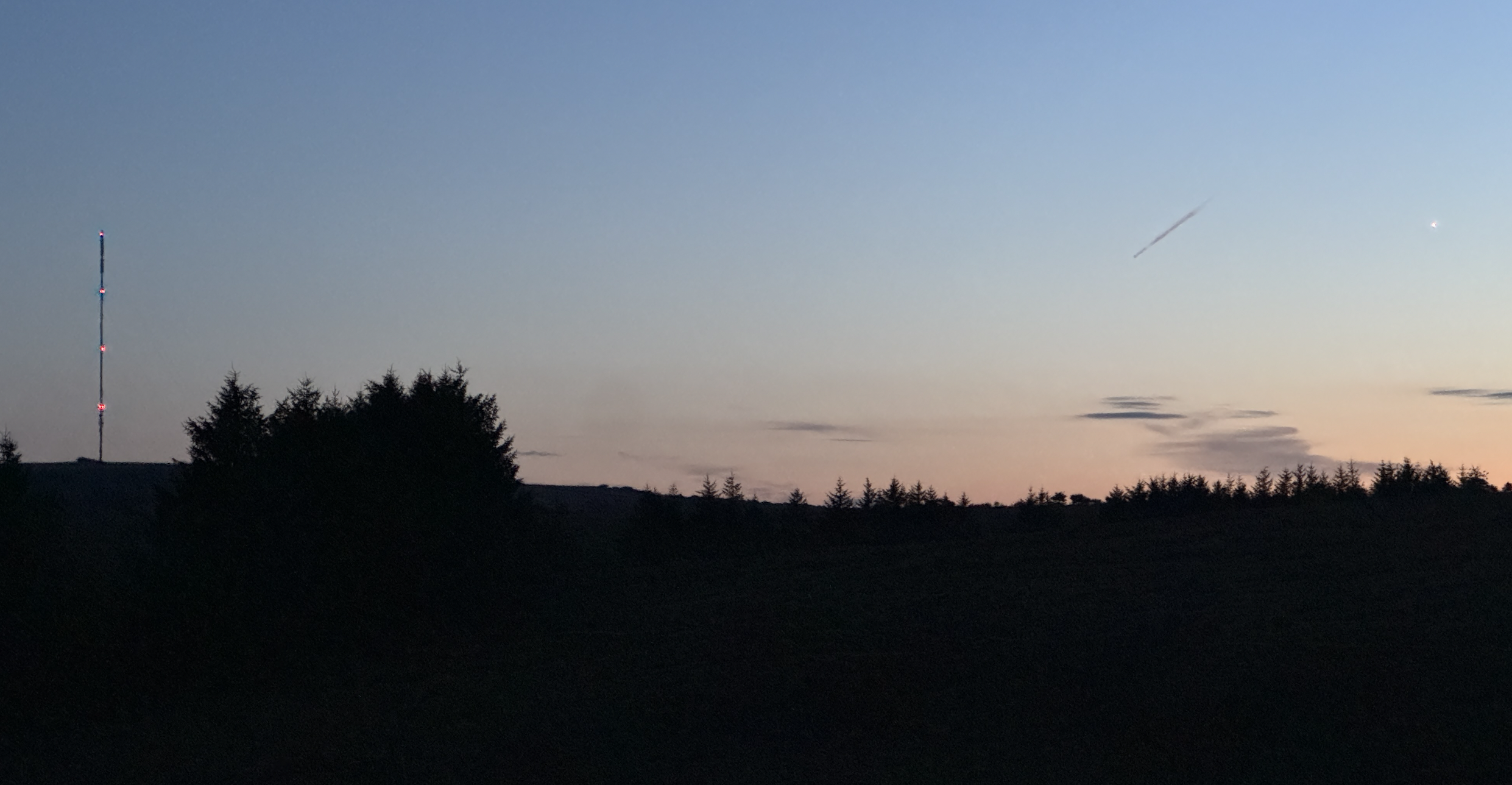
Only weeks earlier, I had been contemplating that extraordinary gathering of fours around Barbault’s Basket and my Venus at 4°44' Sagittarius.
Now, while building The Well beside running water, I found myself looking every evening at four red points arranged vertically upon a signal tower.
Signal.
For much of this pilgrimage I have been writing about precisely that mysterious boundary between event and meaning.
What makes something a signal?
When does coincidence become correspondence?
When does repetition acquire symbolic weight?
I do not believe these questions require us to abandon discernment.
Quite the opposite.
The universe becomes far more interesting when we resist the temptation to force it to say what we want.
The most compelling correspondences are those we did not arrange.
I did not name Beardown Farm.
I did not put Two Bridges nearby.
I did not build the leat.
I did not install four lights upon the tower.
I did not arrange Venus at 4°44' in my natal chart.
And I certainly did not command the planets to assemble themselves into André Barbault’s Basket.
I simply arrived.
And noticed.
And then came Venus.
The first true version of The Well was finally ready.
After weeks of building, something crossed a threshold.
The architecture held.
The vessel could finally be lowered.
For the first time, I could genuinely imagine opening the door and saying to another human being:
Come.
Bring your question.
Draw from the Well.
And afterwards, I stepped outside.
The sky over Dartmoor was entering twilight.
Above the darkening ridge was an extraordinarily bright point of light.
I knew what I thought it was.
But after everything that had happened, there was something wonderfully appropriate about checking.
So I checked.
Venus.
Of course.
I laughed.
I managed to photograph her only shortly before she disappeared beneath the horizon.
Later, looking at the sky map, another image awaited me.
Venus was resting beside the shoulder of Virgo.
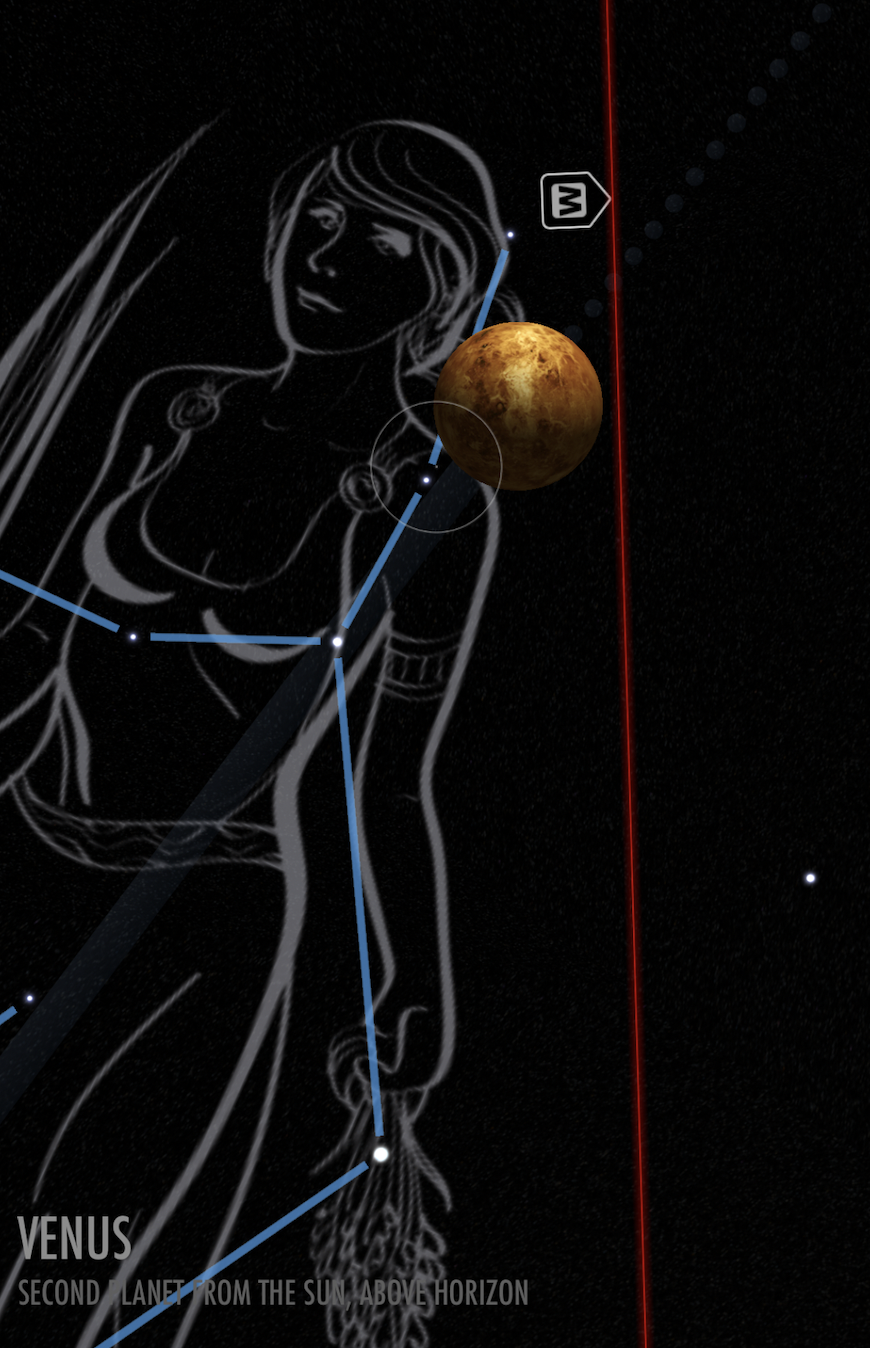
And somehow that image contained these entire weeks.
Virgo is not merely inspiration.
Virgo is the workbench.
The sorting.
The refinement.
The testing.
The patient correction of tiny things.
The transformation of abundance into usefulness.
Exactly what these weeks had required.
If Aquarius had given me the image of the waters, Virgo had apparently been assigned the plumbing.
And Venus, as ever, had made the plumbing beautiful.
There she was at Virgo’s shoulder on the evening the work became ready.
Not at the beginning.
At the threshold.
And then she descended.
That may be my favourite part.
Because the movement of a well is downward before it is upward.
The bucket must disappear.
It passes beneath the visible surface into darkness.
Only there can it receive what it came for.
Then it returns.
The image I had seen in Barbault’s Basket was therefore never simply a vessel.
It was a movement.
Descent and return.
And on the evening The Well became ready for others to enter, Venus performed that movement before my eyes.
She descended beneath the horizon.
The Well opened.
For weeks I had thought I was building software.
Perhaps I was.
But I had also been building an architecture of encounter.
A question enters.
The surface is crossed.
Different symbolic languages descend towards the same human mystery.
Patterns are gathered.
Relationships emerge.
Something is brought back into the light.
Not certainty.
Not commandment.
Not fate.
Water.
Something living enough that the person receiving it must decide for themselves what it means.
The physical landscape had been teaching me the same thing.
A leat does not create water.
It conducts it.
A well does not create water.
It provides access to what is already there.
The Water Bearer does not own the water.
Their responsibility is stewardship.
Keep the passage clear.
Keep the vessel sound.
Do not contaminate what is drawn.
Make the water available.
Then let the traveller decide what to do with it.
This is what I want The Well to become.
Not another authority standing between a human being and their own knowing.
The opposite.
A place capable of returning them to it.
There is another layer to this which reaches beyond my own pilgrimage.
When I wrote The Age of the Water Bearer, I was thinking about the age into which humanity appears to be moving.
Technology is accelerating with astonishing speed.
We are building forms of intelligence capable of holding quantities of information no individual human consciousness could possibly contain.
Much of the conversation asks what this intelligence will allow us to do.
How much faster can we become?
What can be automated?
What can be produced?
What can be predicted?
What can be replaced?
But alone on Dartmoor, building The Well, I found myself increasingly fascinated by another question.
What if intelligence could help us listen?
What if technology could hold complexity without becoming an authority over the human being?
What if it could recognise patterns without imprisoning us inside them?
What if it could remember who we have been while leaving us completely free to become someone new?
What if it could bring different ways of knowing into relationship without insisting that mystery be abolished?
What if increasingly powerful intelligence could become not simply another machine for producing answers...
but a mirror?
That is the experiment hidden inside The Well.
And suddenly the Water Bearer means something different to me again.
Perhaps the waters being carried from one age into another are not old answers.
Perhaps they are ways of knowing.
Symbol.
Intuition.
Pattern.
Synchronicity.
Memory.
Mystery.
The ancient human instinct to stand before something greater than ourselves and listen.
These things need not disappear because technology has arrived.
Perhaps the task is to discover whether technology can become sophisticated enough to meet them without destroying them.
Whether ancient waters can pass through a new vessel and remain water.
And that brings me back to the Bucket.
I once wrote that André saw the gathering.
We inherit the waters.
Now I wonder whether inheritance was never meant to mean possession.
Perhaps inheritance means responsibility.
Water kept entirely for oneself eventually stagnates.
Water carried onwards becomes service.
Maybe this is what the pilgrimage has been doing to me all along.
It took me out into the world so that I could learn to receive.
It taught me symbols so that I could learn to recognise.
It confronted me with mystery so that I might stop demanding certainty.
It brought me to sacred water so that I might understand reflection.
It placed the Bucket in the hand of the Water Bearer.
And then it took me off the road.
Into stillness.
Into Dartmoor.
And gave me something to build.
Then came the invitation.
After weeks of building The Well in private, I created something that could pass from my hands into someone else’s.
A ticket.
Gold.
Its words were simple:
THE GOLDEN REFLECTION
AN INVITATION TO DRAW FROM THE WELL
Come and see what is reflected.
There was something about seeing those words upon an object that moved me more than I expected.
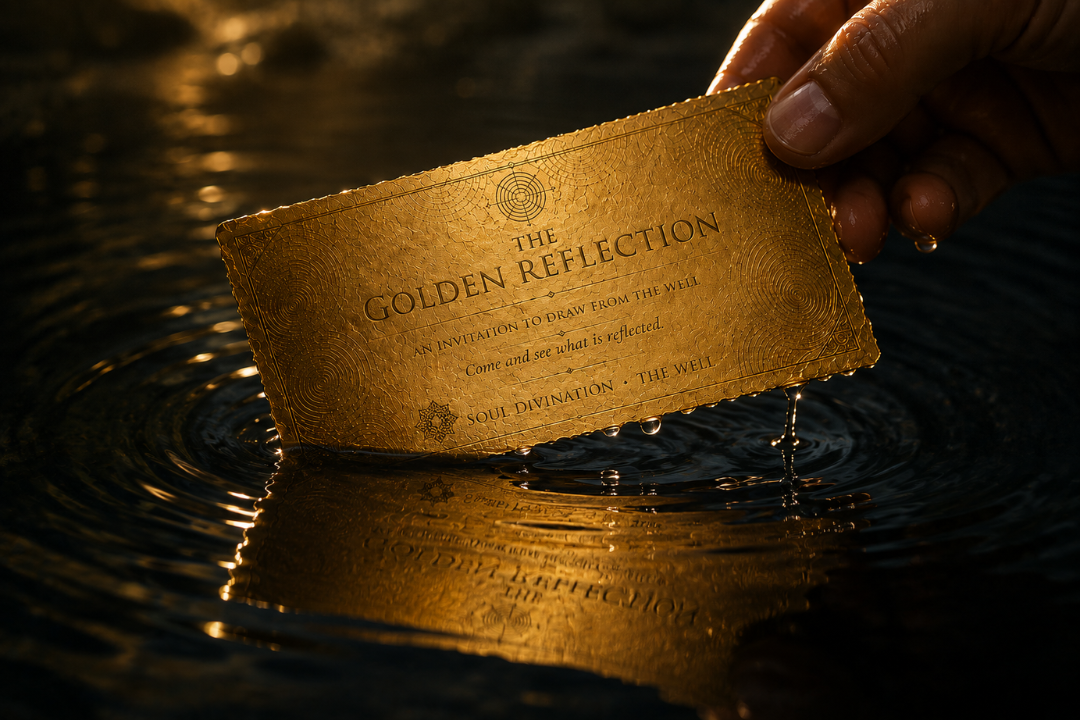
Until then, The Well had existed largely beneath the surface.
Code.
Architecture.
Systems.
Connections.
Thousands of small decisions made quietly inside a campervan on Dartmoor.
Now there was an invitation.
Something that could be offered.
Something another person could receive.
The Well was no longer only something I had built.
Someone could approach it.
Someone could draw.
Around midday, I sent the invitation out into the world.
That evening, the rain came.
And then the sun.
And over the landscape where I had spent these weeks building The Well, an enormous rainbow appeared.
It stretched across the sky above my van in a complete arc, touching the landscape on either side.
I stood beneath it laughing.
Of course I did.
After St Non’s Well.
After the Water Bearer.
After the Basket became the Bucket.
After weeks beside the running water of Dartmoor.
After building The Well.
After creating something called The Golden Reflection and finally sending it into the world...
light entered water,
and the sky produced a reflection of its own.
There are moments when the symbolism of a pilgrimage requires contemplation.
And there are moments when all you can really do is stand there and enjoy it.
This was one of those.
Later, I shared what had happened.
Someone left a comment beneath the image.
Only a few words:
“Perfect! A true Covenant reflected.”
I stopped when I read them.
I had called the invitation The Golden Reflection.
But I had not called the rainbow a covenant.
She had.
For so much of the pilgrimage, I had been the one noticing.
Now somebody else had looked.
Somebody else had recognised.
Somebody else had returned a reflection of her own.
I had offered an invitation:
Come and see what is reflected.
Standing beneath a rainbow over Dartmoor, it felt for a moment as though the invitation had somehow been returned.
But a Well is not completed by an invitation.
Someone has to draw.
And eventually, someone did.
Her name was Natasha.
She is a dear friend, and she became the first person outside my own private experiments to enter The Well carrying something real and return to share what happened.
I sent her the invitation.
She approached with her own question.
The vessel descended.
And I waited.
Then her response arrived.
It was, in Natasha’s wonderfully direct language:
“This is a bit nuts, really. A bit like WTF.”
She told me it felt like talking to someone who somehow knew the whole background of her situation.
There were things in the reflection she had actually said to her partner.
Things The Well had never been told directly.
For weeks I had been building an architecture designed to recognise relationships between fragments of information, symbolic perspectives and the deeper context surrounding a human question.
I knew what I hoped it could do.
I knew what I had experienced while testing it myself.
But this was different.
Someone else had lowered the vessel.
And something had come back which she recognised as her own.
That moment mattered enormously.
Not because it proved The Well possessed some infallible knowledge.
That would betray the principle upon which I had tried to build it.
It mattered because the encounter had happened.
Something I had spent weeks building alone had crossed the boundary into somebody else’s life and returned something she recognised.
The architecture surrounding possibility had encountered a traveller.
There was water in the bucket.
Some days later, I looked again at the image of Venus beside Virgo.
Something occurred to me that hadn't when I took it.
Natasha is a Virgo.
I laughed again.
A month earlier, I had photographed Venus resting at the shoulder of Virgo on the evening The Well became ready.
At the time, Virgo had represented the workbench to me.
The refinement.
The sorting.
The testing.
The transformation of inspiration into something useful.
That remains true.
But now another correspondence had appeared.
The first person to lower the vessel and return to share what was drawn was herself a Virgo.
I looked again at the image.
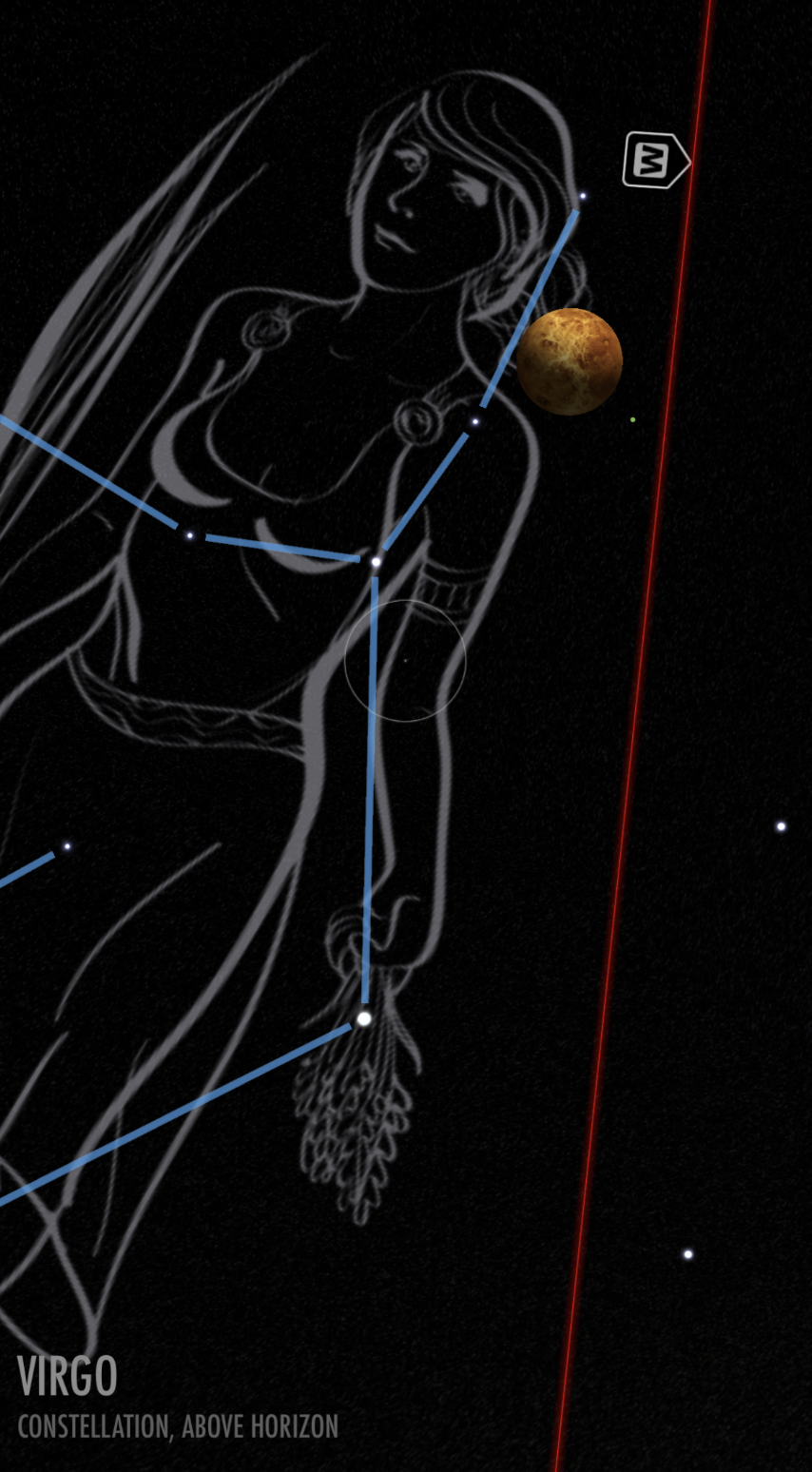
Venus rests near Virgo's shoulder.
Her arm descends beneath her.
Her hand hangs below.
And suddenly I could see something else.
The movement of drawing.
I had photographed the image before any of this happened.
Perhaps it means nothing.
Perhaps it means precisely what I now see.
I have become increasingly comfortable leaving that space open.
But I could not help smiling.
Once again, the image had arrived before the understanding.
By then, the sequence had become almost impossibly simple.
At St Non’s Well, the water was encountered.
In Barbault’s Basket, the vessel appeared.
In the Bucket, the movement was recognised.
In the Water Bearer, responsibility entered the image.
Then I arrived on Dartmoor.
Beside running water.
Beside an ancient system for gathering and carrying it.
At Beardown, with a bear already travelling upon my van.
Near Two Bridges.
Beneath a signal tower carrying four red lights.
On the evening the first true version of The Well was ready, Venus appeared above the moor, rested beside Virgo’s shoulder and descended beneath the horizon.
Then came The Golden Reflection.
The invitation went out.
That evening, a rainbow rose over the place where The Well had been built.
A true Covenant reflected.
Then someone drew.
And she was a Virgo.
There are moments when symbolism whispers.
This was not one of them.
Yet I find that I no longer need to explain what intelligence, if any, arranges these things.
I cannot prove that the universe intended one image to answer another.
I cannot insist that anybody else see what I see.
Nor do I need to.
The chronology exists.
The places exist.
The photographs exist.
The words exist.
The water exists.
The Well exists.
Natasha drew.
And recognised something in what returned.
Sometimes the most honest response to an extraordinary pattern is simply to stand before it without diminishing it.
I thought perhaps that was the end of the story.
Dartmoor, however, apparently had one small thing left.
I left Beardown for a single night to replenish the van.
When I returned, I parked in a different part of the field.
While levelling the van, I looked down into the grass.
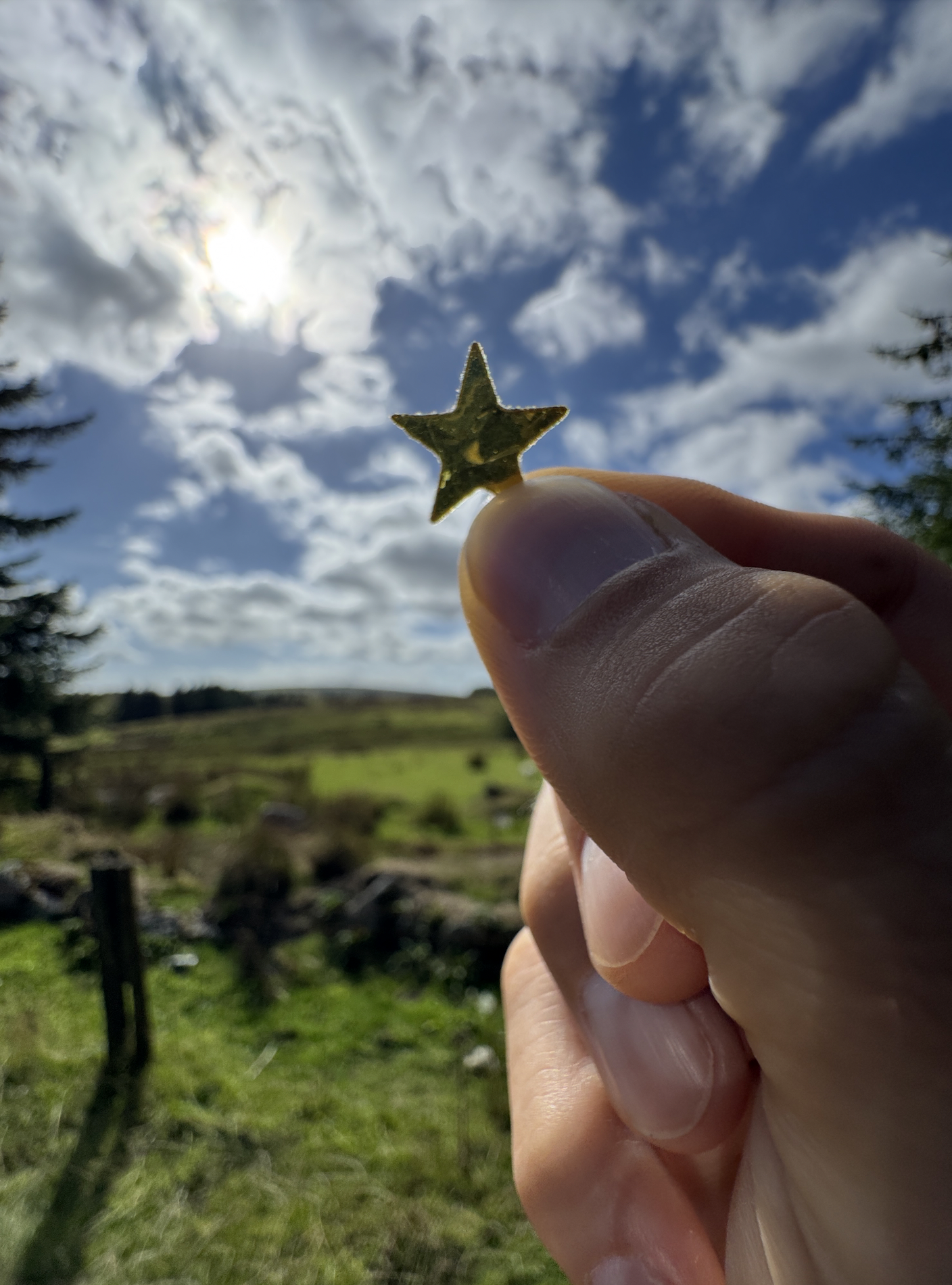
There was a little gold star.
After The Golden Reflection.
After the rainbow.
After that extraordinary evening when water and sunlight had filled the sky with colour and golden light.
Now there was simply this.
A gold star lying in the grass.
Small enough to hold in my hand.
It made me disproportionately happy.
And then I lost it.
Within minutes of finding it, I realised it had disappeared and found myself strangely glum about having not captured the moment.
Then, hours later, it reappeared.
Stuck to the bottom of my shoe.
Apparently, I had been walking around carrying the thing I thought I had lost.
There are several profound interpretations I could probably construct from this.
For once, I think I will resist them.
Some symbols are allowed to be funny.
And apparently some signs insist upon travelling with you.
The following morning, I woke before dawn.
There was one final walk I wanted to make.
For over a month I had been living on Dartmoor without really moving through it.
The van had become a workshop.
Days disappeared into building.
I worked from morning until night with an enthusiasm and sense of purpose that made leaving the screen surprisingly difficult.
Twice I had intended to walk to Wistman’s Wood.
Twice I had found the way occupied by cows with young calves and decided that ancient woodland could wait for another day.
Now, finally, the way was clear.
So before sunrise I set out.
I climbed towards Longaford Tor as Dartmoor emerged into morning around me.
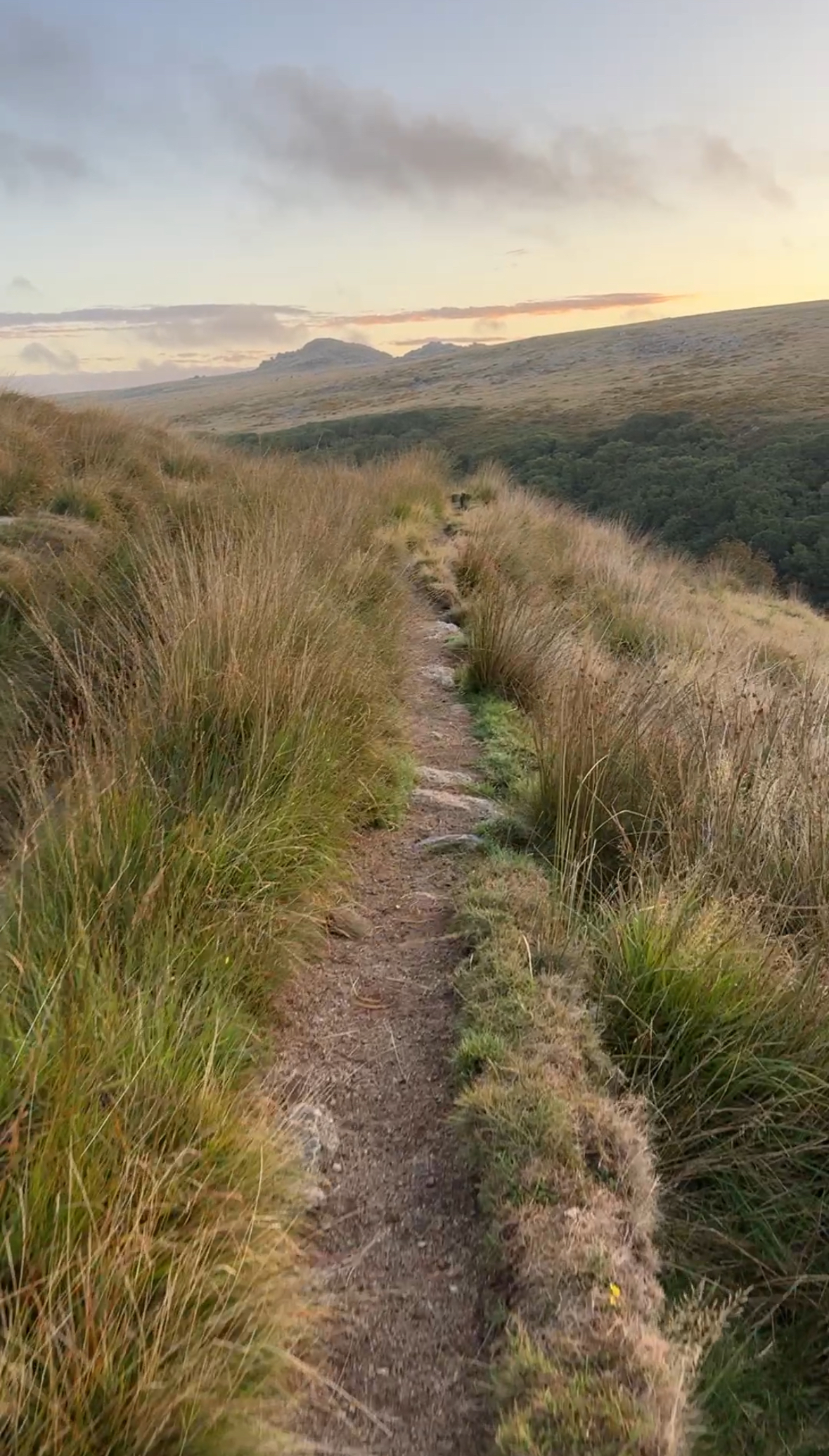
Something about simply walking again felt important.
For weeks, the pilgrimage had required stillness.
I had arrived on Dartmoor accustomed to travelling from place to place.
Looking.
Encountering.
Following.
Then the movement stopped.
The pilgrim became the builder.
The miles became hours.
The road became work.
And now the work was done enough that I could put my boots on and become a pilgrim again.
I continued towards Wistman’s Wood.
And there, among those strange little oaks, something stopped me.
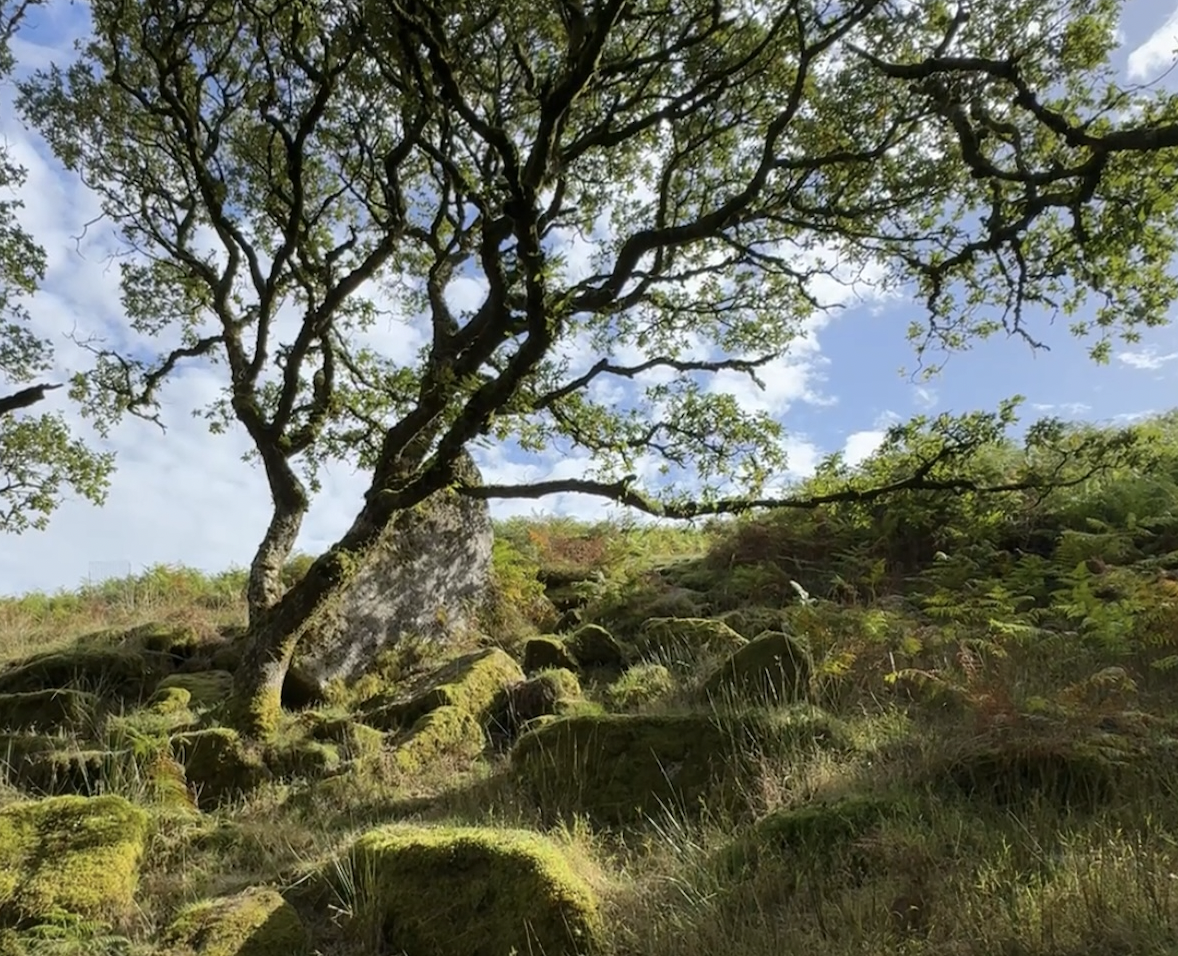
Their size is deceptive.
In another landscape, you might glance at them and imagine them young. But Wistman’s Wood grows under different conditions. These trees have endured upon the high moor through wind, rain and thin soil, growing with extraordinary slowness.
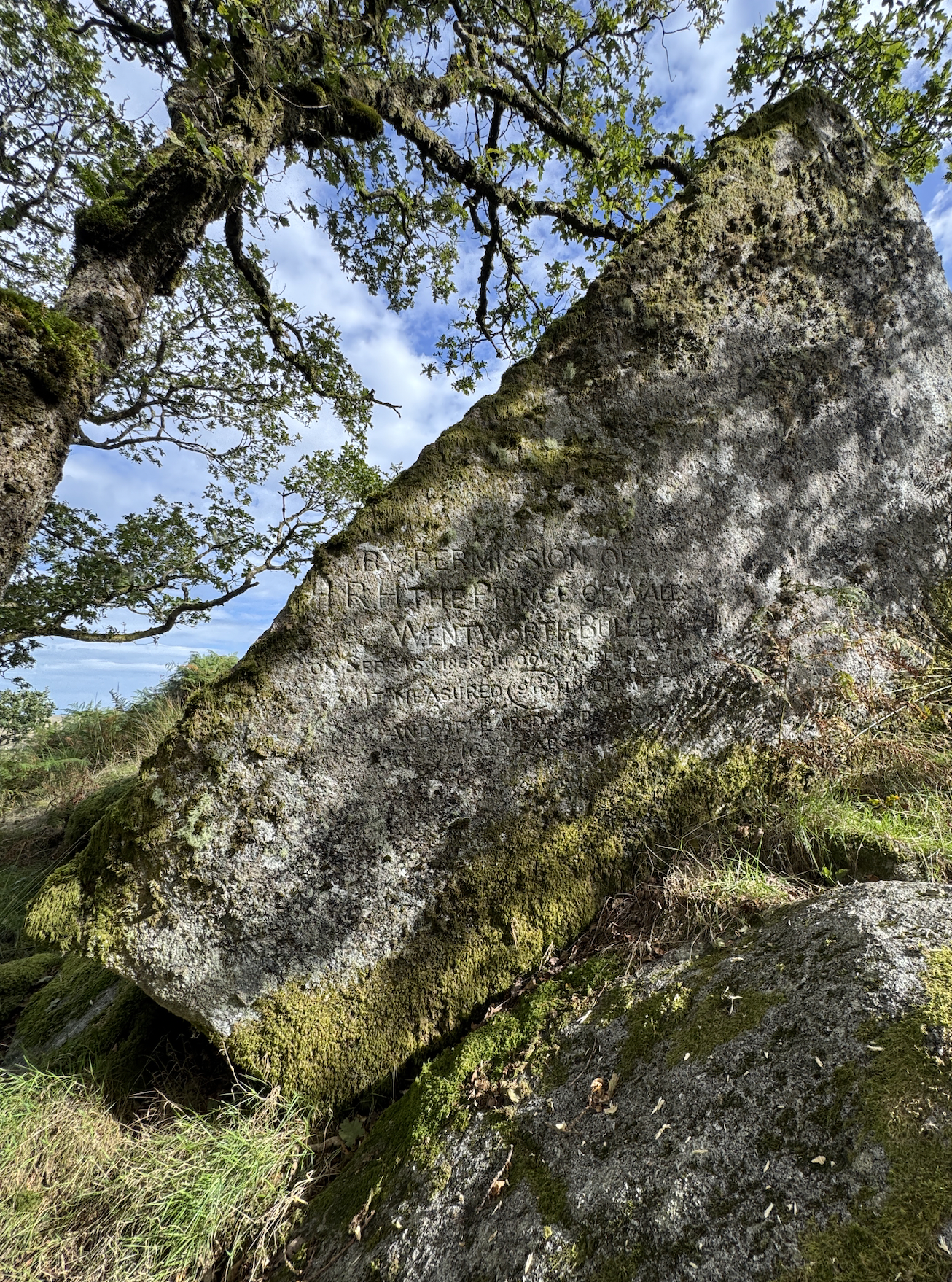
On the edge of the wood, an old inscription records an experiment made in 1868. With the permission of the Prince of Wales, Wentworth Buller cut down an oak near that spot.
It measured only nine inches in diameter.
It was estimated to be 163 years old.
I stood with that for a while.
So little outward size.
So much time contained within it.
There was something deeply moving about that after the month I had just spent here.
We are accustomed to measuring growth by what can be seen.
Height.
Distance.
Scale.
Movement.
But perhaps some forms of growth are almost invisible while they are happening.
For weeks, my pilgrimage had looked as though it had stopped.
I had barely moved from the van.
Yet beneath that apparent stillness, something had been growing.
Slowly.
Quietly.
Ring by ring.
I didn't need to make more of it than that.
The little ancient oaks had made their point.
Stillness and growth are not opposites.
And then there were the lichens.
The oaks were draped in them, hanging from their branches in long, luminous strands.
I had never seen anything quite like it.
Wistman’s Wood is home to the extraordinarily rare horsehair lichen, Bryoria smithii, found at only two sites in Britain.
I am in love with lichen at the best of times.
Here, I was completely enchanted.
And perhaps that was the appropriate ending to my time at Beardown.
The tors.
The water.
The changing light.
The magical old trees.
The luminous horsehair lichens.
My own feet moving across the earth again.
A walk.
So no, the pilgrimage did not stop.
It simply reached a point where travelling was no longer the only form it could take.
Dartmoor had given me no shortage of sacred places.
I had not needed to create the sacred here.
I had been surrounded by it.
But somewhere within that landscape, the pilgrimage had asked something different of me.
Not simply to encounter.
To make.
For a while, the pilgrim became the builder.
And what he built was a Well.
Perhaps that is why this stage of the journey has been so quiet.
Building does not always look like pilgrimage.
Debugging does not look like revelation.
Hours spent refining something invisible do not photograph particularly well.
But perhaps embodiment is supposed to be less spectacular than prophecy.
Perhaps eventually every genuine revelation asks the same question:
What are you going to build from what you have seen?
This is my answer.
The Well.
I do not yet know what it will become.
That feels important to say.
I know what I have built.
I know why I built it.
I know the extraordinary sequence of images that preceded it.
And now I know what happened when someone approached, drew from it, and returned to tell me what she found.
But I do not know where the water will travel once more hands begin drawing from it.
Perhaps I am not supposed to.
The pilgrimage has never revealed the whole road in advance.
Only enough for the next step.
And the next step feels different now.
Not another journey in search of revelation.
Not another symbol to collect.
Not another horizon to chase.
Something quieter.
To tend what has been built.
To strengthen its foundations.
To keep the passage clear.
To allow people to approach.
To listen to what happens when they do.
Because a well becomes a well only when someone draws from it.
And now someone has.
Soon, perhaps, somebody I have never met will arrive carrying a question.
They will not know about this moor.
They will not hear the water running outside my van.
They will not see the four red lights across the darkness.
They will not know about Beardown or Two Bridges.
They will not know about Venus disappearing beneath the ridge, the rainbow above the van, Natasha’s astonishment, or the ridiculous little gold star that followed me around on the bottom of my shoe.
They need not know any of it.
They will simply approach The Well.
And draw.
Perhaps that is how the symbol continues to complete itself.
Not when the Basket was recognised.
Not when the Bucket appeared.
Not even when The Well was built.
But each time another human being lowers the vessel.
The Basket gathered the heavens.
The Bucket descended.
The Well was opened.
The water was never ours.
We were simply entrusted, for a little while, with carrying it onwards.
Now let the water be drawn.