
The Divine Pilgrimage
Pilgrim’s Journal — The Cazimi
Pilgrim’s Journal
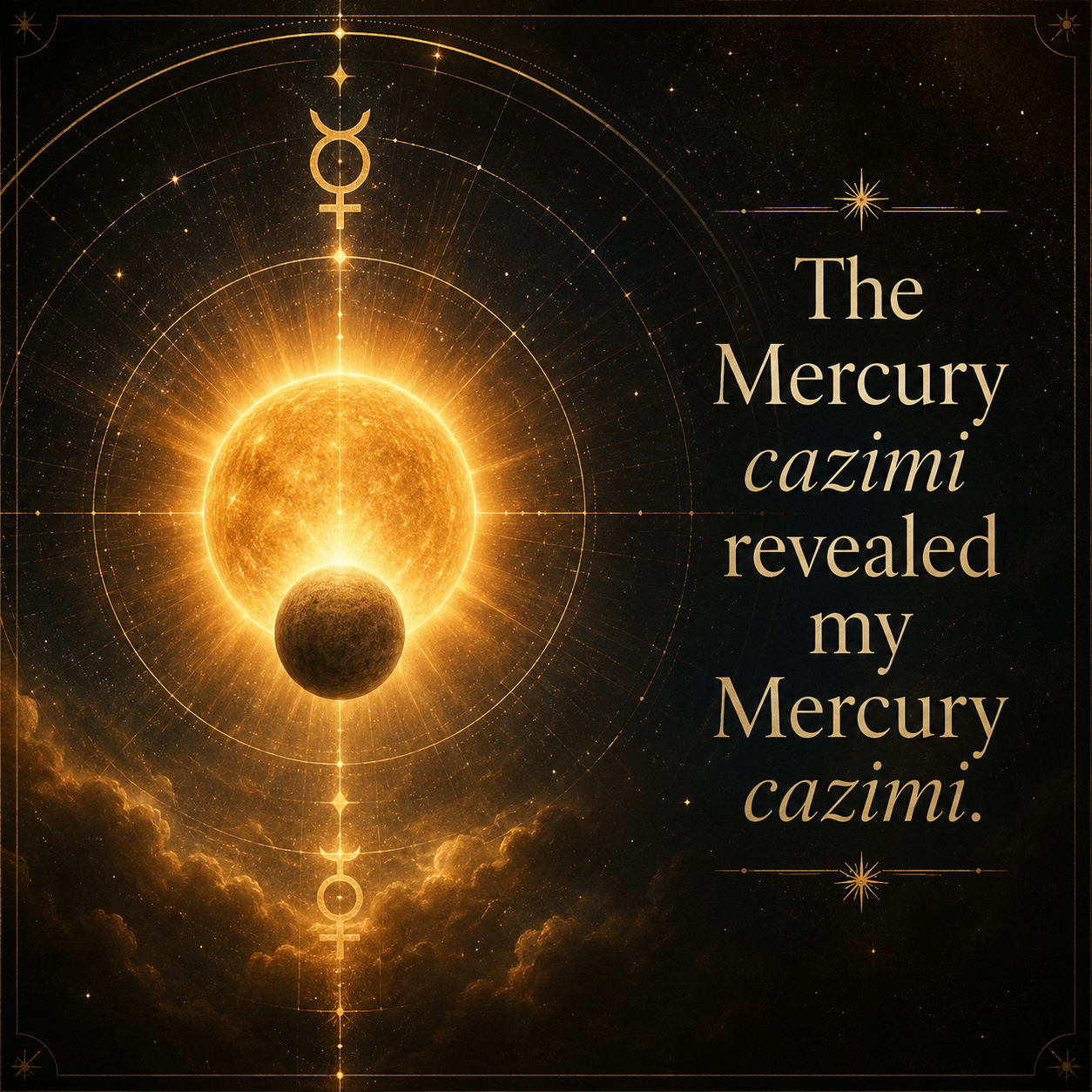
Pilgrimage has taught me that reality speaks through continuity.
Rarely does meaning arrive in a single moment. More often, it gathers quietly through a sequence of seemingly unrelated events until, almost without warning, the pattern reveals itself. Looking back, what once appeared as isolated experiences begin to feel like chapters of the same conversation.
This was one of those conversations.
I had left St Davids on the 12th of May.
The following day, while looking back through photographs and videos from my time there, I found myself returning again and again to a single screenshot:
Venus appearing to crown the celestial Bull.
At first, it was simply a moment of astonishment—an astronomical curiosity beautiful enough to make me preserve it.
But the image refused to leave me.
The symbolism drew me deeper.
Across the ancient world, the heavens were never regarded as empty space filled with lifeless objects. They formed a symbolic language through which the order of creation revealed itself.
The visible reflecting something invisible.
Then, the next day, on the 14th May, the thread continued.
While reading about the current sky, I discovered that Mercury itself was entering a condition known as cazimi
It was a word I had only begun encountering over the previous year. I understood it to signify a moment of clarity or illumination—often spoken of as a particularly auspicious day by astrologers I follow—but I had never truly considered what a cazimi actually was.
Until that moment, I had unconsciously carried a rather modern understanding:
Planet conjunct the Sun = planet in cazimi.
Simple.
Convenient.
Entirely wrong.
Yet, that was when the thought arrived:
"Sun conjunct Mercury... WAIT... I have that in my birth chart!"
It suddenly dawned on me that my own chart contains Mercury conjunct the Sun.
I had known that for many years.
I simply hadn't yet put two and two together.
The more I read, the more captivated I became.
The word derives from the Arabic kaṣmīmī — "as if in the heart."
Rather than being consumed by the Sun, the planet was understood to have entered its very centre.
The medieval image was unforgettable.
The trusted messenger admitted into the private chamber of the king.
Not orbiting the court.
Not merely glimpsing the sovereign.
But entering the very heart.
I was absolutely riveted by what I was discovering, and then a tiny detail appeared that, for a moment, made my heart stop.
In modern astrology, close conjunctions between Mercury and the Sun are often described quite simply.
The medieval astrologers, however, made a profound distinction and were considerably more precise.
A conjunction might span several degrees and unfold across days. A true cazimi, however, was something altogether rarer.
It was not a day.
It was a moment.
Traditionally, the planet must lie within just seventeen arcminutes of the centre of the Sun—less than a third of a single degree, and roughly half the apparent diameter of the Sun itself as seen from Earth.
Ordinarily, a planet drawing too close to the Sun became combust. Its own light disappeared within the overwhelming brilliance of the solar fire.
The cazimi was entirely different.
I had never once measured the precise distance between them.
Slowly, I opened my natal chart.
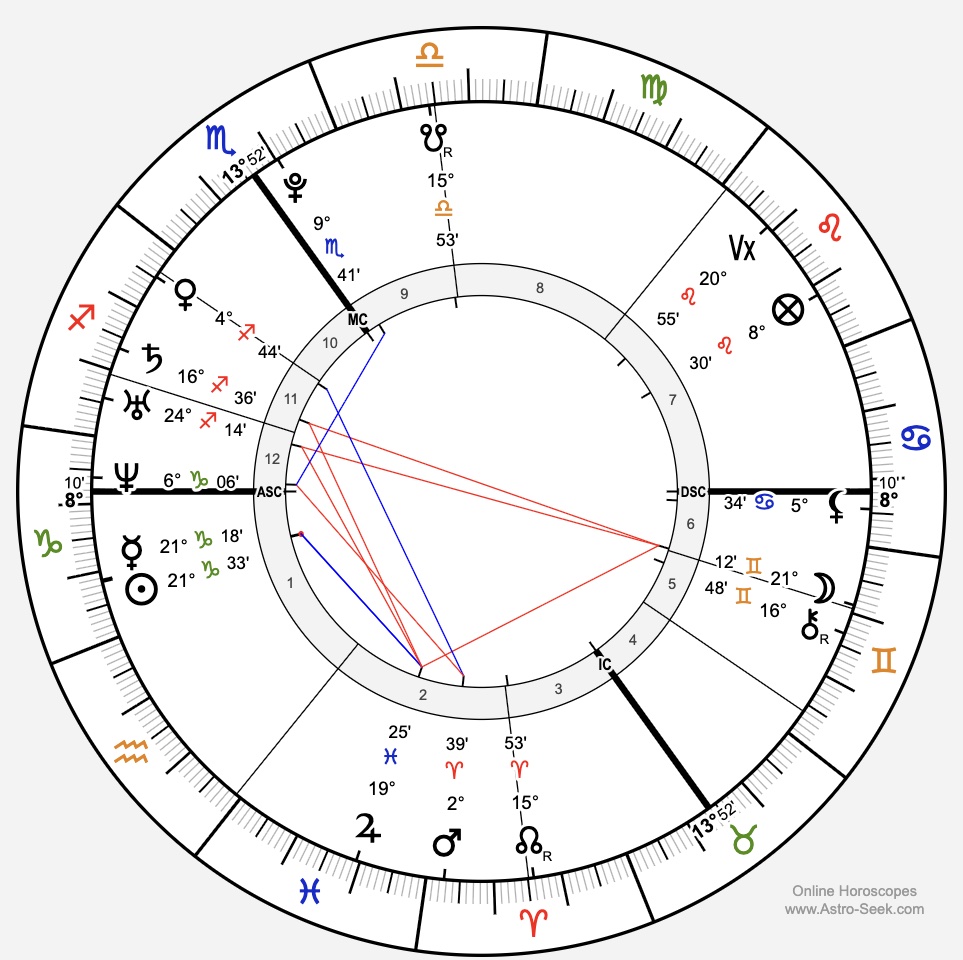
Sun.
21°33' Capricorn.
Mercury.
21°18' Capricorn.
Fifteen arcminutes.
I checked again.
Then once more.
I had been born beneath a true Mercury cazimi.
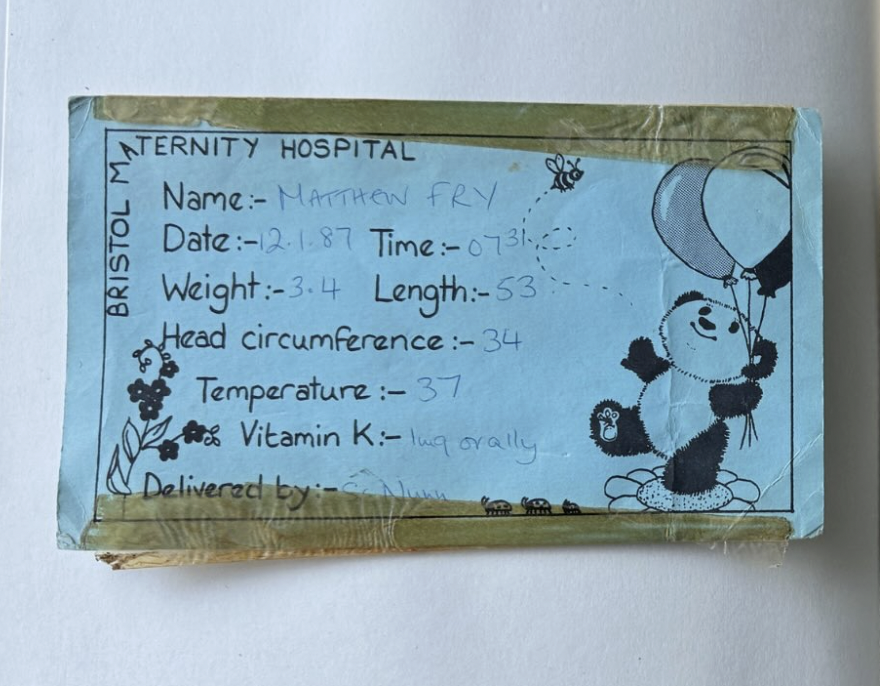
I felt relief, if I'm honest.
But what strikes me most is not simply the discovery itself.
It was the timing.
I had not gone searching through my birth chart looking for hidden meanings.
I had been reading about the Mercury cazimi unfolding in the heavens that very day.
It was that present moment that awakened my awareness of the same condition at the moment of my birth.
The Mercury cazimi revealed my Mercury cazimi.
I simply sat in silence.
Only the day before, I had been contemplating the symbolism of a celestial crown.
Now I found myself reading about the throne room.
First the crown.
Then the sovereign centre.
The continuity spoke for itself.
The more I explored the medieval understanding of the heavens, the more deeply I realised how profoundly our modern imagination has changed.
Today, we often think of the universe as a vast collection of objects moving through empty space.
The medieval imagination inhabited an altogether different cosmos.
It was an enchanted world.
The heavens were alive with correspondence.
Meaning was not projected onto nature.
Meaning was woven through it.
The Sun was not merely another star.
It was the visible image of sovereignty itself.
The organising centre.
The source from which light radiated into creation.
Within that cosmology, the cazimi was one of the most beautiful images imaginable.
The messenger entering the heart of the king.
Not to replace the king.
Not to become the king.
But to receive.
This brought me immediately back to John Dee.
Months earlier, my pilgrimage had begun in London, where I had found myself walking through places deeply connected with his extraordinary life. Dee has often been remembered through modern categories that divide mathematics from mysticism, astronomy from astrology, theology from natural philosophy.
Yet those divisions would have made little sense to him.
For Dee, creation itself formed one coherent whole.
Number, geometry, scripture, the heavens, angels, mathematics and the human soul all belonged to the same living reality.
Knowledge was never merely the accumulation of information.
It was participation in a meaningful cosmos.
Reading about the cazimi, I realised I was not simply discovering an overlooked detail within my birth chart.
I was rediscovering an older way of seeing.
A world in which the visible continually gestures towards the invisible.
A world in which symbols are not arbitrary inventions but expressions of a deeper order.
A world that speaks.
Since beginning this pilgrimage, I have noticed that reality often arranges itself with extraordinary coherence.
Not because every event carries hidden meaning.
But because, every so often, life gathers a sequence of correspondences whose beauty becomes impossible for me to ignore.
The Venus crown.
The Mercury cazimi.
My own Mercury cazimi.
The throne room.
And yesterday, I finally recognized the solar halo I'd unknowingly captured in May.
None of these experiences required me to force a connection between them.
The connection revealed itself.
Perhaps that is why this discovery affected me so deeply.
At first, I thought I had found an intriguing astrological detail.
Instead, I encountered a meditation upon sovereignty.
Not sovereignty over others.
Inner sovereignty.
The messenger enters the throne room not to proclaim his own wisdom, but to listen before carrying the message back into the world.
The symbolism has remained with me ever since.
Looking back now, I can see the rhythm that had quietly begun unfolding.
The pilgrimage first drew my attention towards the symbolism of sovereignty.
Then it led me into the heart of the Sun.
Afterwards I was called back to St Davids to continue the pilgrimage, where I found myself standing at St Non's Well beneath the Summer Solstice Sun, the longest day of the year. This will be the next entry in the Pilgrim's Journal.
In many ways, the pilgrimage truly began there. Without Woodland Glade to return to, I stepped fully into a new way of life beneath the Summer Solstice Sun itself, standing at its greatest height above the Earth.
The crown.
The throne.
The heart of the Sun.
The halo of the Sun.
The Sun at its greatest height above the Earth.
Only then did the pilgrimage lead me to the sacred well.
I could never have arranged such a sequence.
I could only walk it.
Pilgrimage, I now know, is not merely a journey across landscapes.
It is an education in attention.
Creation has not ceased speaking.
Our task is simply to become quiet enough to hear its language once again.