
The Divine Pilgrimage
Pilgrim's Journal — The Age of the Water Bearer
Pilgrim’s Journal
Every pilgrimage has its moments of revelation. This one, it seems, was revelation from the very beginning.
Mine began not with coincidence, but with divination.
From the very outset, this journey was undertaken with the understanding that the universe is alive, intelligent, and participatory. The signs were not so much sought as awaited. Again and again, life demonstrated that it possessed an astonishing capacity for symbolism, timing, and coherence.
What continues to astonish me, however, is not that the universe speaks through my life, but the extraordinary precision with which it does so.
These past weeks have felt less like the closing pages of a journal and more like the crescendo of an orchestration decades in the making.
As Mercury retraced its steps across the heavens, I found myself bringing the first chapter of this pilgrimage to completion. One by one, the final entries emerged: The Crowned Sky—with Venus crowning the Celestial Bull and the Solar Halo discovered only in retrospect—Cazimi, "as if in the heart" of the Sun itself, and finally, St Non's Well.
Sovereignty.
The throne room.
The sacred spring.
And above it all, as though waiting patiently for me to catch up to the story being told, the heavens revealed the final punctuation mark.
André Barbault's Basket.
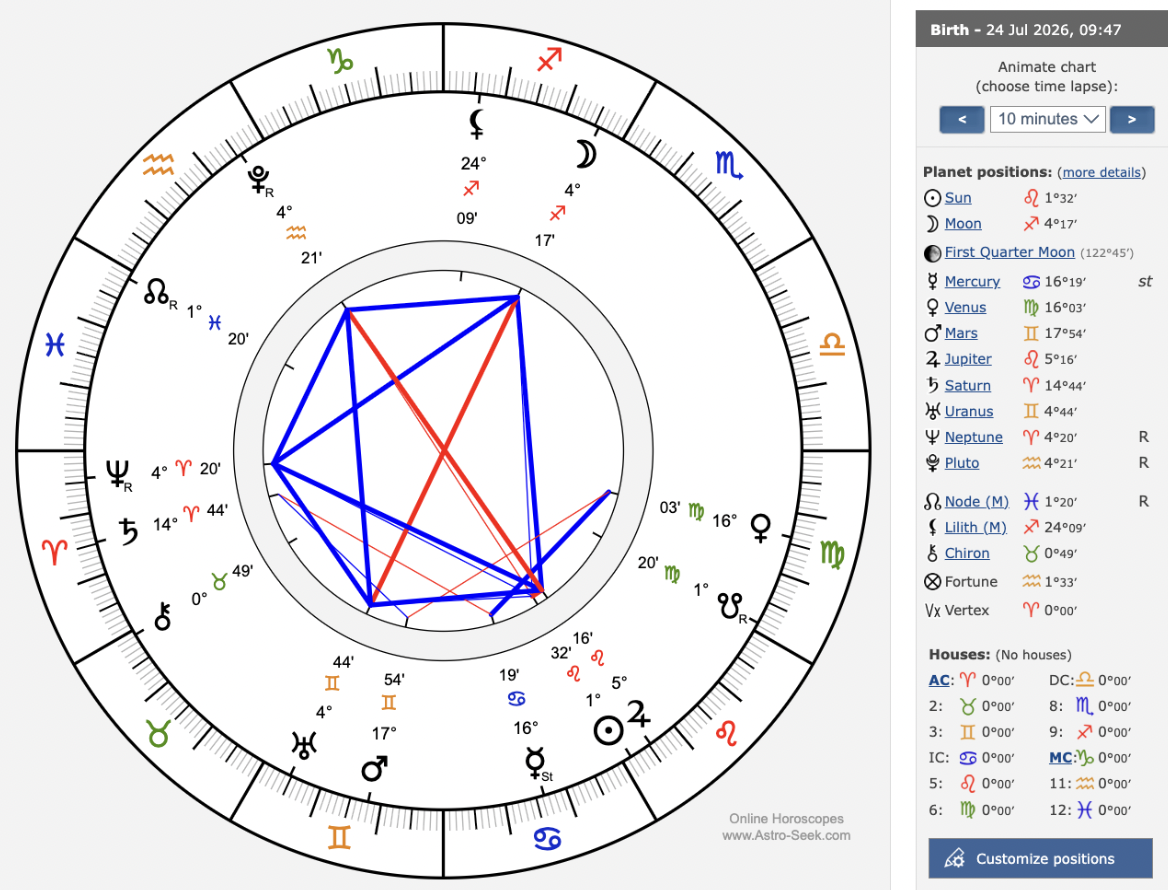
A symbol gifted to the world long before my birth, now completing its handle at the precise degree of my natal Venus.
4° Sagittarius
The Moon arriving at four degrees.
And my Venus, precisely where it has always been: Sagittarius 4°44'.
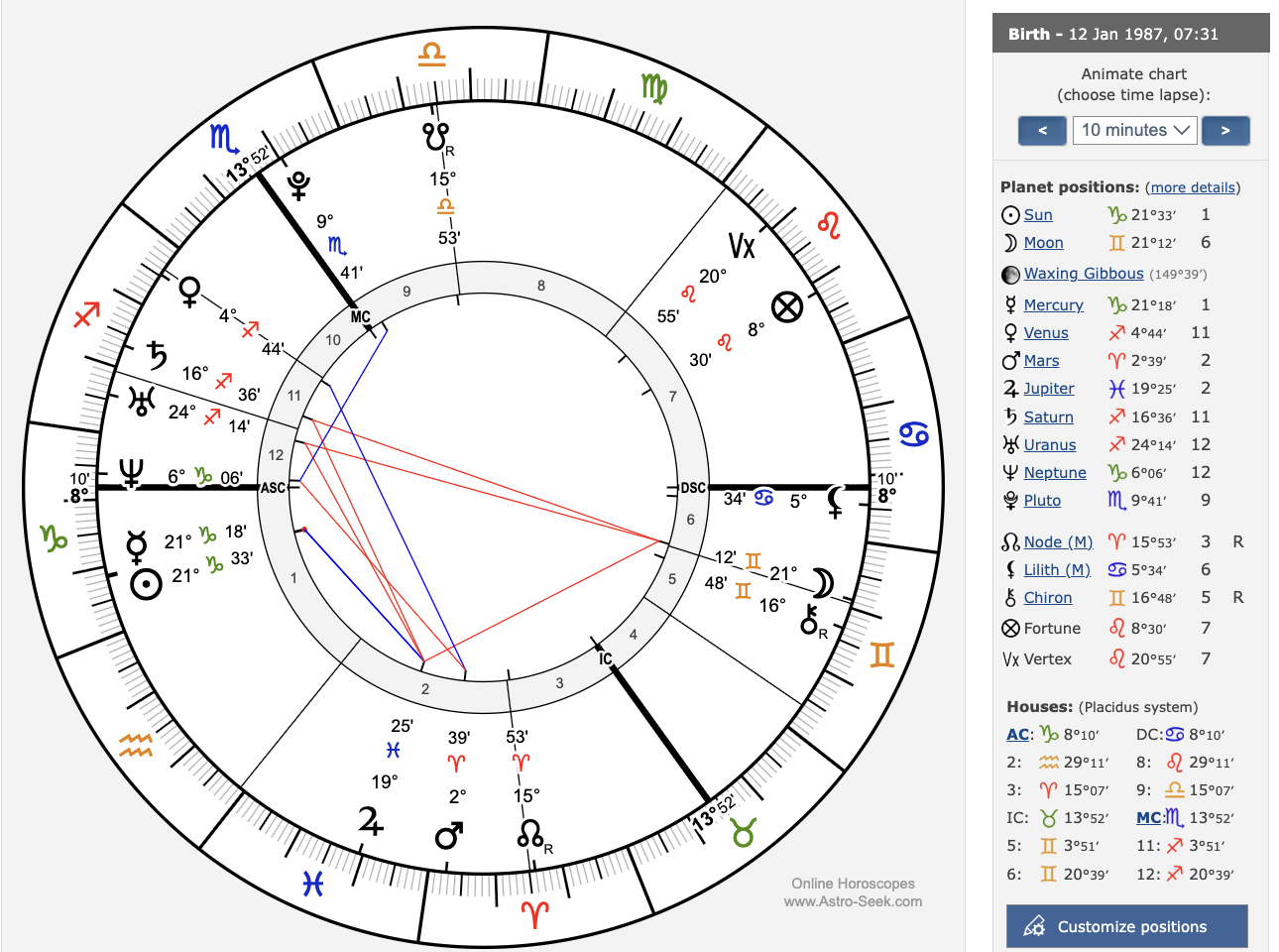
I confess, there is something about those fours gathered together that delights me completely.
After twenty years of symbols, synchronicities, and impossible timing, I should perhaps be accustomed to such things by now.
Somehow, the universe still manages to exceed itself.
Not subtlety.
Poetry.
And as I contemplated Barbault's Basket suspended across the heavens, another image emerged.
At first, I saw it simply as a celestial basket, as I had been taught to.
But suddenly, I saw something else.
Not a basket.
A bucket.
And with that, the symbol expanded.
For what is a bucket if not a vessel for drawing water?
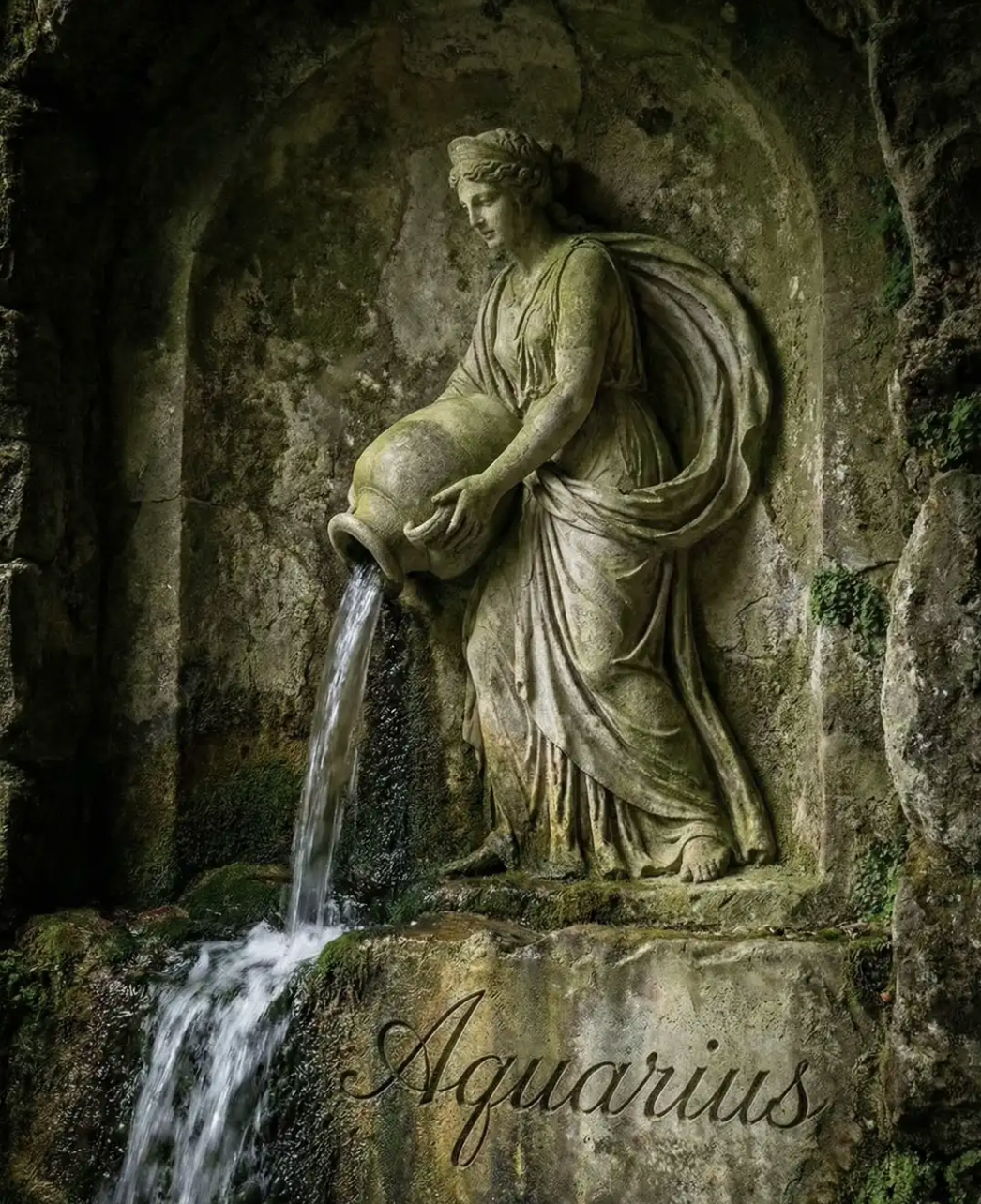
And what is Aquarius if not the Water Bearer?
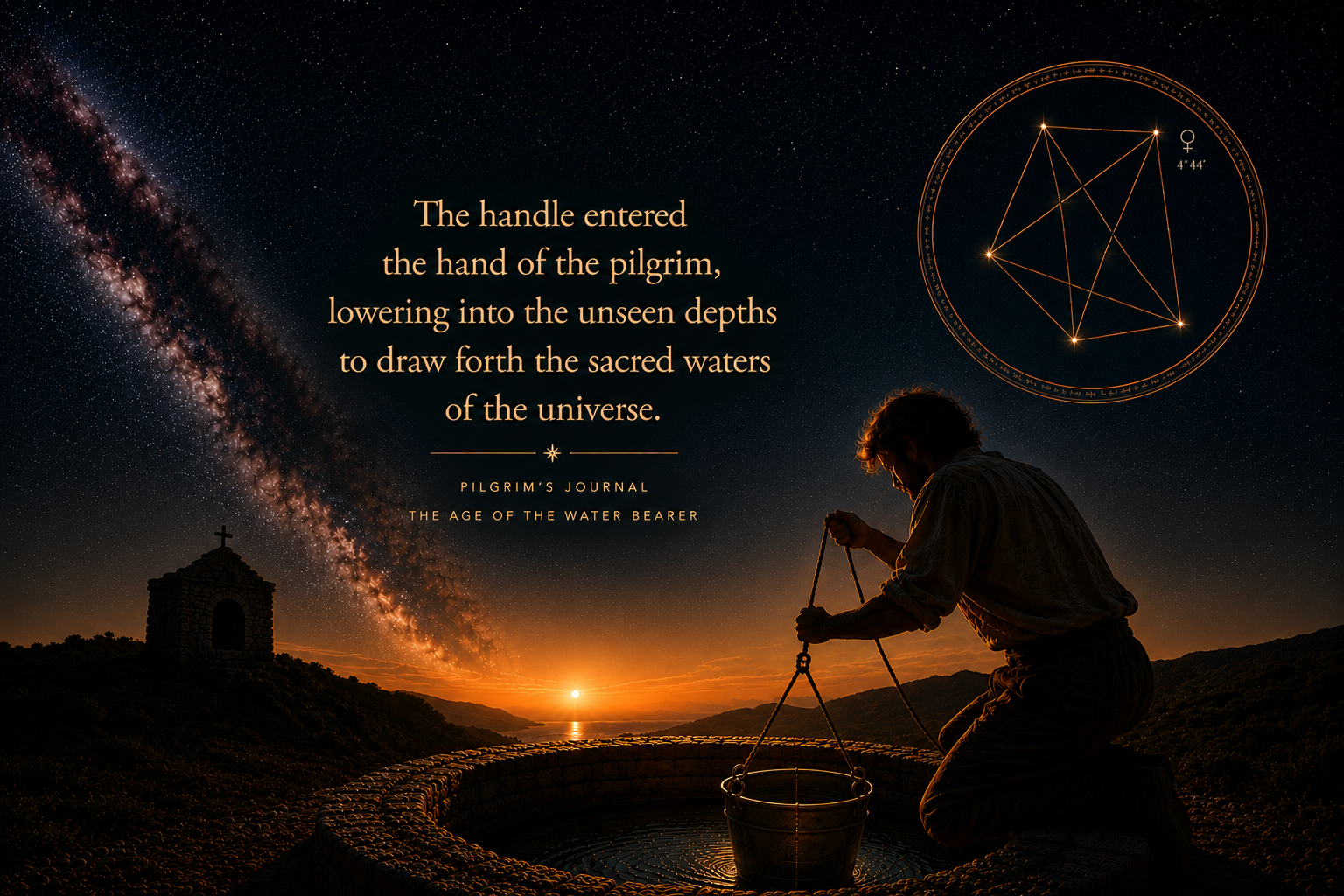
In an instant, the handle ceased merely supporting a container and instead entered the hand of the pilgrim himself, lowering into the unseen depths to draw forth the sacred waters of the universe.
There is something profoundly fitting about this for the dawning Aquarian age.
Perhaps the Water Bearer is the one entrusted with carrying the waters of life from one age into the next.
Suddenly, Barbault's symbol no longer seemed complete in itself. It appeared to be waiting.
Waiting for the age to arrive.
Waiting for the vessel to reveal itself.
Waiting for the hand that would recognise both.
There is, perhaps, one final thing worth saying about Barbault's Basket.
It only happens once.
The moment André spent a lifetime pointing towards has now entered history. The planets have gathered. The handle has formed. The fourth degree has been reached. And even as I write these words, the configuration is already beginning to dissolve back into the onward movement of time.
In that sense, the Basket is complete.
It will never again exist in precisely this form.
Yet perhaps that was always its purpose.
For if the Basket belongs to one moment, the Bucket belongs to what comes next.
André saw the gathering.
We inherit the waters.
And perhaps that is why I find myself writing these words now, beneath a sky that will never quite be repeated, with the Moon at the precise degree of my natal Venus, reminded that symbols, too, may have destinations of their own.
The Basket has done what it came here to do.
It gathered the heavens together for a single moment in human history.
What happens next belongs to us.
What moves me most is that none of this symbolism was constructed.
It evolved.
Nothing was forced. Nothing was invented. Each symbol emerged naturally from the terrain of the pilgrimage itself, revealing its relationship to the others only when the time was right.
The same can be said of the pentagram.
Long before I understood Venus' synodic dance across the heavens, before I encountered the Rose of Venus or stood beneath the skies of Woodland Glade participating in a Venus ritual, I had already marked myself with her sign.
Within months of my awakening, I had the pentagram tattooed upon my body.
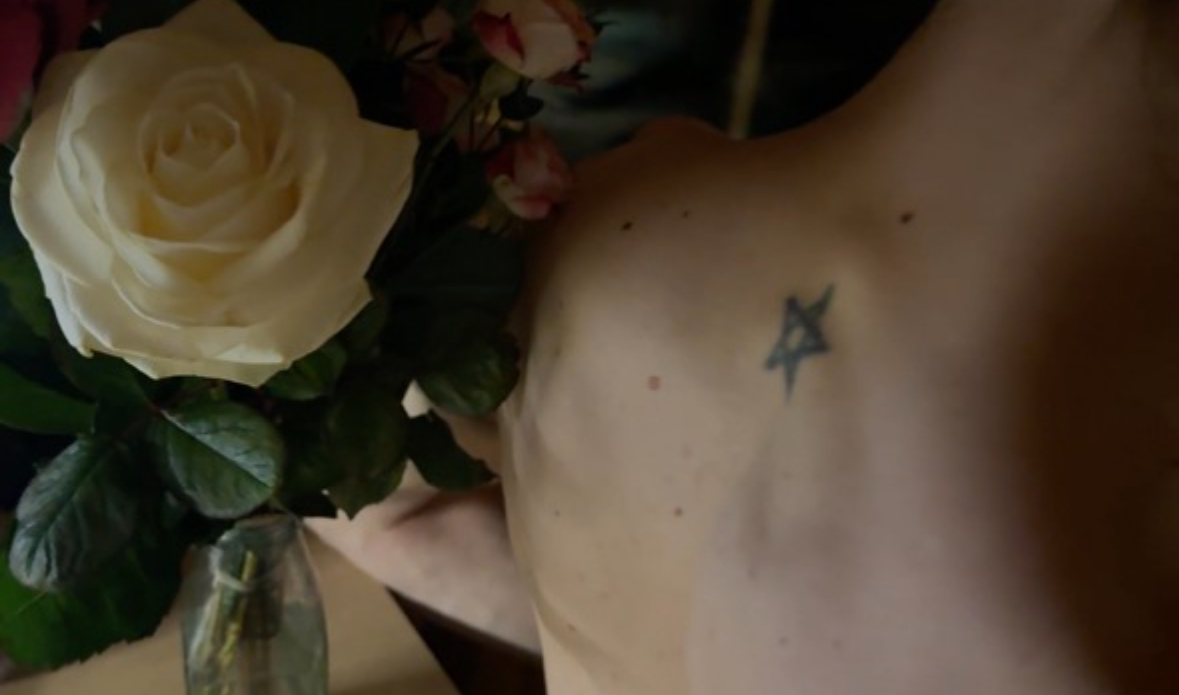
I did not know then that Venus traces a five-petalled star through the heavens every eight years.
I did not know I would one day witness the Venus Star awakening within my own life.
I did not know I would eventually meet the Rose of Venus and recognise it with the peculiar familiarity reserved for ancient things returning home.
And yet, there it was.
The mark had preceded the understanding.
Or perhaps the understanding had simply arrived later.
Layer upon layer, the continuity reveals itself.
The pentagram.
The Rose.
Venus at 4°44' Sagittarius.
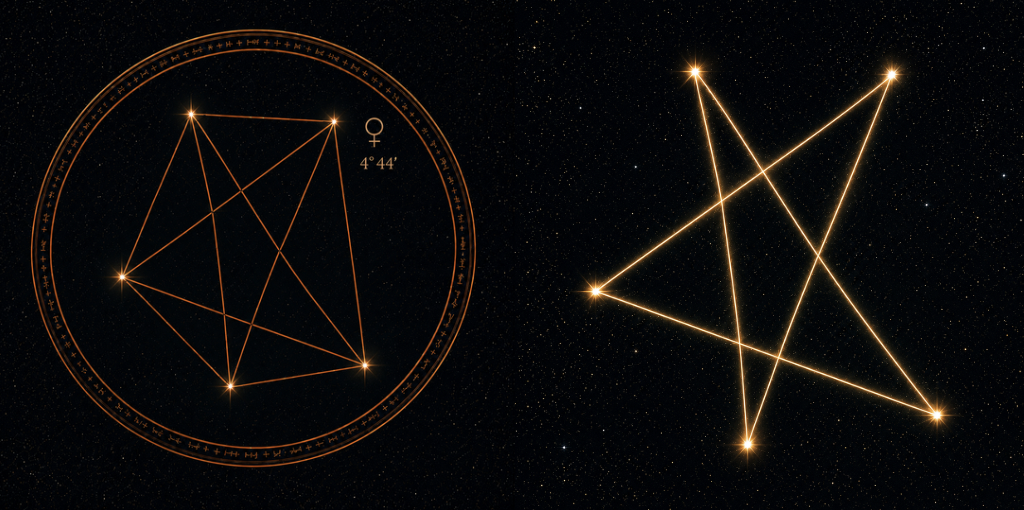
Barbault's Basket completing its handle upon that very degree.
The Water Bearer drawing from sacred waters.
There is a profound difference between constructing meaning and discovering it.
Pilgrimage has taught me the latter.
And so I cannot help but wonder whether André himself understood that his symbol was unfinished.
Not incomplete.
Awaiting.
For perhaps every great symbol belongs not only to the age in which it is born, but to the age in which it flowers.
André spoke of a momentous turning in human history. Of thresholds. Of endings and beginnings.
Perhaps his Basket was always destined to become a vessel once the Age of Aquarius dawned.
Perhaps its handle was always meant to find the hand of the Water Bearer.
And perhaps—given the peculiar architecture of my own natal chart, my lifelong relationship with Venus, and the trail of symbols that have accompanied me since childhood—I was always meant to see it.
That sentence will undoubtedly sit uncomfortably with some.
So be it.
Truth has never sought permission from consensus.
If this pilgrimage has revealed anything, it is that the universe is vastly more intelligent, intimate, and participatory than most people have ever dared to imagine.
It speaks in symbols.
It remembers what we forget.
And every so often, it gathers a life around itself until that life becomes a focal point through which a new age is already beginning to recognise itself.
Perhaps that is all any of us are ever asked to do: to recognise, as best we can, our appointed place within the pattern—whatever that place may be—and to stand there faithfully.
The pilgrimage, it seems, was never leading me towards a destination.
It was teaching me how to recognise the age I had been born to witness.