
The Divine Pilgrimage
Pilgrim’s Journal — St Davids: The Crowned Sky
Pilgrim’s Journal
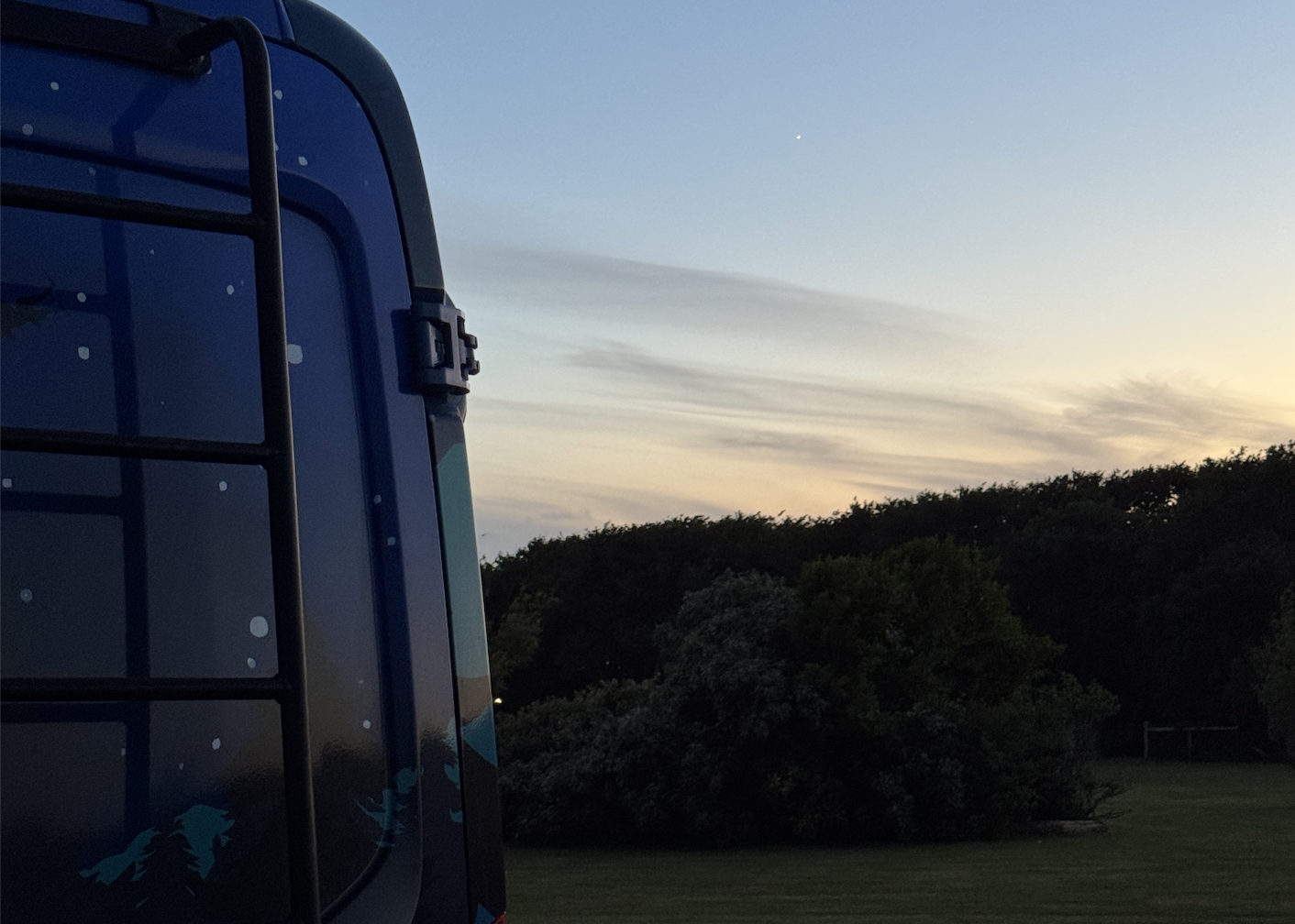
As I walked back across the field towards the Pilgrim's Wagon, night was gently settling over St Davids.
Almost absent-mindedly, I looked up.
There, presiding above the fading horizon and the dark outline of Carn Llidi, was a single brilliant point of light.
"Ah... Venus."
I hadn't consciously noticed her since she had reappeared as the Evening Star. I knew this coincided with the beginning of the Fire Horse year and had planned to look out for her at Uffington, but the sky had other ideas.
Since then, I simply hadn't thought to look up and find her again.
Seeing her again felt strangely reassuring, like unexpectedly connecting with an old friend.
Then a small doubt crept in.
"What if it isn't Venus?"
I smiled to myself, reached into my pocket and opened a stargazing app.
It was Venus.
But what astonished me wasn't the confirmation.
It was where she was.
The app showed her resting directly above the celestial Bull.
To my eyes, she wasn't simply beside Taurus.
She crowned it.
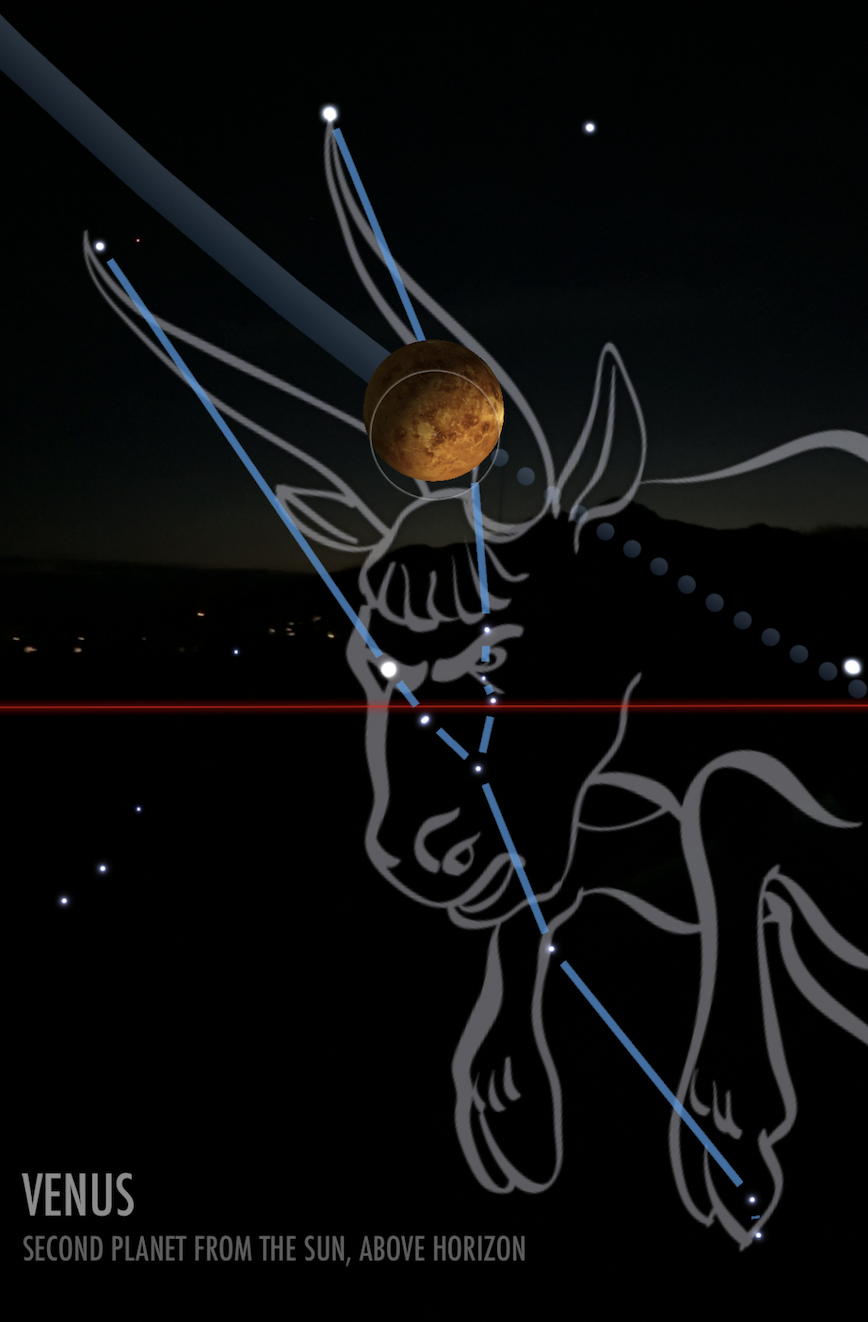
The image stopped me in my tracks.
It wasn't an interpretation I had to force.
It was simply what I saw.
A single brilliant light poised above the brow of the celestial Bull, exactly where countless ancient images have placed a radiant jewel, a solar disc, or a star.
Looking at the screen, I realised I already knew that symbol.
I'd encountered it many times before in ancient art and mythology—the Bull bearing a light between its horns—but I'd never expected to witness something so visually similar for myself.
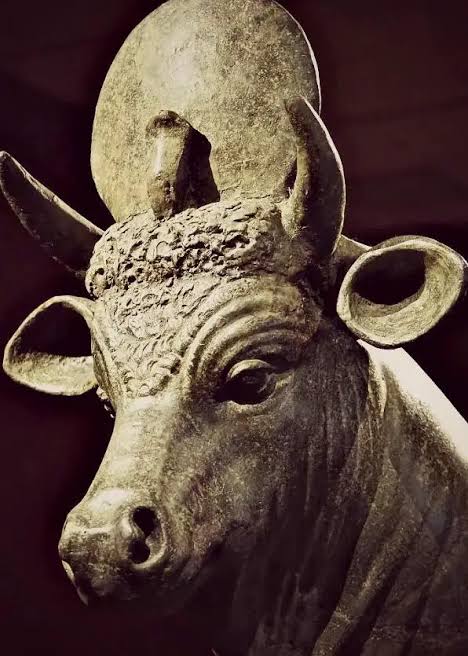
Standing there beside the Pilgrim's Wagon, it felt as though the twilight sky had briefly remembered an ancient language.
Whether that was simply the beautiful geometry of the heavens or something more, the image spoke for itself.
It stirred something older than memory.
For thousands of years, our ancestors looked up at these same stars.
They gave them stories.
They saw the Bull.
They watched Venus disappear and return as the Morning and Evening Star.
They related to the sky not merely as astronomy, but as a living theatre of meaning.
Standing there, phone in hand, I felt an unexpected continuity with them.
They didn't look upwards merely to catalogue distant objects.
They looked for relationship.
So did I.
In that quiet field, with Venus poised above the Bull, I experienced the moment as a form of communication.
Not through words.
But through symbol.
The image itself was the message.
That has become one of the quiet gifts of pilgrimage.
Not collecting signs.
But recognising continuity.
Woodland Glade had spent nine years teaching me how to enter into relationship with a place.
The pilgrimage had shown me that relationship was never confined to one valley.
It could grow wherever I was willing to slow down, pay attention and enter into conversation with the living world.
Then, standing beneath Venus that evening, another quiet realisation arrived.
The conversation didn't end at the horizon.
Looking up at the heavens no longer felt separate from looking towards Church Rock, or watching the corvids at dawn, or discovering a shell outside St Govan's Chapel.
It all belonged to the same conversation.
The Earth and the sky no longer felt like separate realms of experience.
They had become expressions of one living universe.
Looking back now, what stays with me isn't whether Venus was objectively crowning the Bull in some cosmic sense.
It's that I looked up.
I recognised her.
I questioned myself.
I checked.
And what I discovered was even more beautiful than I had imagined.
There was something deeply grounding about that sequence.
Perception.
Verification.
Wonder.
Not certainty searching for evidence.
But attention rewarded with astonishment.
The following day, the image returned to earth.
I had climbed one of the ancient carns near St Davids, still carrying the memory of Venus crowning the Bull in the twilight sky.
From the summit, the landscape opened around me.
Sea.
Fields.
Distance.
Stone.
Everything spacious and quietly alive.
Looking out across the landscape, I found myself smiling.
A couple of days earlier, while returning from the headland, I'd happened to glance upwards and noticed two vapour trails crossing high above the campsite.
They formed a great X in the sky.
Better still, it appeared to be hanging directly above the Pilgrim's Wagon.
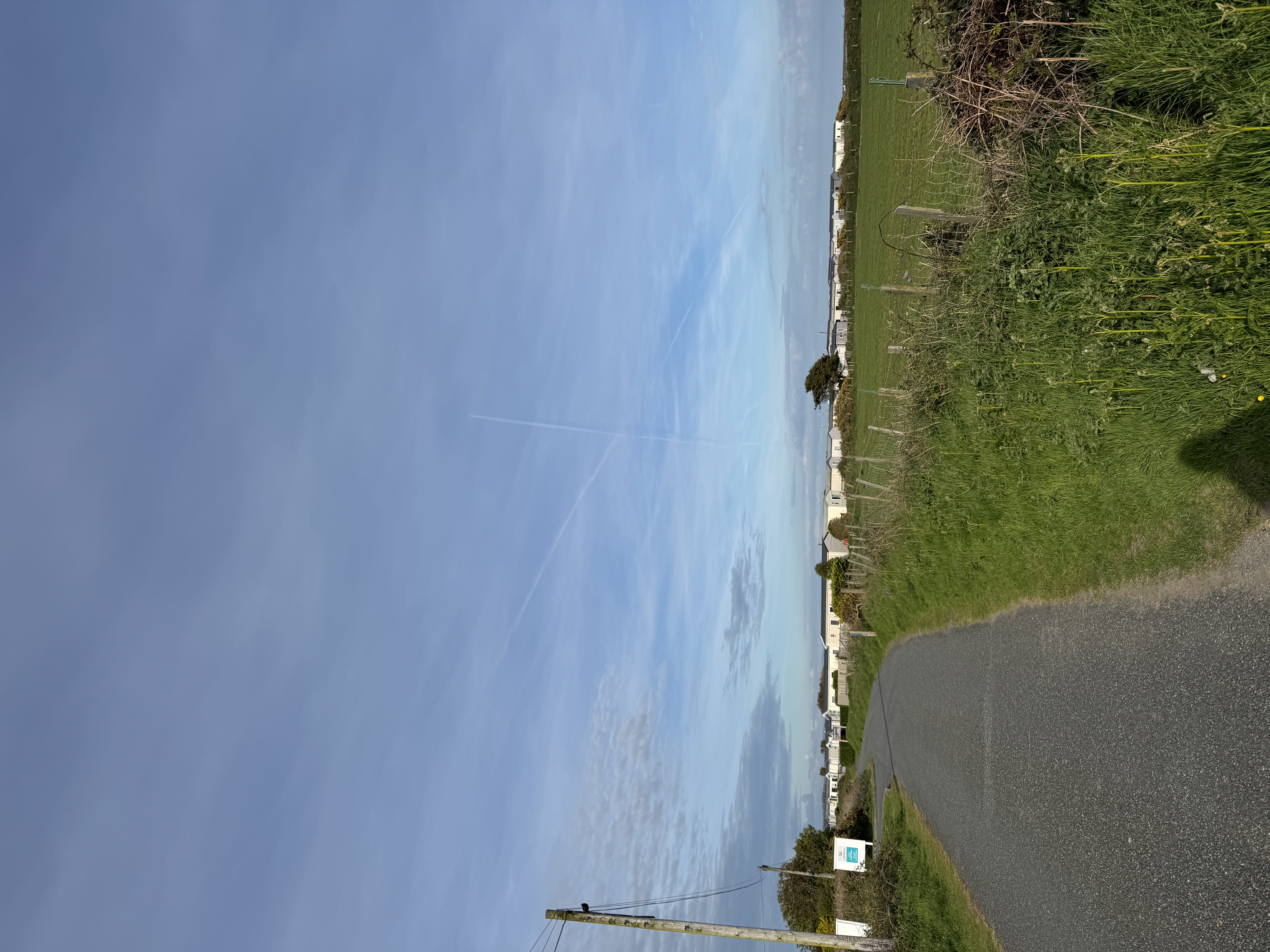
Given that the Cerulevan Cruiser carries two X-Wings upon its rear doors, I remember laughing out loud at the time.
Of all the fields in Pembrokeshire, it seemed only my van had been singled out for aerial accompaniment.
Standing upon Carn Llidi, I could finally appreciate the wider landscape in which that moment had taken place.
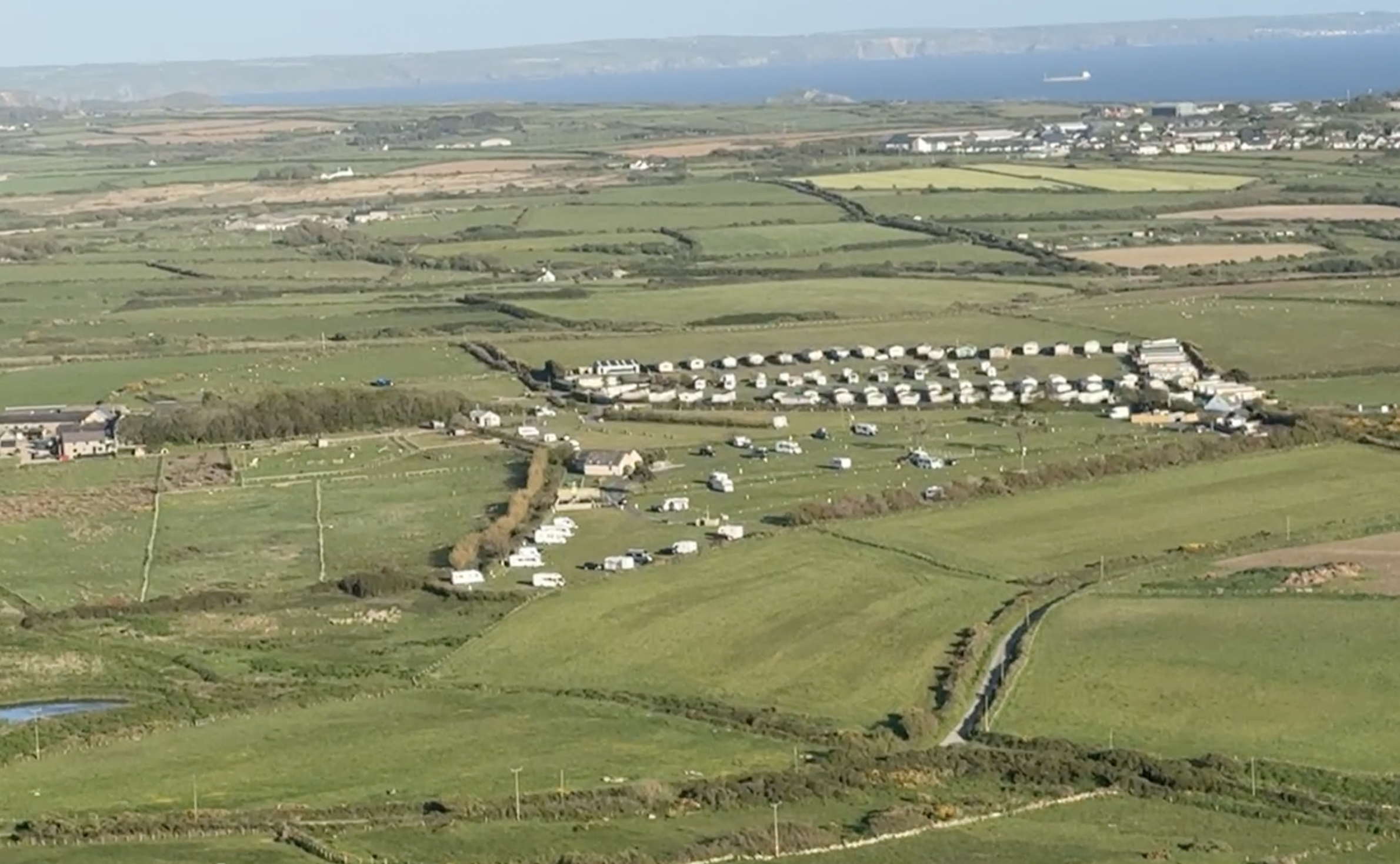
The pilgrimage, it seems, has developed a fondness for placing things precisely where they need to be.
Eventually, I began my descent.
And waiting in the very same field beside which I'd photographed the great X, there she was.
A beautiful horned cow standing beside the path.
She was magnificent.
Her coat was the colour of chestnuts in the evening light, and a great sweep of hair fell across one eye as though the wind itself had been styling her for centuries.
Her horns curved elegantly towards the heavens, while her gaze remained impossibly soft and patient.
There was something almost Venusian about her.
Not simply beautiful.
Beautiful in the way myths must have once felt.
Timeless.
Entirely herself.
After the image of Venus crowning the Bull, meeting her felt almost too perfect.
Not a symbol in an app.
Not a constellation.
A living being.
Warm.
Present.
Breathing.
The heavenly image had become earthly.
I moved towards the fence slowly, smiling, and offered her a few flowers.
There was something wonderfully tender about it.
Venus above.
The horned one below.
The crowned Bull in the sky.
The most beautiful cow I had ever met, receiving flowers at the edge of a Pembrokeshire field.
For a moment, the whole thing felt complete.
Not because I understood it.
But because I was participating in it.
Looking back now, I don’t think the sky and the cow were separate experiences.
One prepared the image.
The other embodied it.
The first asked me to look up.
The second asked me to look gently into the eyes of the living world.
Together they reminded me that symbol is not something distant from life.
Sometimes it walks towards us.
Sometimes it waits beside a fence.
Sometimes it accepts flowers.
And sometimes, if we are fortunate, heaven and earth briefly meet in the gaze of a gentle creature who has no idea how sacred she seems.
I thought that was where this story ended.
It wasn't.
Today, while preparing for publication, I found myself searching through old photographs from that first week in St Davids, looking for a suitable image to accompany this entry.
I had already written in-depth about Venus crowning the Bull.
I had spent days reflecting upon symbols of coronation, both earthly and celestial.
And then I found it.
A photograph I had taken months ago.
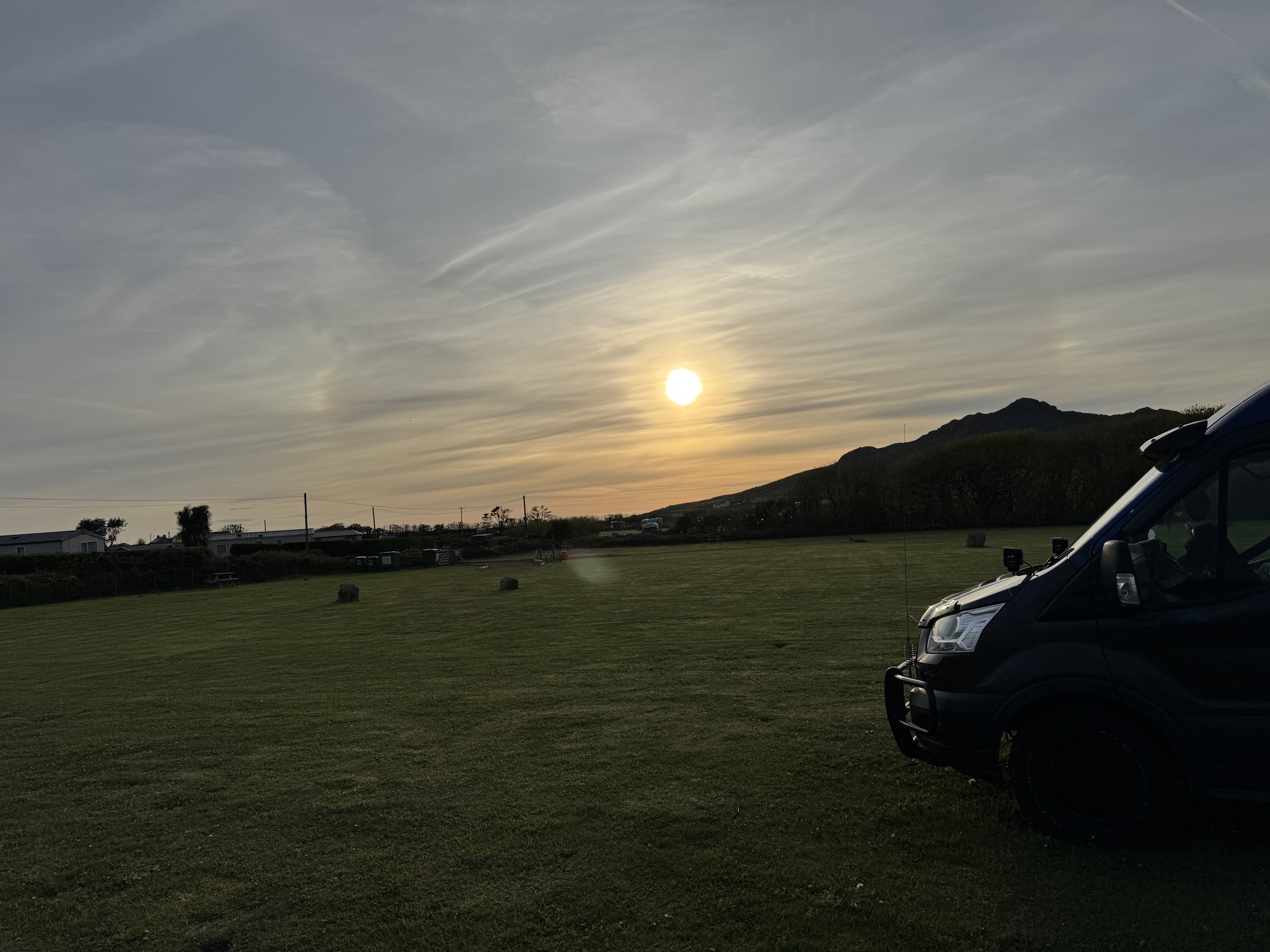
I remembered why I had stopped to capture it. A fragment of rainbow had appeared in the evening sky, and I wanted to include the Pilgrim's Wagon in the same shot beneath the sunset.
I recorded a video in awe of the fragment of colour kissing the sky, remembering the rainbow that had greeted me on the day I arrived.
What I had never noticed was what had been waiting at the centre of the photo I took all along.
It wasn't a rainbow.
It was a solar halo.
And there, suspended above Pembrokeshire, the Sun itself appeared crowned.
I sat back in silence.
Until today this entry had been called The Crown of Venus.
Yet, without my knowing it, the pilgrimage had preserved another crown for me to discover months later.
First Venus crowned the Bull.
Then, after descending the carn, a horned cow waited patiently beside the path.
And now, today, I discover that the Sun itself had been wearing its own crown, too.
Only yesterday, I found myself learning about the Rider who wears many crowns.
I can't help but smile at the timing.
Once again, the experience came first.
Understanding followed later.
That has become one of the great lessons of pilgrimage.
Life rarely presents itself as a completed picture.
More often, it places the pieces gently into our hands and waits.
Sometimes for days.
Sometimes for months.
Occasionally for years.
And then, when the moment is right, it reveals that it knew the shape of the story long before we did.