
The Divine Pilgrimage
Pilgrim’s Journal — St Davids: Arthur's Quoit
Pilgrim’s Journal
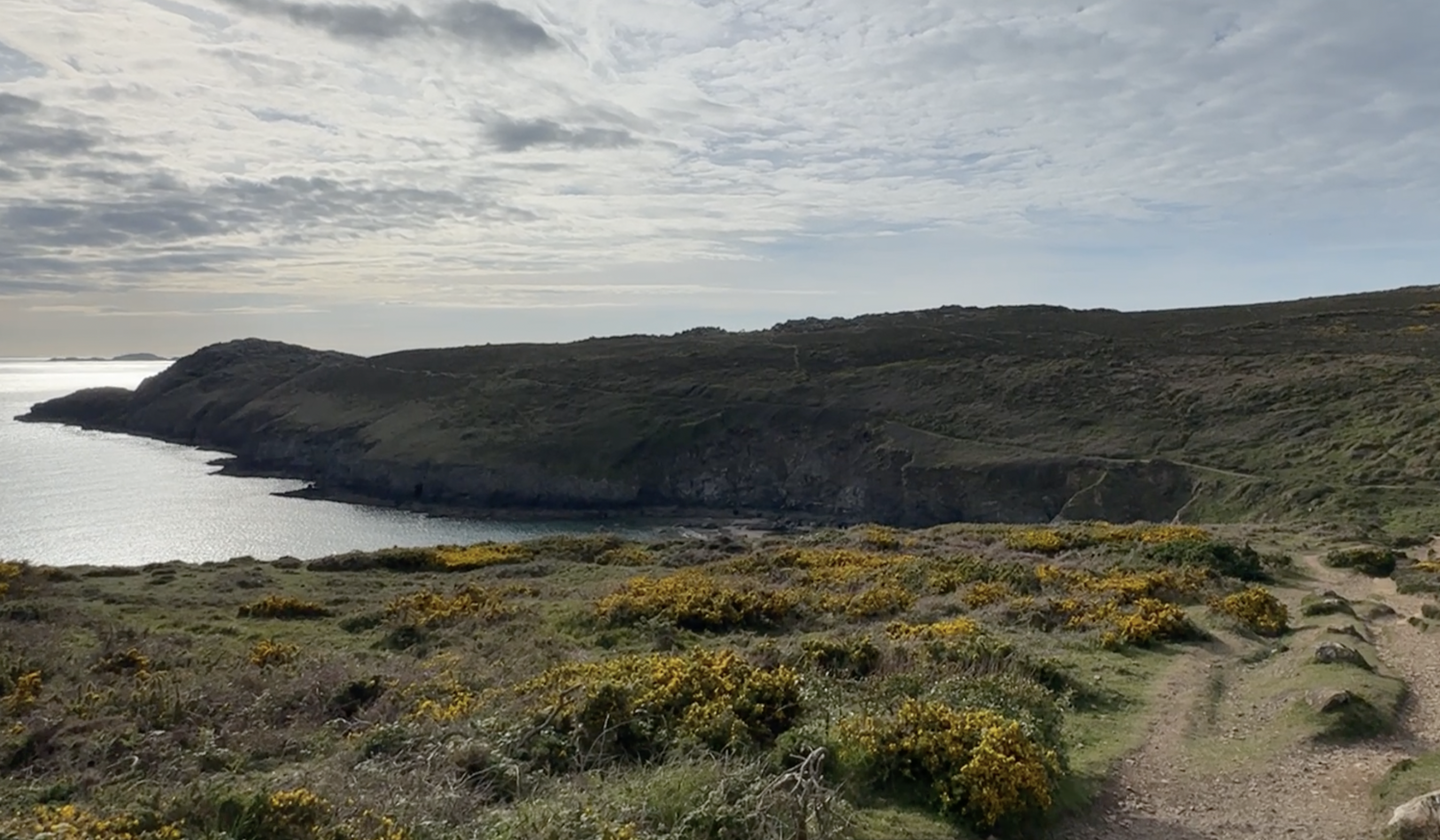
The coastal path to Arthur's Quoit first carried me across St David's Head.
Before I reached the ancient burial chamber itself, I found myself slowing amongst a landscape that seemed to hold time differently.
The first thing I noticed was the great earthwork stretching across the headland, enclosing the ancient settlement beyond.
Crossing it felt like passing through an invisible threshold.
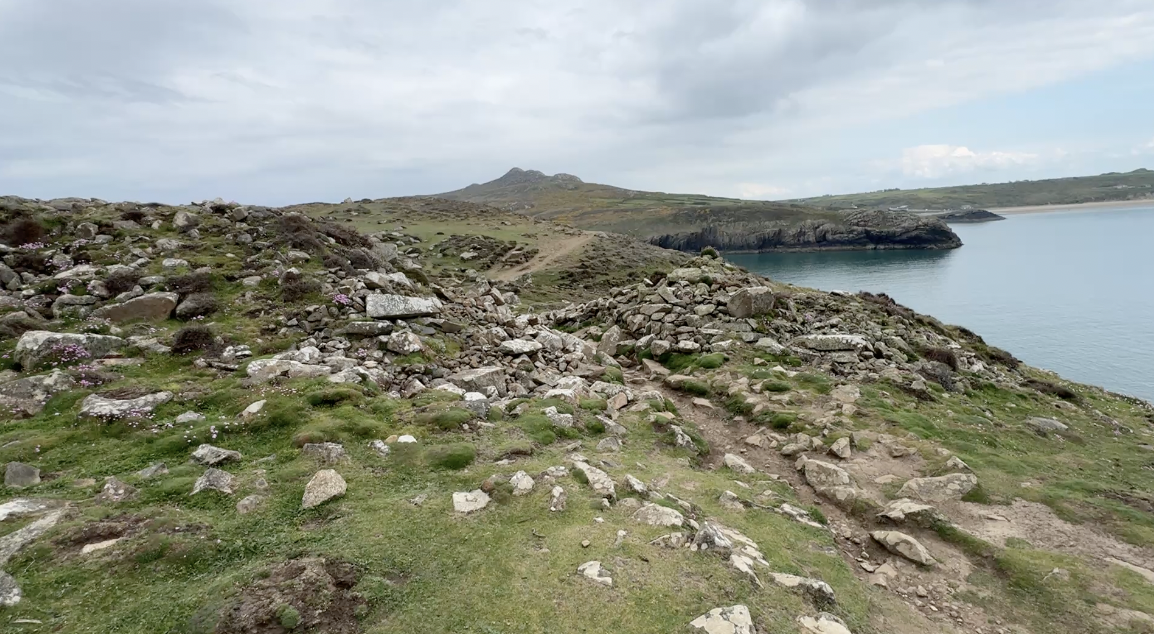
On the other side lay the remains of Iron Age hut circles.
Perfect circles of stone, still quietly resting upon the headland after more than two thousand years.
It was spring.
Wildflowers had filled the old foundations with colour, softening the ancient stones with blues, pinks and white blossoms.
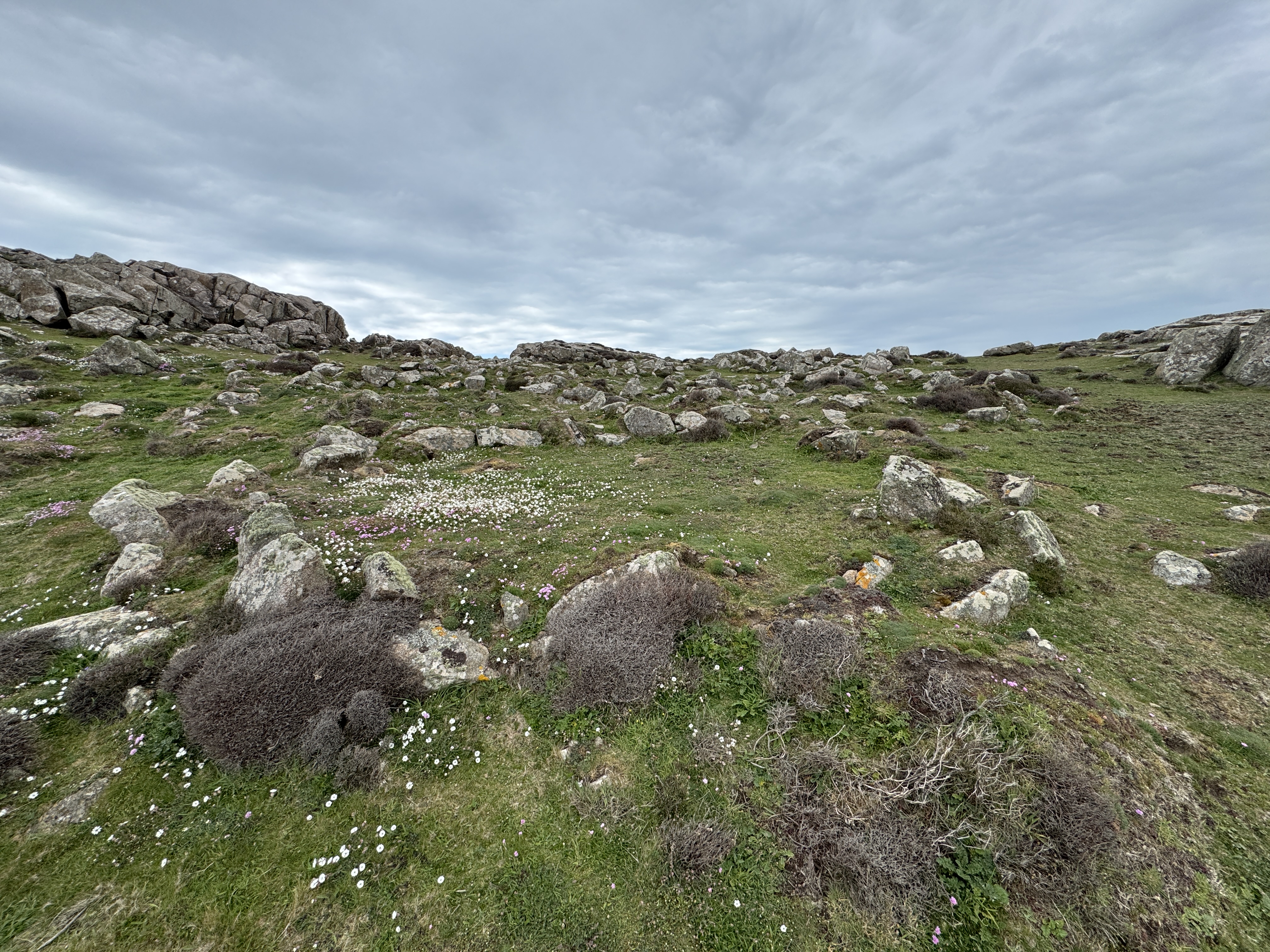
I wandered slowly amongst them before eventually sitting down.
There was no one else there.
Only the wind.
The sea.
The birds.
I found myself imagining the families who had once called this place home.
How extraordinary it must have been to wake each morning to this view.
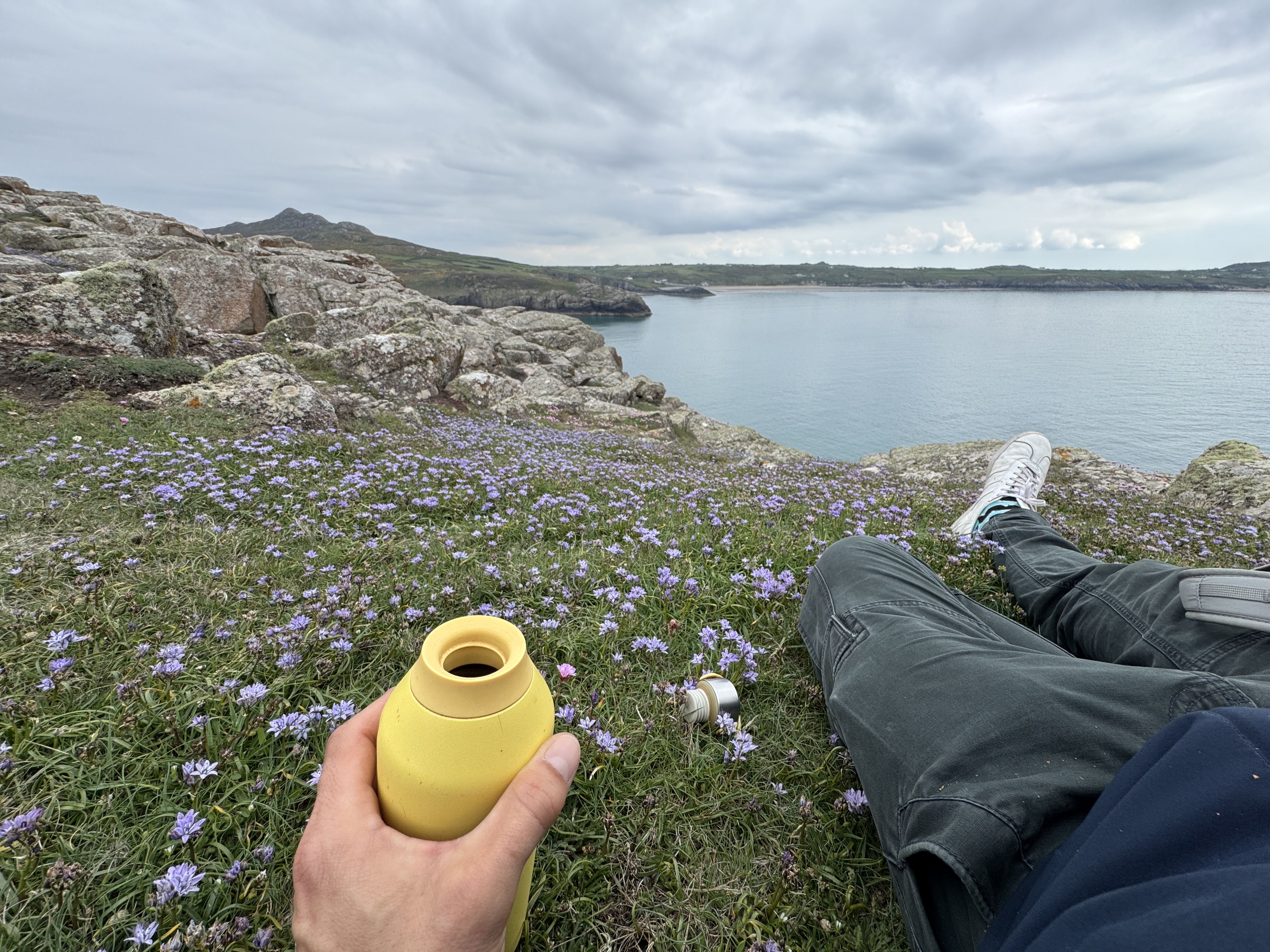
The cliffs.
The endless sea.
The changing skies.
Of course, they would have known hardship too.
Storms.
Cold winters.
Lives unimaginably different from my own.
Yet what surprised me most wasn't how different they felt.
It was how familiar.
Sitting amongst those little circles of stone, I didn't feel like an outsider looking back through history.
I felt like a kindred spirit.
Not because I believed I'd somehow lived there before.
Simply because, for a little while, the centuries seemed to soften.
Their world and mine briefly overlapped.
The feeling caught me completely by surprise.
Time no longer felt like a wall separating us.
It felt more like a landscape we were both sharing.
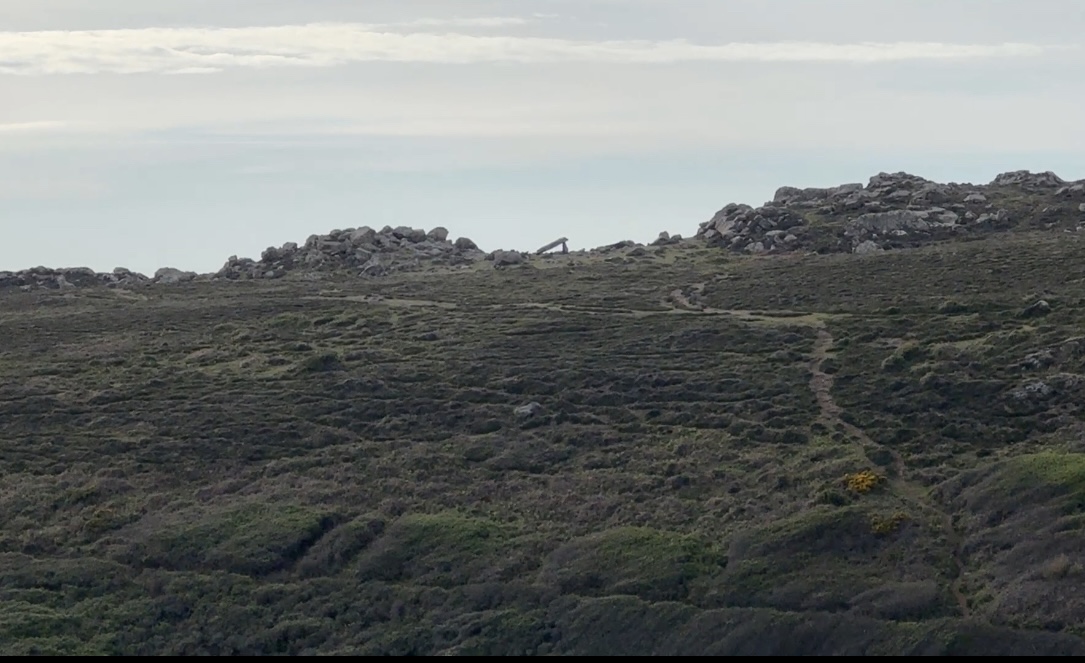
Eventually I rose and crossed back over the ancient earthwork, making my way towards Arthur's Quoit.
I knew roughly where it was.
Then, almost without warning...
"There you are."
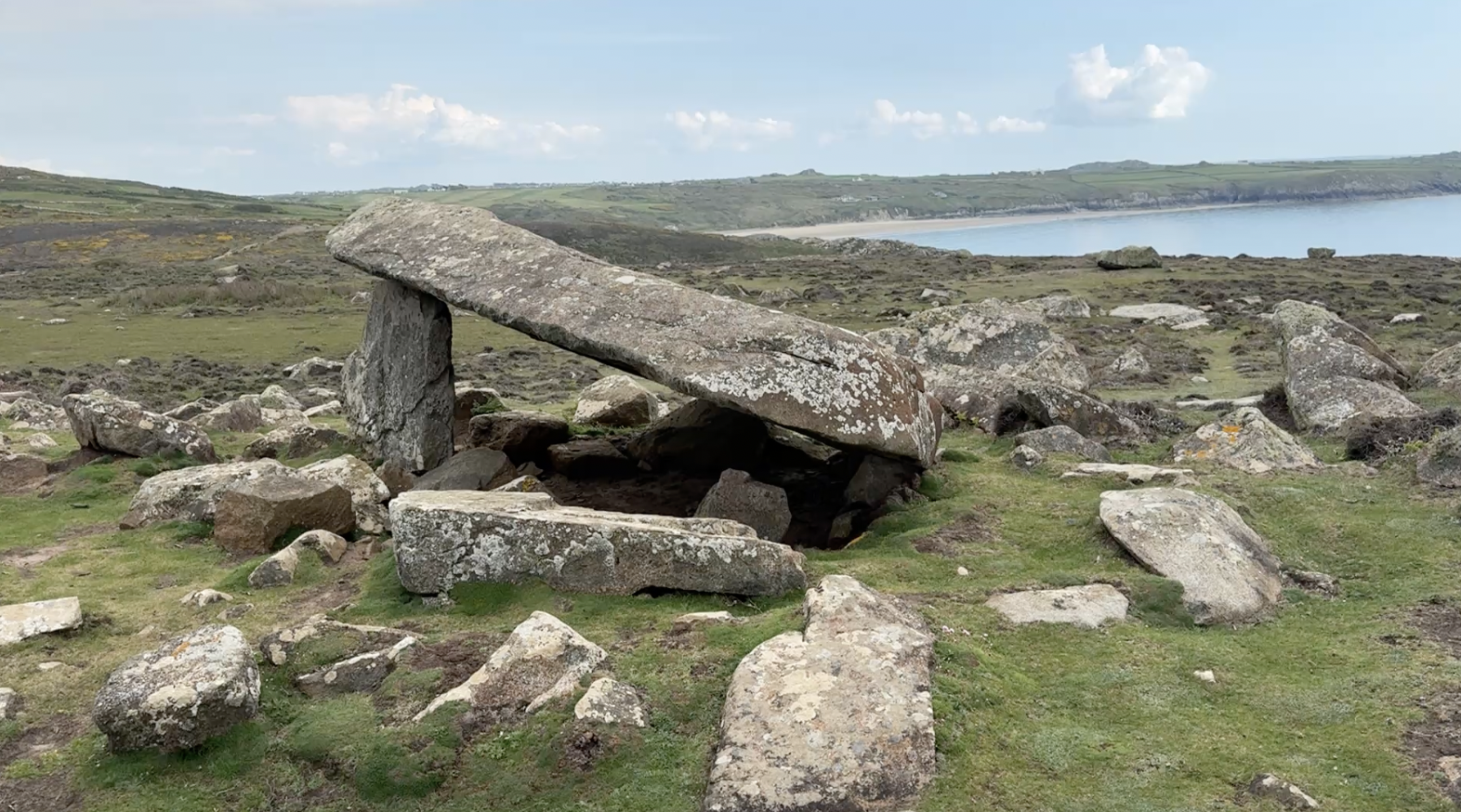
One moment it wasn't there.
The next it stood only a few steps away.
I wandered slowly around the great capstone, peering beneath it and marvelling that these enormous stones had stood together for thousands of years.
Then another thought arrived.
The people whose homes I'd just been sitting amongst would also have looked upon Arthur's Quoit as an ancient monument.
Their settlement belonged to the Iron Age.
The burial chamber before me had already stood for perhaps two thousand years before they built their first hut.
That delighted me.
We often imagine ancient people standing at the dawn of history.
Yet they too inherited a landscape already rich with memory.
They walked amongst monuments whose builders had long since passed from living memory, just as I was doing.
It made the distance between us seem smaller still.
Across thousands of years, we had both found ourselves wondering about those who came before.
It fascinated me, too, to realise that while families tended their fires on that Pembrokeshire headland—looking out across the Atlantic and perhaps watching the same sunsets I had watched—the world was changing.
In fact, as this settlement is believed to have been occupied around the turn of the millennium, some of the people who lived there would have shared the world with Jesus of Nazareth.
Suddenly, the people in those hut circles are no longer "prehistoric" in the way we often imagine. They become contemporaries of one of the most influential figures in human history.
They could not have known that, on the other side of the known world, events were unfolding that would eventually reach even the furthest western shores.
Empires would rise and fall.
Rome would come and go.
Christianity would spread.
Languages would change.
Kingdoms would be born.
And those little circles of stone would one day become ruins visited by pilgrims.
Least of all could they have known that a carpenter's son in Galilee would become the axis around which much of human history would later turn.
And perhaps that's one of the most humbling things about history:
We are always living in the middle of stories whose endings we cannot yet see.
I took out my phone to record the moment.
As I stood there, movement caught my eye.
A couple of horses appeared on the far side of the headland.
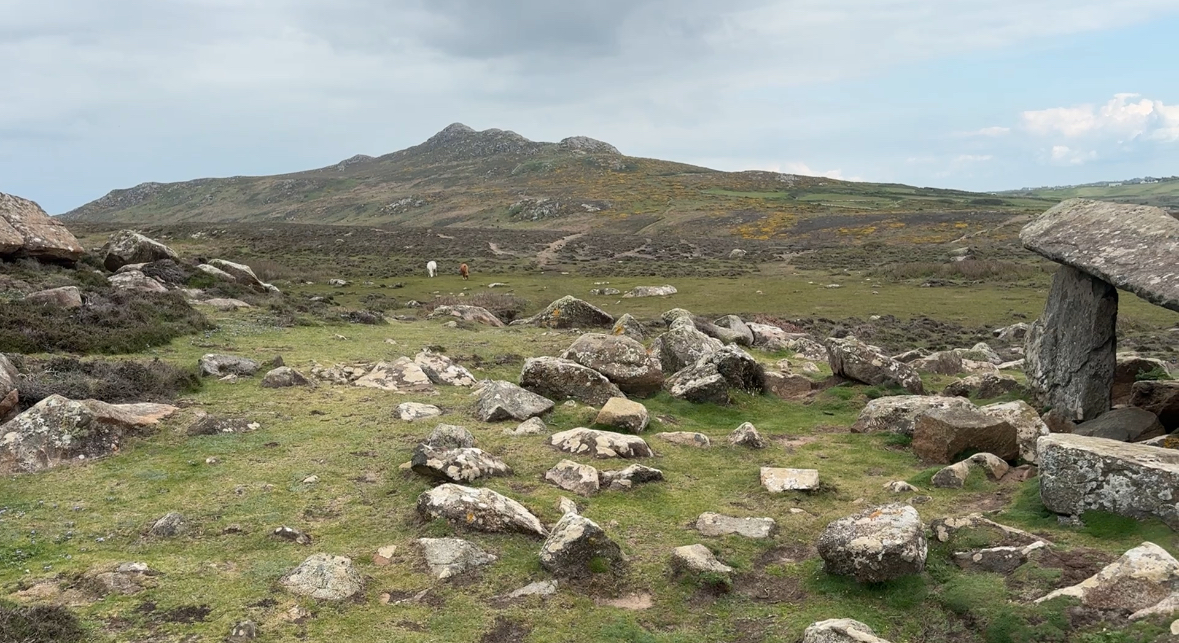
"Ah... the horses are arriving."
I remember smiling as I said it into the camera.
Then more appeared.
And more.
Soon an entire herd was descending across the headland.
At first, if I'm honest, I felt a little nervous.
I'm not especially used to horses.
As more and more of them made their way towards Arthur's Quoit, I suddenly realised they would soon be passing exactly where I was standing.
There was nothing threatening about them.
They were simply following their own familiar path.
Still, I decided to climb onto a nearby boulder.
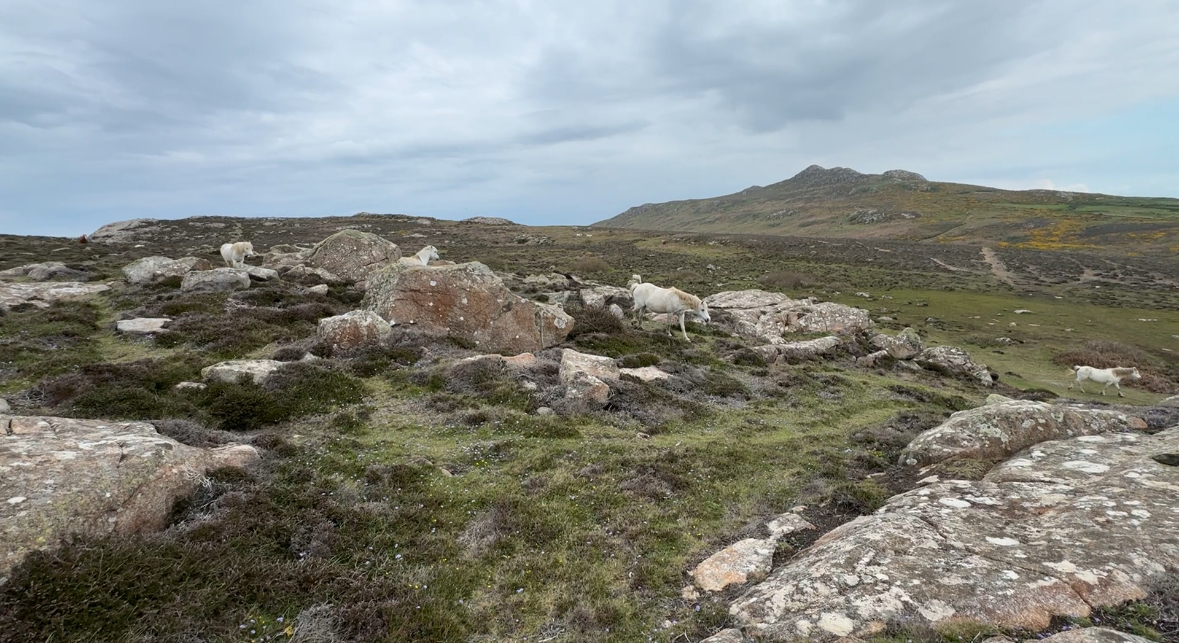
Partly for a better view...
And partly because I wasn't quite ready to find myself standing in the middle of more than twenty horses.
From my rocky perch I watched one of the most beautiful scenes of my life unfold.
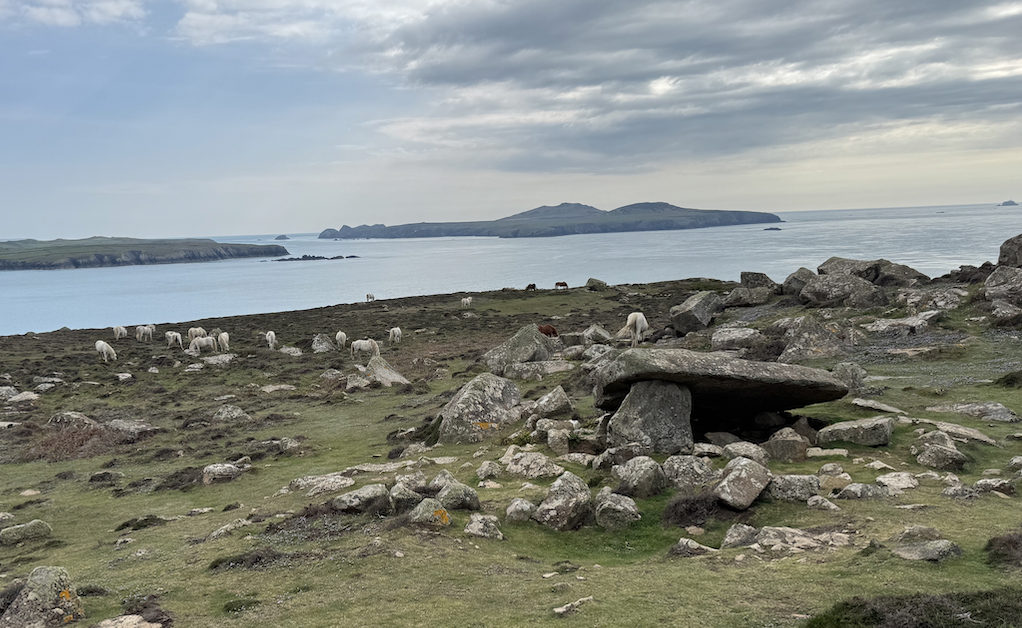
White horses drifted steadily across the ancient headland.
Some paused briefly against favourite boulders for a satisfying scratch before continuing on their way.
One beautiful white pony stood peacefully beside the ancient stones, while others passed gently by as though the monument had always belonged within their world.
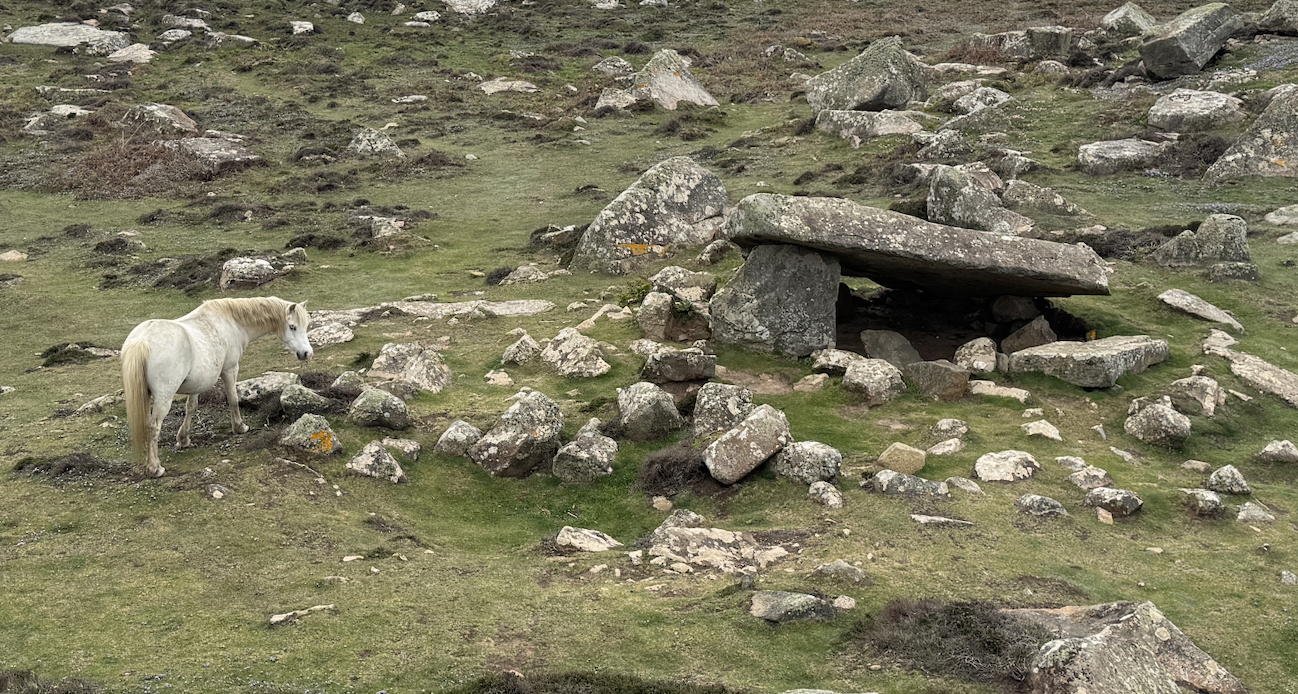
Of course, perhaps it had.
Arthur's Quoit had probably watched countless generations of horses cross this headland long before I ever arrived.
The horses weren't visiting an ancient monument.
They were simply moving through the landscape they knew.
And somehow that made the place feel even more alive.
For the first time, I stopped seeing Arthur's Quoit as a relic from another age.
It was still participating in the living world.
It always had been.
Standing there, another thread quietly gathered itself together.
The pilgrimage had begun in London.
The following day, on the first day of the Year of the Fire Horse, I was already planning to visit the Uffington White Horse.
Yet before that journey had even begun, while standing outside the British Museum unable to get inside, an antiquarian bookshop across the road caught my eye.
Sitting in its window was a book titled The Scouring of the White Horse.
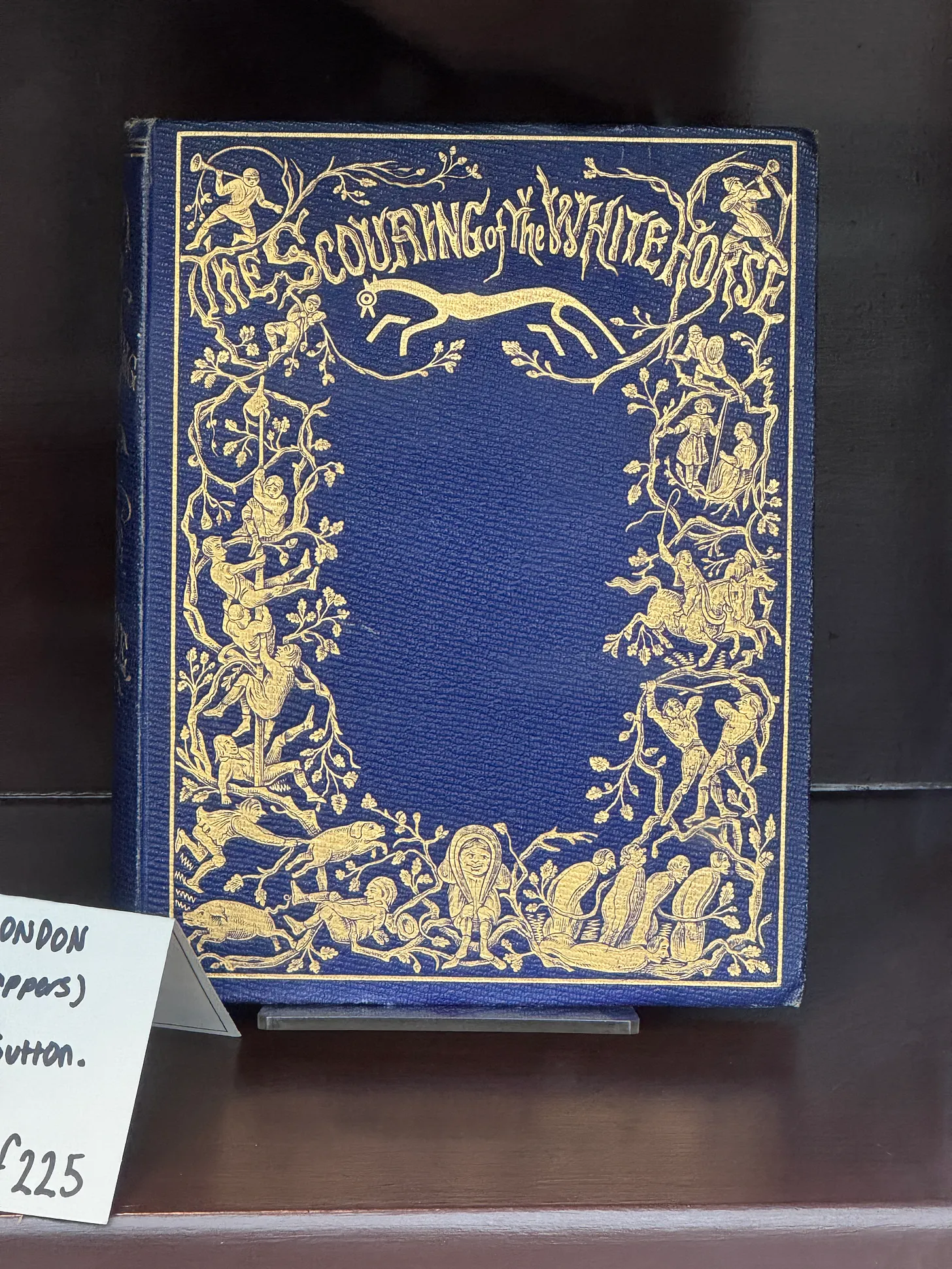
The very White Horse I would be visiting the following day.
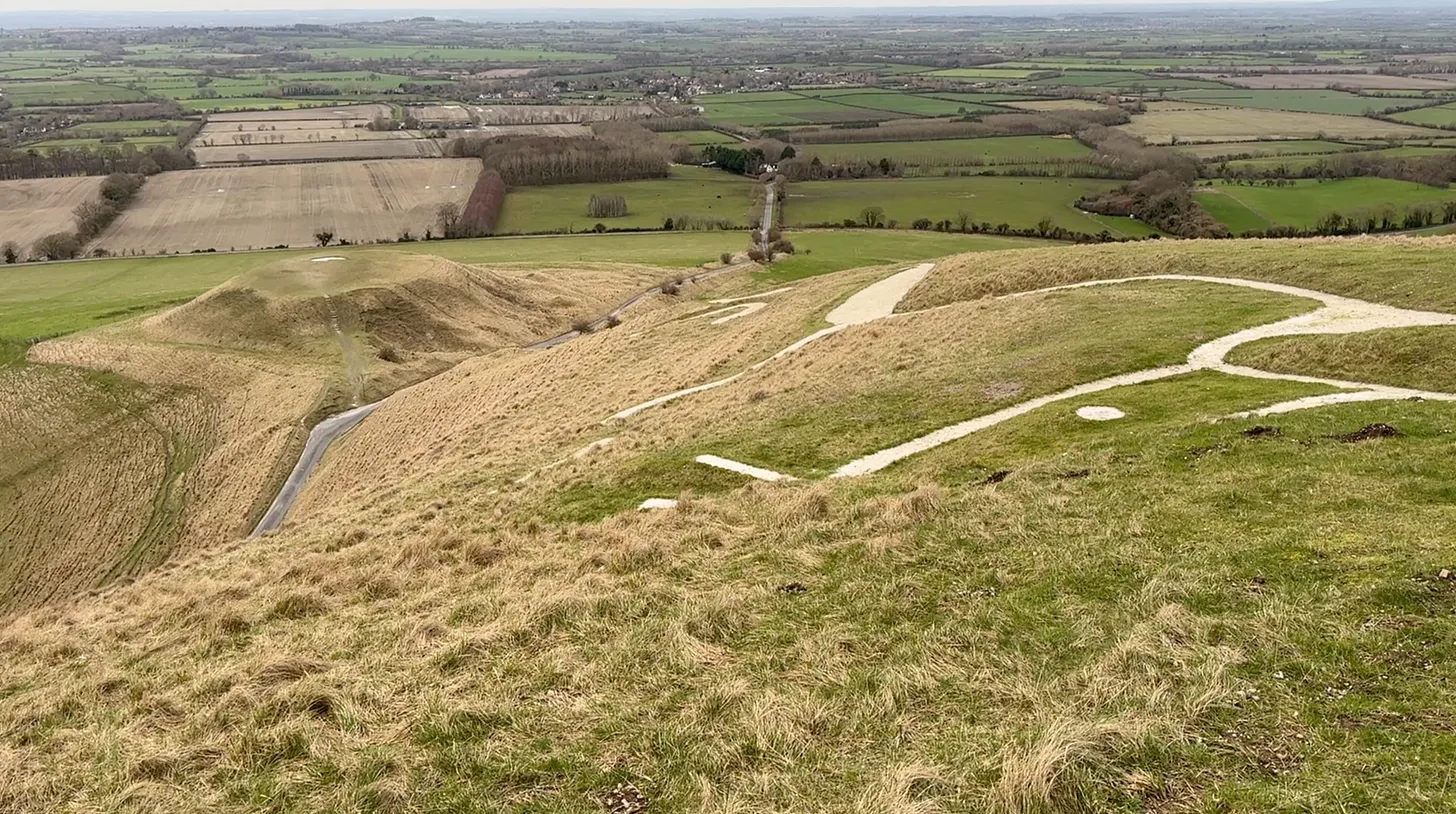
Later, I travelled to Scotland to collect the Cerulevan Cruiser.
As I walked through the airport, I was unexpectedly greeted by the image of another white horse.
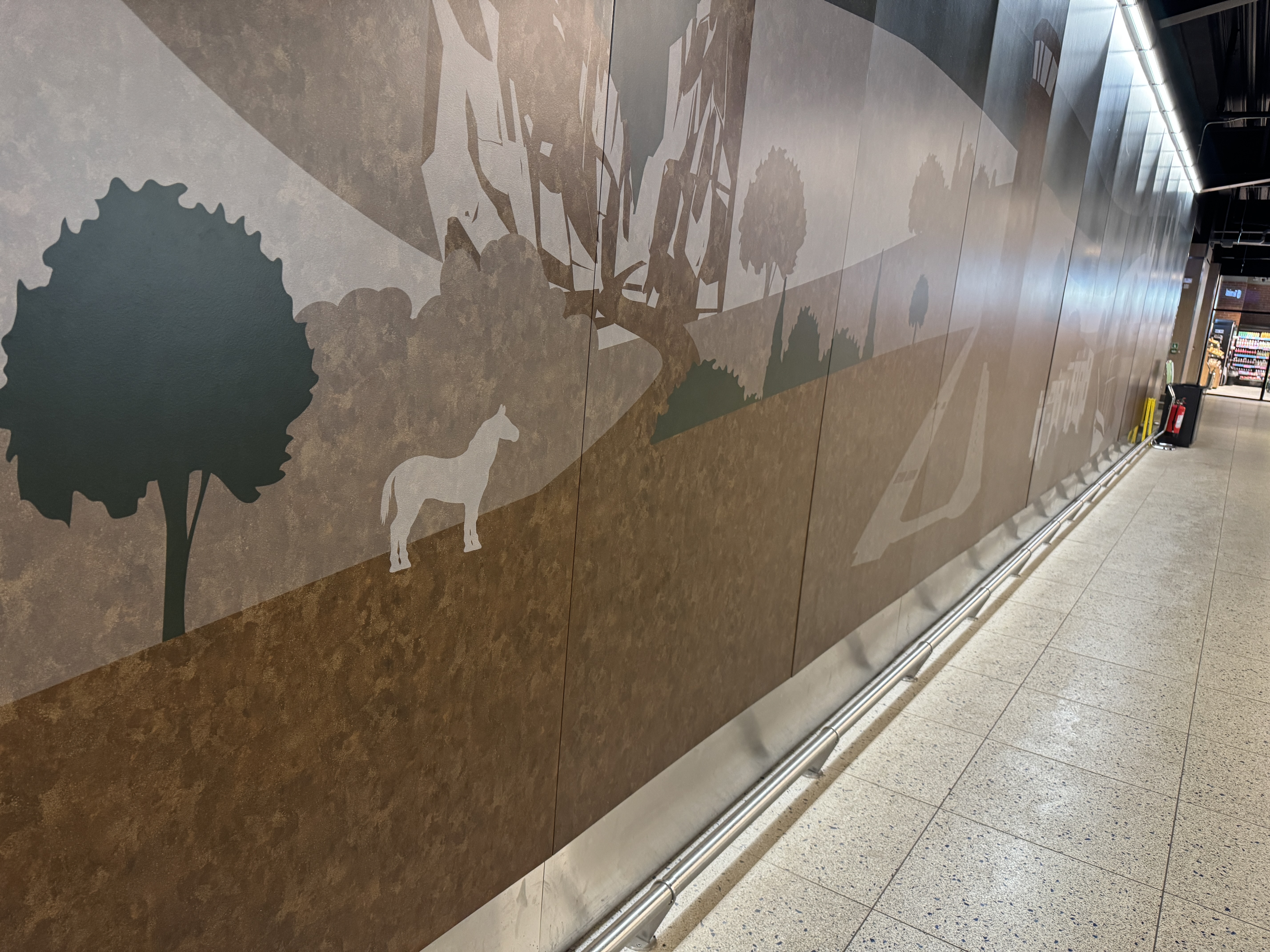
After collecting the van, I arranged the insurance with the same company as the previous owner. A few days later, a keyring arrived through the post.
Its logo was a white horse.
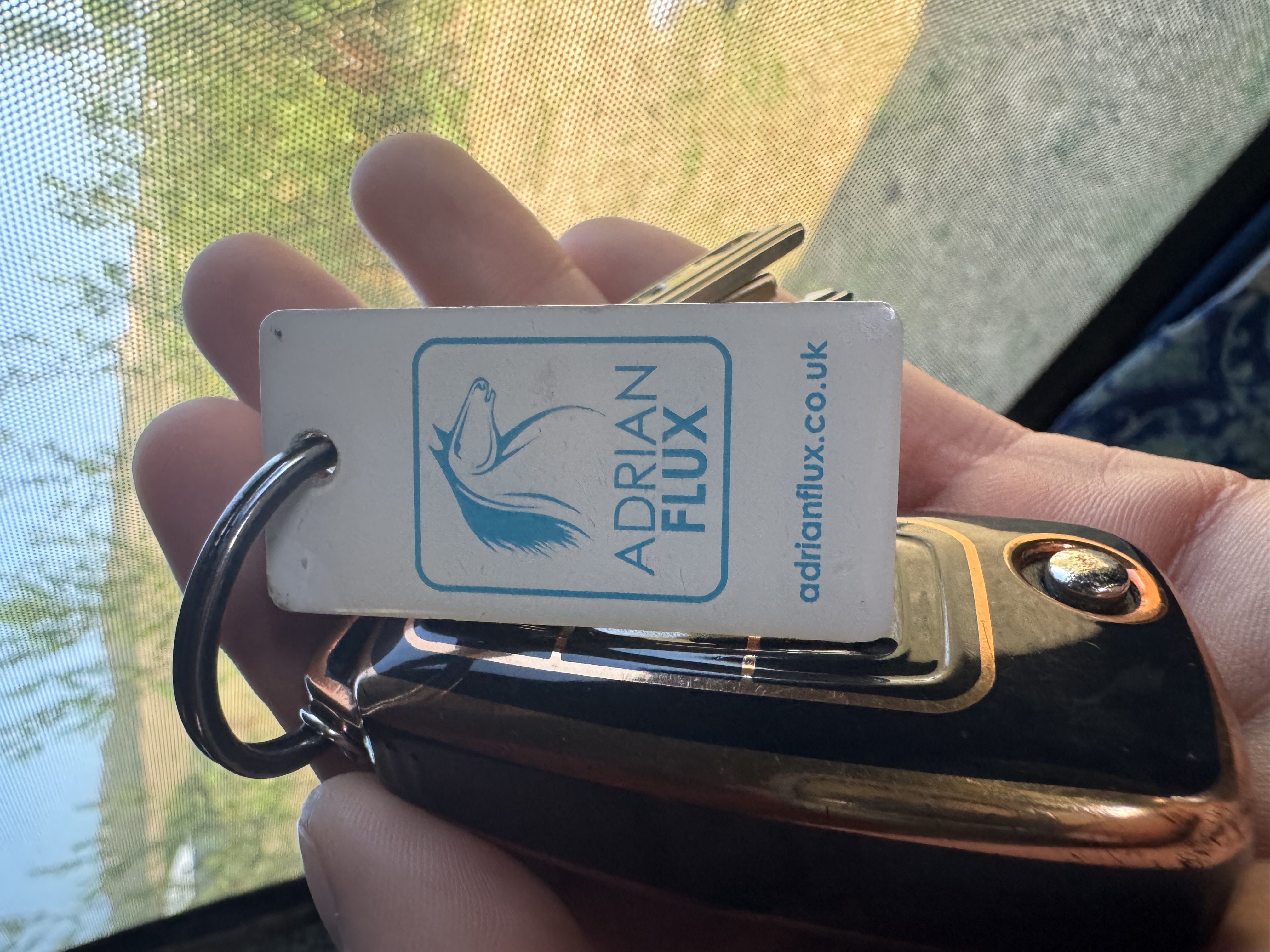
I couldn't help laughing when I realised...
The Pilgrim's Wagon is drawn by a white horse upon its keys.
Horse power.
Then, only weeks later, I found what appears to have been an Ice Age horse tooth amongst pebbles on a Pembrokeshire beach.
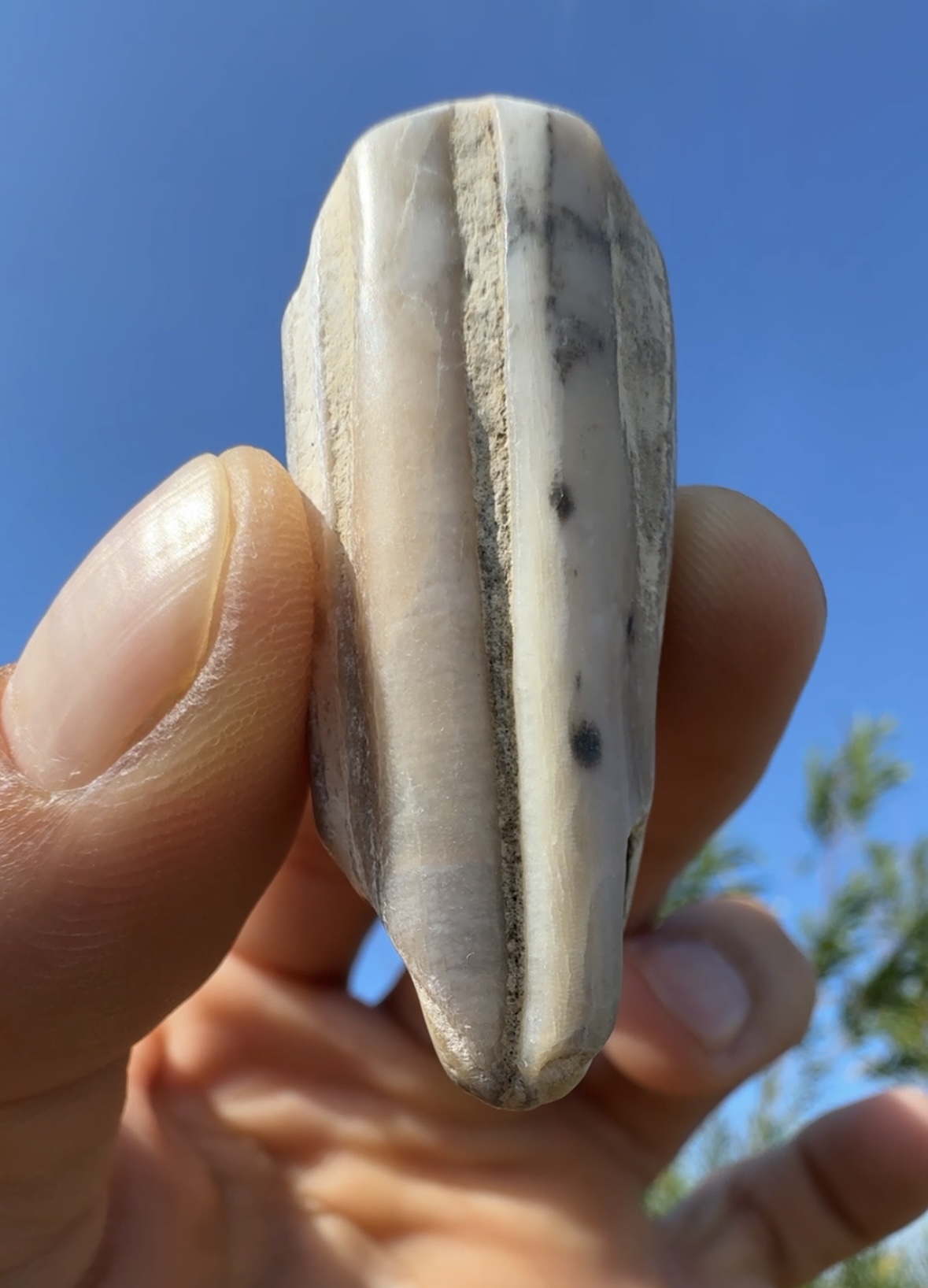
Now—at Arthur's Quoit—the horses themselves had arrived.
Not as symbols.
Not as reminders.
Simply as themselves.
Living.
Breathing.
Moving through the same ancient landscape that generations before me had also walked.
Looking back now, I don't think the horses came to deliver a message.
Their presence was enough.
For a little while, standing between an Iron Age settlement, a Neolithic burial chamber and a living herd gently making its way across the headland, I experienced time differently.
The past no longer felt lost.
It felt present.
Alive beneath my feet.
Perhaps pilgrimage doesn't simply take us to remarkable places.
Sometimes it reminds us that every generation inherits a world already ancient.
And if we walk slowly enough, with open eyes and an open heart, we may discover that we are not standing apart from that story.
We are living within it.