
The Divine Pilgrimage
Pilgrim’s Journal — London — The Threshold
Pilgrim’s Journal
This is the first entry in the Pilgrim’s Journal, the companion reflections to the pilgrimage films.
In these entries I explore the symbolism, synchronicities, and strange small moments that unfold along the road — the details that rarely fit inside the videos themselves.
The Call
Pilgrimages rarely begin with certainty.
More often they begin with a quiet nudge — a moment when the world shifts slightly and something inside you recognises it is time to move.
On the morning of February 16th, I stood on a train platform holding a handful of tissues and preparing to travel to London. A gentle winter cold had accompanied me for the journey, and the dark phase of the moon seemed to hang in the air as much as in the sky.
Just before boarding, my attention was pulled to a parked car across the platform. Its number plate read:
OMG.

I laughed out loud.
It felt like a fun acknowledgement from the universe — the sort of cosmic wink that seems to appear when something meaningful is about to begin.
And this journey did feel meaningful.
Nineteen years earlier, in June 2006, I had experienced a profound spiritual awakening in Kings Cross, Sydney. It happened in the most unexpected way — through a moment of ecstatic laughter while inhaling nitrous oxide in my apartment.
The experience shattered my understanding of reality. Something vast and loving had revealed itself, and in the aftermath I found myself trying to understand what had happened.
Months later, while reading a book on Kabbalah, I typed my name into an online gematria calculator.
The result startled me.
In the Enochian system — an angelic language recorded by an Elizabethan mystic who, as we shall later discover, would become a central figure in this story — my name corresponded to the number 288, which was listed with the words:
Parousia: The Second Coming.
At nineteen years old, I didn’t know what to do with that discovery. It felt mysterious, strange, and far too large to fully grasp.
Life moved on. Years passed.
But the thread never disappeared.
Then, in 2025 — exactly nineteen years after that awakening — something remarkable happened. An interstellar comet, known as 3I/ATLAS, appeared in the sky, and through a strange series of recursive synchronicities, I found myself consciously entering into the work of John Dee for the first time.
I discovered that Dee was a mathematician, mystic, and advisor to Queen Elizabeth I. He was also the man who spoke with angels and recorded the Enochian language — the very system that had produced the strange gematria result I had stumbled upon all those years earlier.
It felt like a circle quietly closing.
Or perhaps more accurately, a circle opening.
When I learned that several of Dee’s artefacts — including his obsidian scrying mirror and pentagram sigils — were on display at the British Museum, I knew I needed to travel to London.
Not only to see the artefacts.
But to walk the ground where Dee had lived.
His home had once stood beside the Thames in a place called Mortlake, and nearby stood St Mary the Virgin Church, where he was buried.
And so a small pilgrimage formed.
First, I would arrive at Kings Cross Station in London — mirroring the place where my awakening had begun nineteen years earlier in Sydney.
Then I would visit the British Museum to see Dee’s magical instruments.
Finally, I would travel to Mortlake and walk along the Thames where he had once lived and worked.
The following day, the pilgrimage would continue at the Uffington White Horse, where I planned to mark the beginning of the Year of the Fire Horse.
The plan felt simple.
But as I would soon discover, the day had other ideas.
The Portal
London greeted me with its usual theatre.
Kings Cross Station was alive with movement — commuters rushing between platforms, travellers dragging suitcases across polished floors, announcements echoing through the vaulted space above.
For most people, it was simply another busy morning in the city.
For me, it was the beginning of a pilgrimage.
There was one small ritual I felt compelled to perform before the journey properly began.
I made my way toward the most unlikely of sacred sites:
Platform 9¾.
In the world of Harry Potter, it is the hidden platform where young witches and wizards pass through a barrier to board the Hogwarts Express. Over the years it has become something of a cultural shrine — a place where imagination and reality briefly overlap.
It felt like the perfect place to mark a mystical arrival.
After all, every pilgrimage begins with a portal.
As I approached the famous trolley embedded in the wall, however, I was met with a very modern obstacle.
The queue.
It stretched far beyond the barriers, snaking through the station like a small pilgrimage of its own. Families waited patiently for their turn to push the trolley into the wall and capture the moment on camera.
The estimated wait time looked to be well over an hour.
I stood there for a moment, amused.
The symbolism was not lost on me.
Sometimes the doorway appears… but not quite in the way you imagined.
So instead of joining the queue, I took a quick photograph from the side as I passed by.
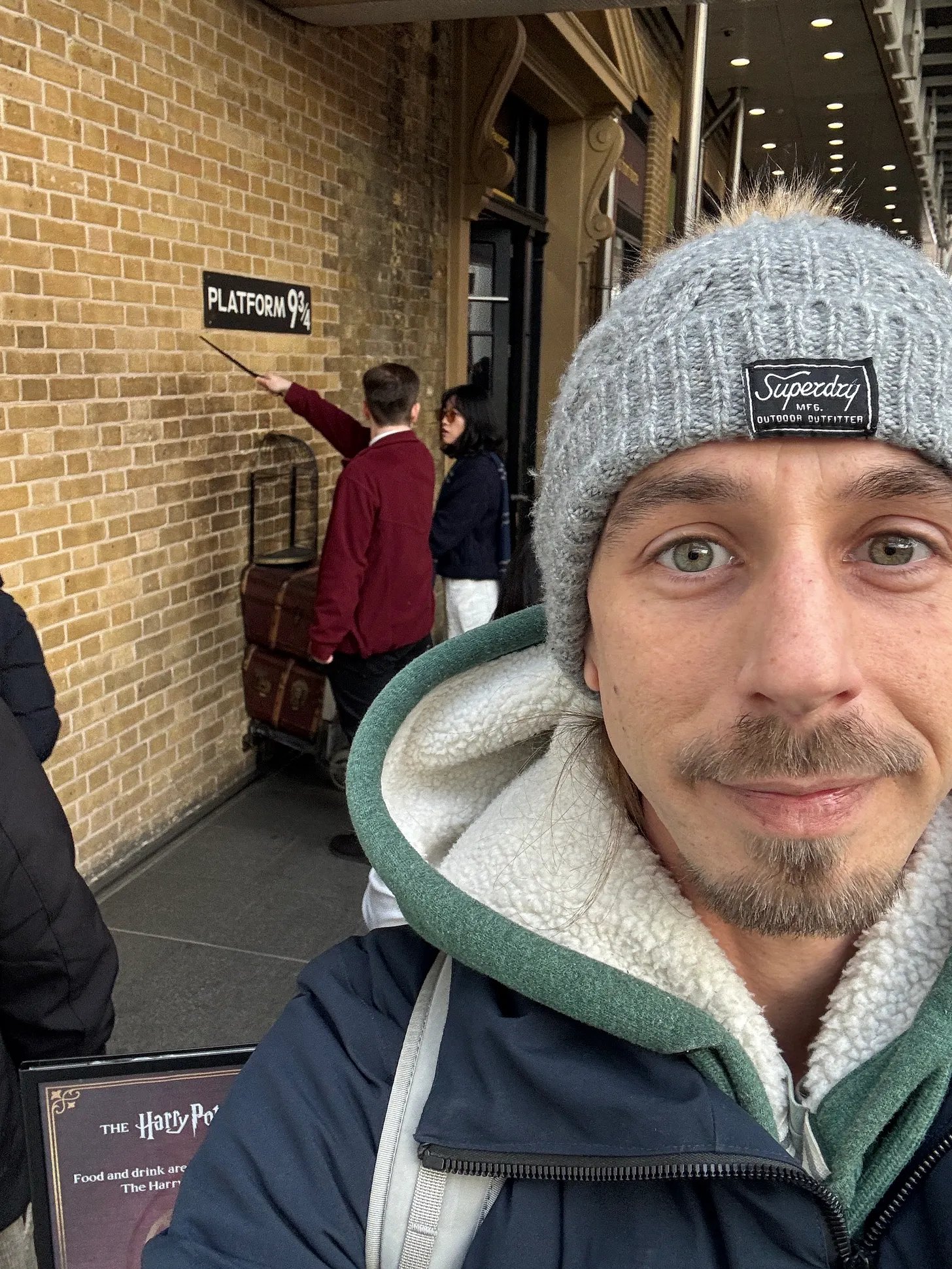
No dramatic run toward the wall.
No perfectly staged arrival.
Just a quiet acknowledgment that the journey had begun.
And in truth, that was enough.
Leaving the station, I stepped out into the streets of London and began walking toward the British Museum.
Within minutes, the first strange sign of the day appeared.
The First Sign
It was small — easy to miss if you weren’t looking down.
A piece of metal.
Curious, I bent to pick it up.
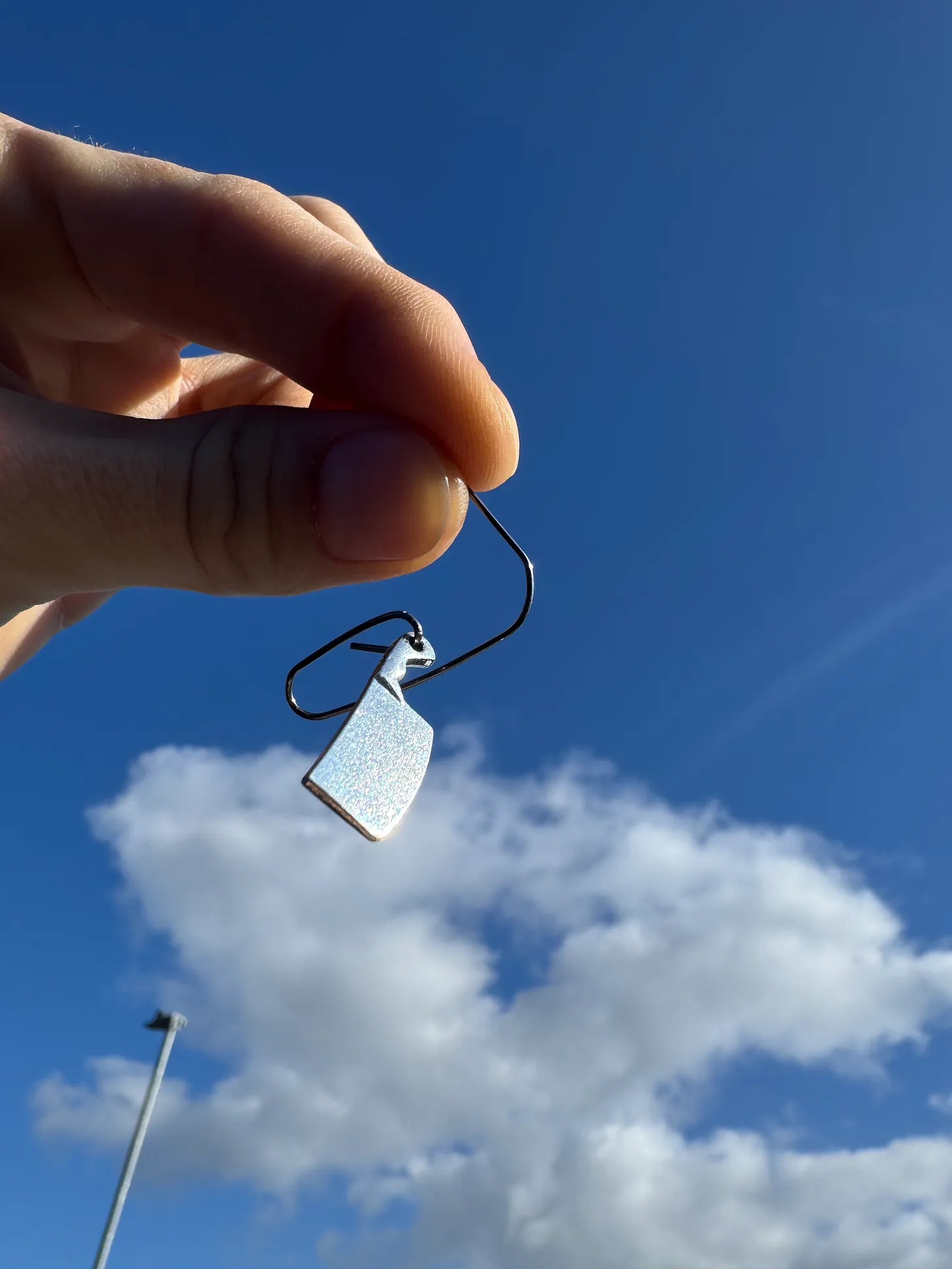
It was a charm in the shape of a butcher’s knife, with a bent paperclip threaded awkwardly through the hole where a chain might once have been attached.
For a moment I turned it over in my fingers, trying to make sense of it.
A knife.
Not exactly the sort of object you expect to find at the beginning of a joyful pilgrimage.
The paperclip gave it an oddly improvised feel.
It felt… strange.
Not threatening, exactly.
Just out of place.
I chuckled quietly to myself.
“Nope,” I said under my breath.
Then I set it back down on the pavement and continued walking.
London carried on around me — buses rolling past, pedestrians moving through the streets, the quiet rhythm of the city in motion.
A few minutes later I found a small park and decided to sit down for a while.
The morning had begun early, and I wanted to slow the moment down before continuing on to the British Museum.
I sat on a bench and enjoyed a coffee, watching the steady movement of people passing by.
Nothing unusual.
Just an ordinary pause in the middle of the city.
When I finished, as I stood up:
That’s when I saw it.
Lying on the ground near my feet.
Another knife.
I froze for a second.
It was the exact same charm.
The same small butcher’s knife.
But this time, the paperclip was gone.
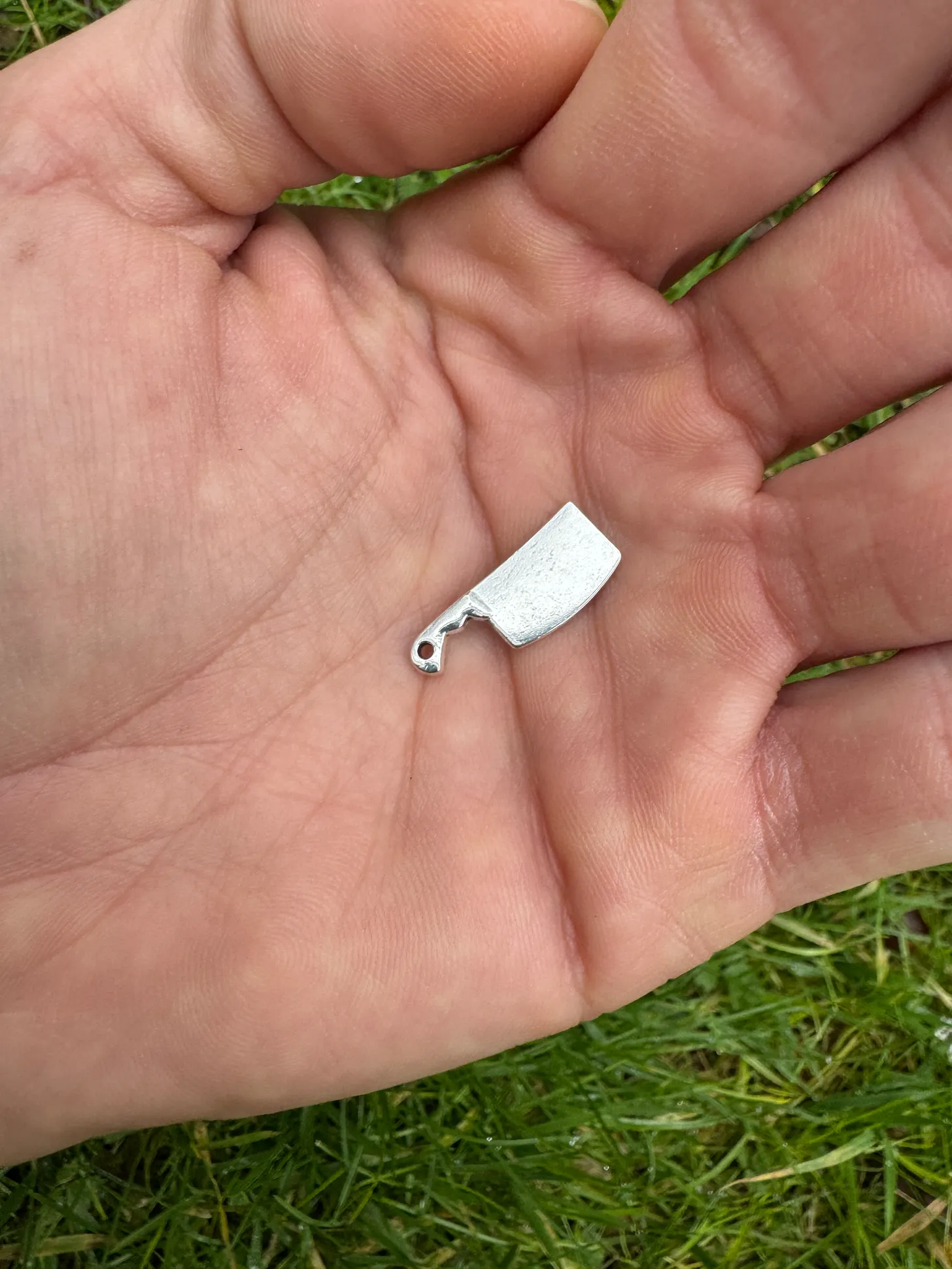
For a moment I simply stared at it, half laughing in disbelief.
The odds of finding the same strange object twice within fifteen minutes, in two different locations, felt… unlikely.
Clearly the universe had decided I was supposed to notice this.
So this time I picked it up and slipped it into my pocket.
As I continued walking toward the British Museum, I found myself absent-mindedly turning the little charm between my fingers.
It felt oddly conspicuous to be walking through London with a tiny knife in my pocket.
I remember thinking:
Why do I have this?
At the time, I had no answer.
But soon enough, the meaning would reveal itself.
The Detour
When I arrived at the British Museum, the crowds were immense.
A long queue stretched across the courtyard, weaving back and forth between the barriers. It looked like it might take at least an hour to reach the entrance.
I stood there for a moment, taking it in.
Part of me thought, Well, this is London.
But another part quietly wondered if the day had other plans.
Instead of joining the queue straight away, I decided to take a short walk and find something to eat before committing to the wait.
Just across the street from the museum stood a small antiquarian bookshop, its display window filled with old volumes and gilt-lettered spines.
As I passed, my eyes landed on a particular book almost instantly.
A deep blue cover.
Gold lettering.
The title read:
The Scouring of the White Horse
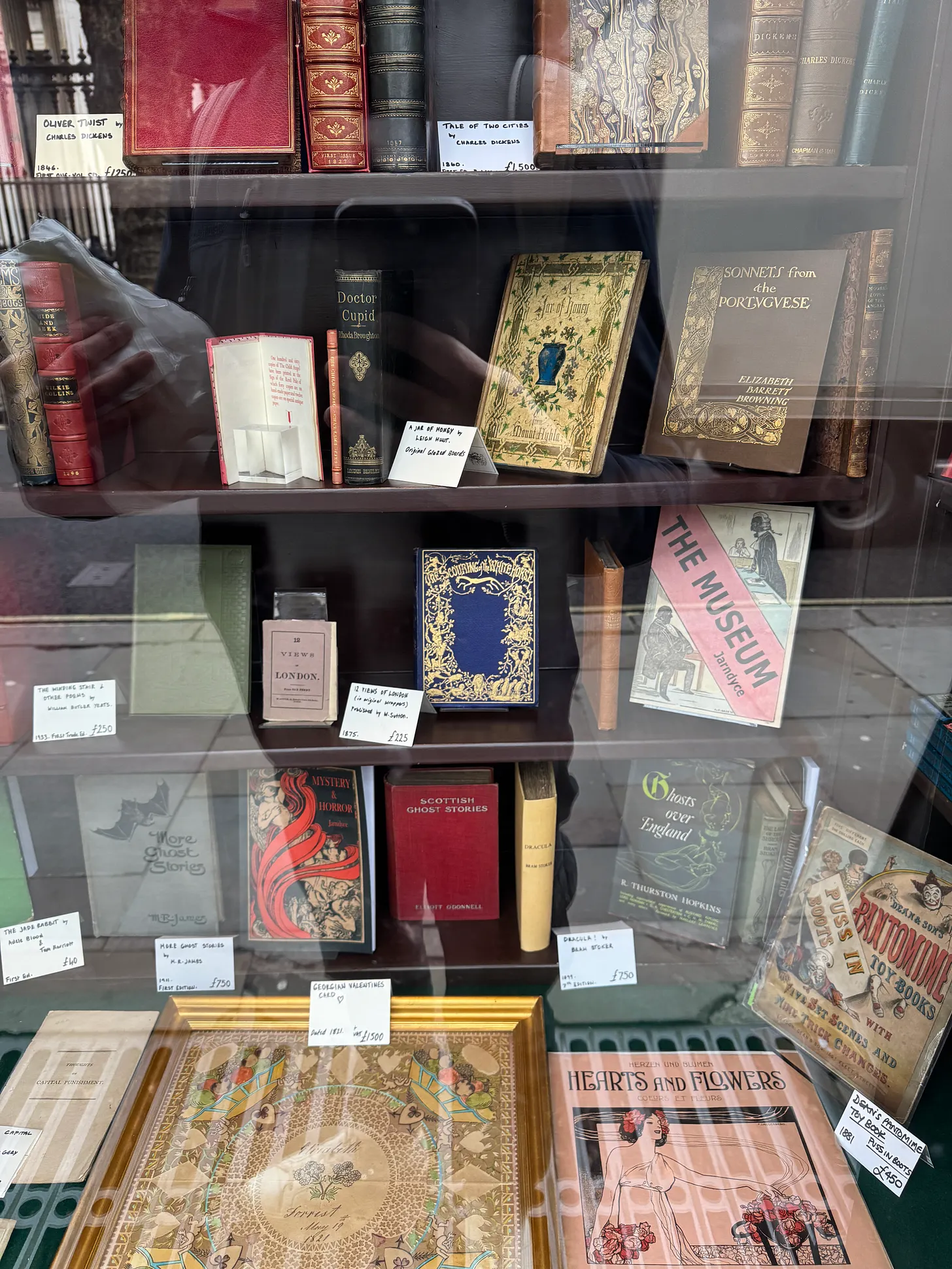
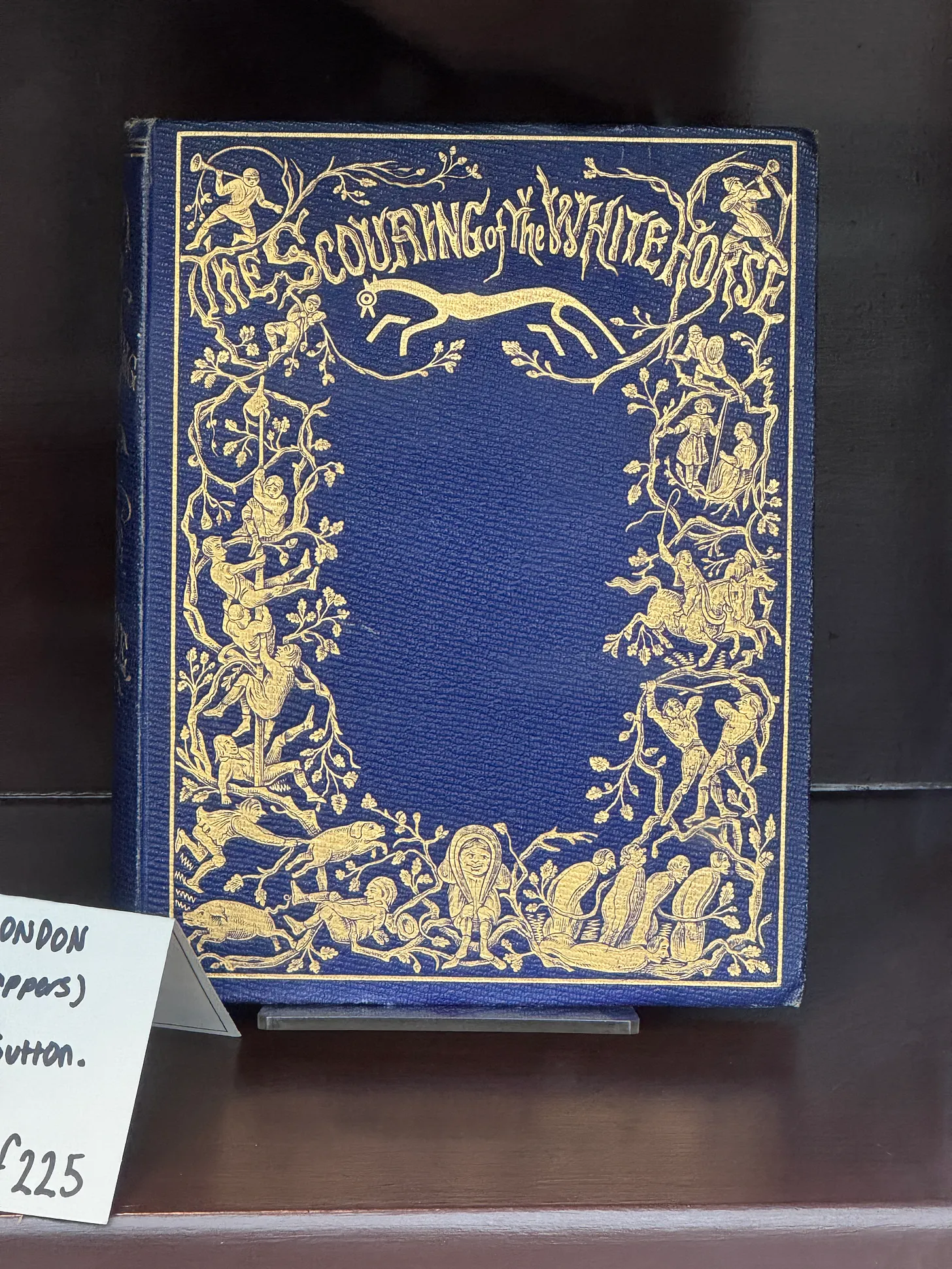
I stopped in my tracks.
The following day, I was travelling to Uffington White Horse — the ancient chalk figure carved into the hills of Oxfordshire.
And here, directly opposite the museum I had come to visit, was a book about the very place I would be walking the next day.
I couldn’t help but laugh.
It felt staged.
I took a photo of the book in the window and carried on to the park to eat my lunch.
Sitting there with my food, I found myself debating what to do next.
Should I abandon the museum entirely and move on?
Or should I honour the intention that had brought me here in the first place?
After all, I had come to London specifically to see the artefacts connected with John Dee.
So once I had finished eating, I returned to the museum.
The queue had barely moved.
Still, I joined it.
I had been standing there for perhaps a minute — no more — when a staff member stepped forward and made an announcement.
No more tickets.
All available tickets allocated until Wednesday.
For a moment I simply stood there.
And then it clicked.
Or rather, I heard the chop.
The knife.
The little butcher’s knife charm that had appeared twice that morning.
The symbol had been literal.
The museum had been cut from my path.
The first knife had carried a paperclip — a small device used to bind pages together.
A quiet nod toward books.
The second knife had appeared without it.
The binding removed.
The cut remained.
And aligned with this, I had encountered the blue book in the window — the one pointing toward the White Horse.
The message suddenly felt very clear.
The museum was never meant to be part of the day.
Something else was waiting.
And with that realisation, any sense of frustration dissolved.
What had seemed like obstacles began to feel like choreography.
So instead of forcing the plan, I turned toward the next destination.
Mortlake.
John Dee’s old ground beside the Thames.
The Journey to Mortlake
Once the decision had been made, the rest felt effortless.
I made my way from the Underground and began the journey west toward Mortlake, leaving behind the dense crowds of central London.
The shift in atmosphere was immediate.
The frantic pace of the city softened as the train carried me along the Thames corridor toward the quieter edges of the capital.
It felt as though the pilgrimage was gently guiding me away from spectacle and back toward something simpler.
Something closer to the ground.
As the train moved through the city, I opened my phone and began watching videos of the very artefacts I had hoped to see at the museum.
John Dee’s magical instruments.
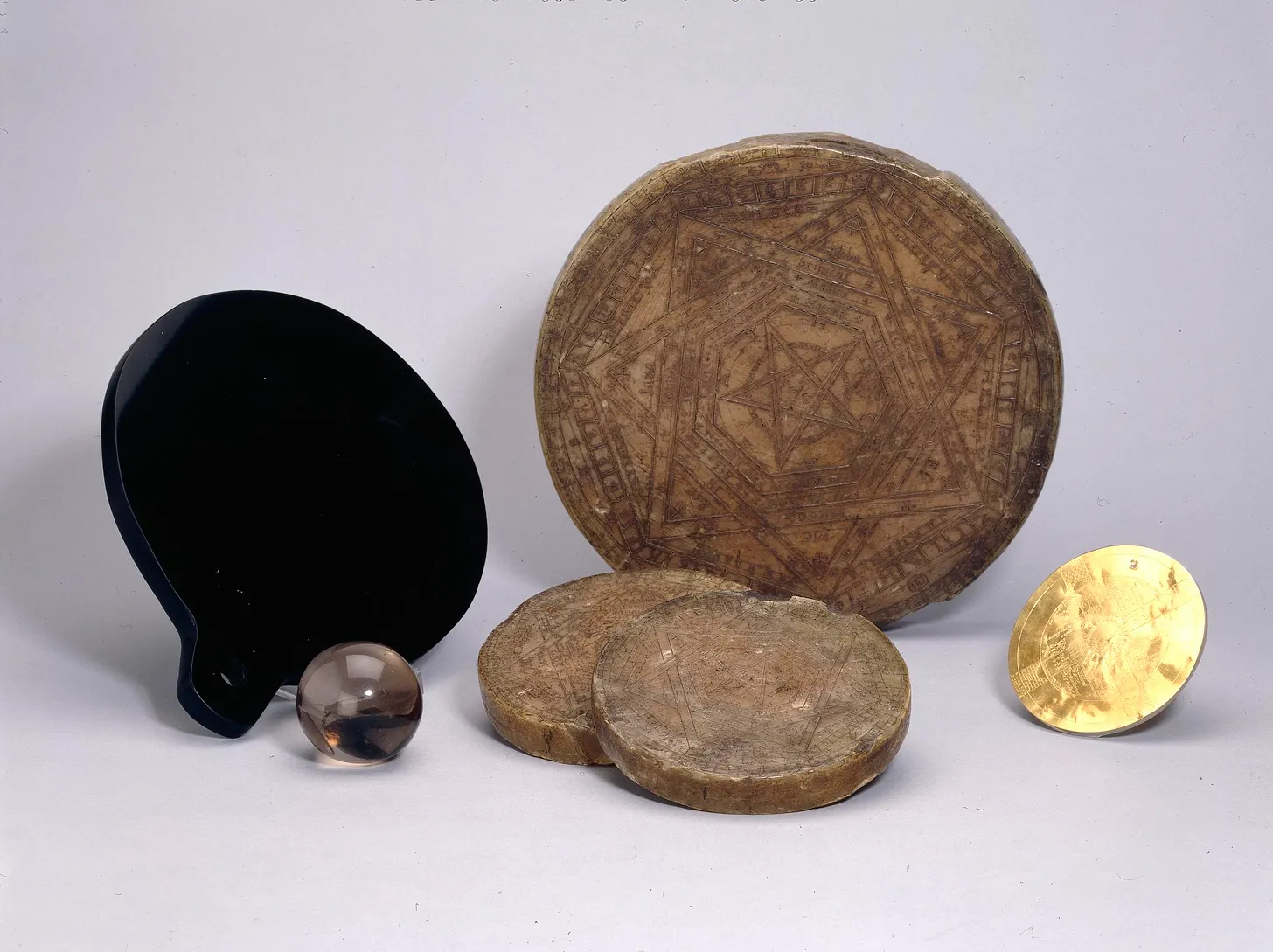
The obsidian mirror, dark and reflective, once used for scrying during his angelic conversations.
The Sigillum Dei Aemeth, the intricate wax seal engraved with sacred geometry and angelic names.
Objects that sat on Dee’s table nearly five centuries earlier as he attempted to communicate with the unseen world.
It struck me then that perhaps I didn’t actually need to stand inside a museum to encounter them.
The knowledge was already available.
The symbolism was already present.
And more importantly, the landscape itself was still there.
Mortlake.
The place where Dee had lived.
Where his house once stood beside the Thames.
Where scholars, sailors, mystics and courtiers had once visited his vast library — one of the greatest collections of books in Europe at the time.
Soon enough, the train pulled into the small station.
I stepped out into the quiet streets and began walking toward the river.
There is something curious about visiting places connected to figures from history.
At first, they exist only as ideas.
Names in books.
Stories told across centuries.
But then you stand where they once stood.
You walk the same ground.
You hear the same river moving beside you.
And suddenly the distance of time collapses.
John Dee had lived here.
Worked here.
Walked these same paths.
I followed the signs pointing toward the Thames Path, eager to reach the riverside and begin exploring the area where his home once stood.
But as I approached the entrance to the path, something unexpected appeared.
The river had other plans.
The Thames had flooded the walkway.
The path was completely underwater.
A small sign stood nearby.
“Dry route during flood.”
The arrow pointed directly back the way I had come.
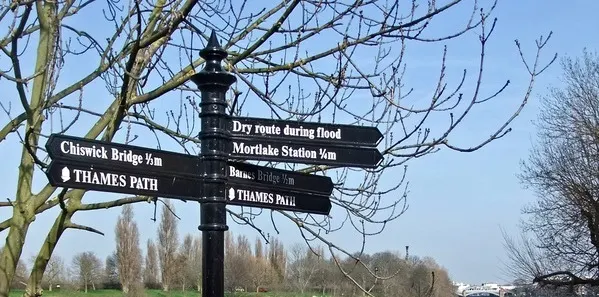
I couldn’t help but laugh.
Of course.
Another detour.
But this one came with a surprise.
Standing calmly beside the flooded path were two striking birds I didn’t immediately recognise.
At first glance they looked like ducks.
Later I would learn they were Egyptian geese.
They watched quietly as the water moved across the path, as though they had been waiting there for some time.
It was a beautiful pause.
The river breathing slowly beside us.
The city noise fading into the distance.
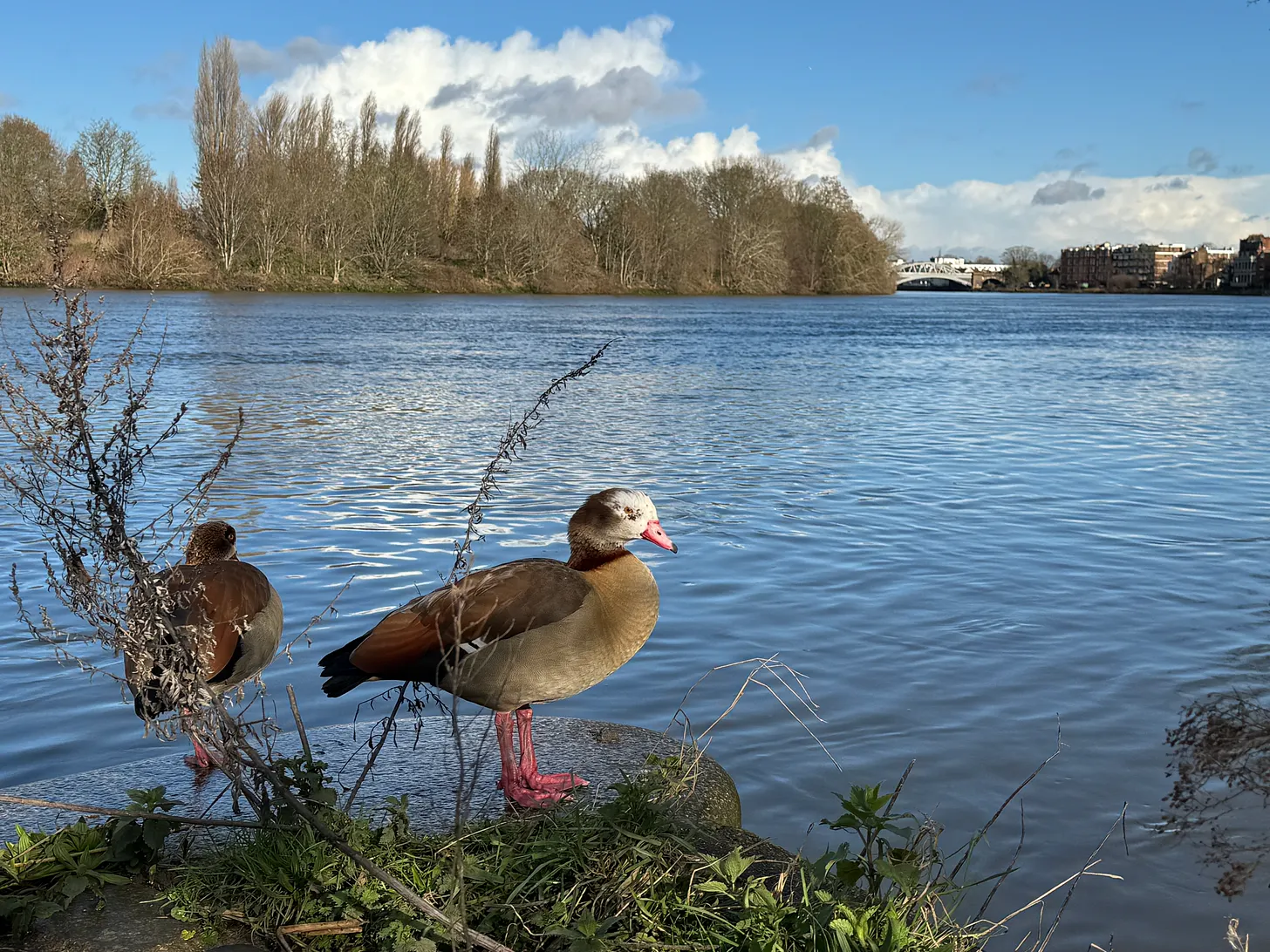
One of the geese caught my attention.
While the female carried the familiar dark brown mask around her eyes, the male beside her did not. His face was pale and clean, lacking the usual markings.
Later I would learn this was something known as leucism — a small genetic quirk that softens or removes an animal’s natural colouring.
Which somehow felt perfectly suited to the day.
Even the geese, it seemed, had arrived with their own little anomaly.
And just as I was settling into the moment, a woman walking along the opposite bank called out to me.
“The tide will drop in about five minutes,” she said with a smile.
“Then you’ll be able to cross.”
So I waited.
And sure enough, the water began to recede.
Not dramatically.
Not with any urgency.
Just enough.
Gradually revealing the path beneath it.
Soon there was a narrow strip of dry ground leading forward along the Thames.
The crossing had opened.
And with that quiet invitation, I stepped onto the path and began walking.
Toward the place where John Dee once lived.
The Church
The path along the Thames was peaceful now.
The water that had briefly blocked the way had retreated back into the river, leaving the ground damp but passable. I walked slowly along the bank, aware that I was moving through a place layered with history.
Not far along the path, I came across a plaque marking the former site of John Dee’s house.
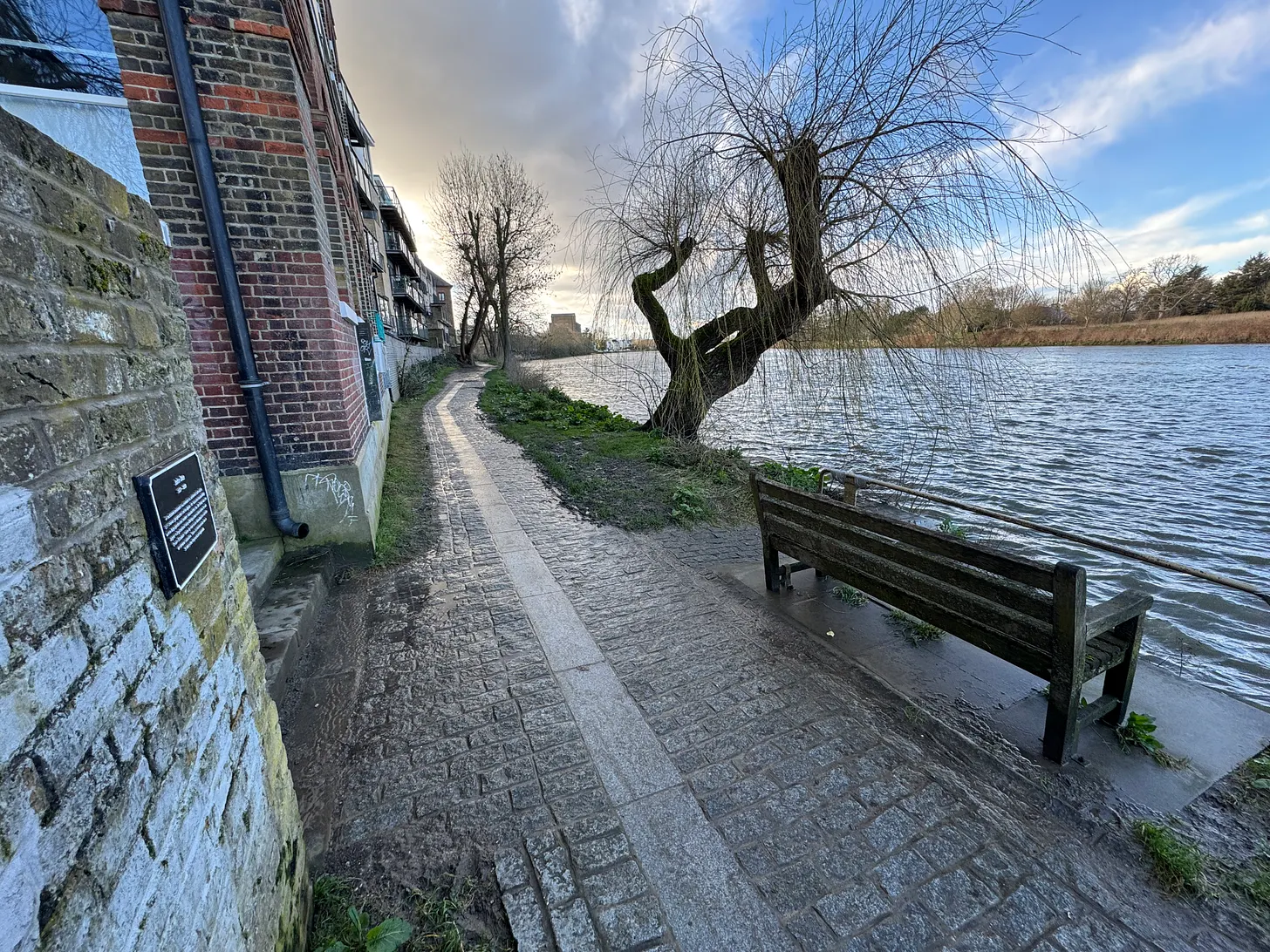
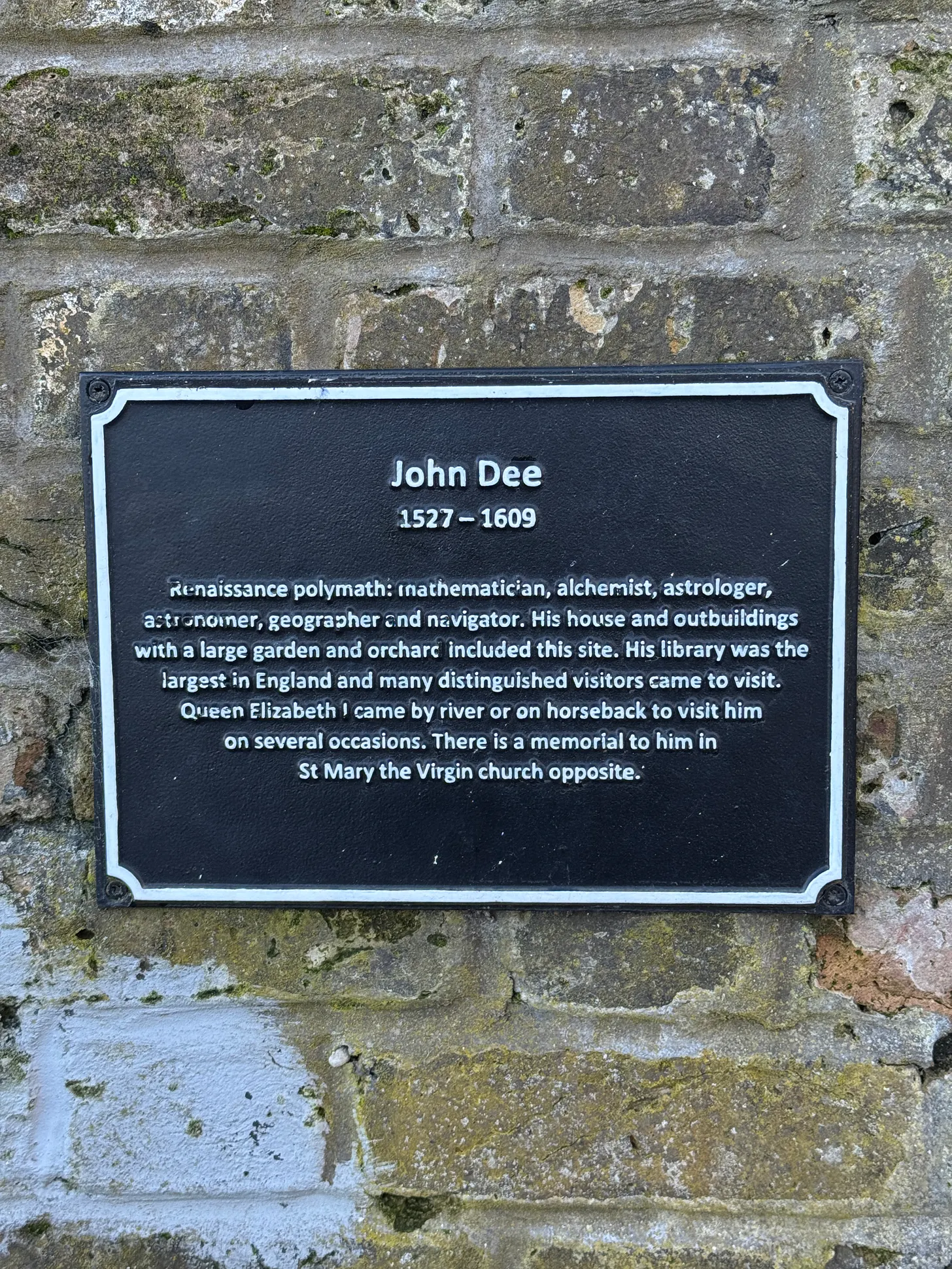
Standing beside the plaque, I paused for a moment.
Five centuries is a long time.
And yet the river still flowed past in exactly the same way.
Just a short walk from the plaque stood St Mary the Virgin Church, where Dee is believed to be buried.
Within the churchyard, I passed beneath an old stone archway — one of the oldest surviving parts of the grounds.
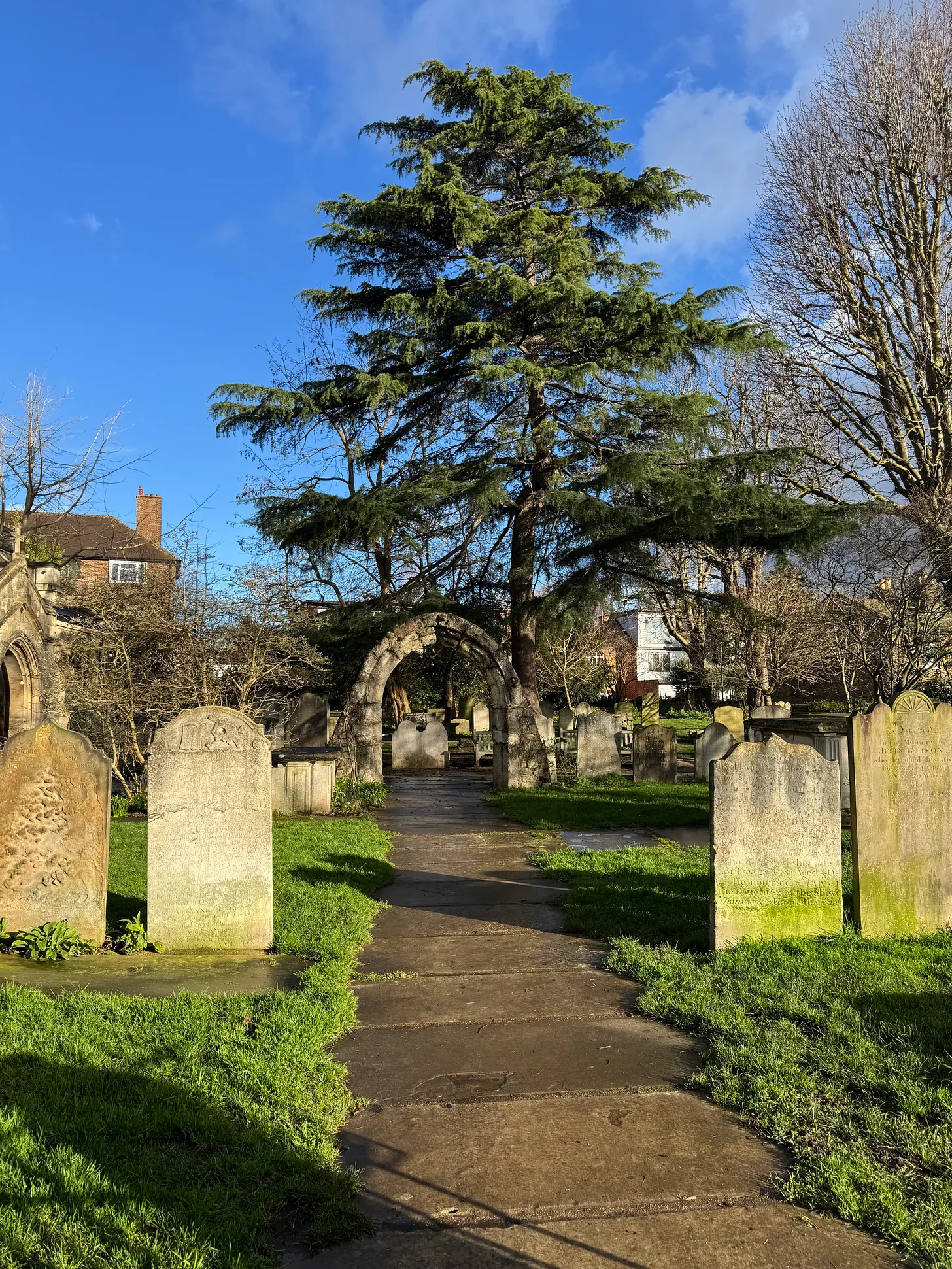
Crossing that threshold felt quietly significant.
The atmosphere changed almost immediately.
The air felt still and contemplative.
I walked slowly across the old stone path and entered the church.
Inside, coloured light filtered through the stained glass windows. Christ in red robes, illuminated by the sun behind him, each saint crowned with the familiar golden halo.
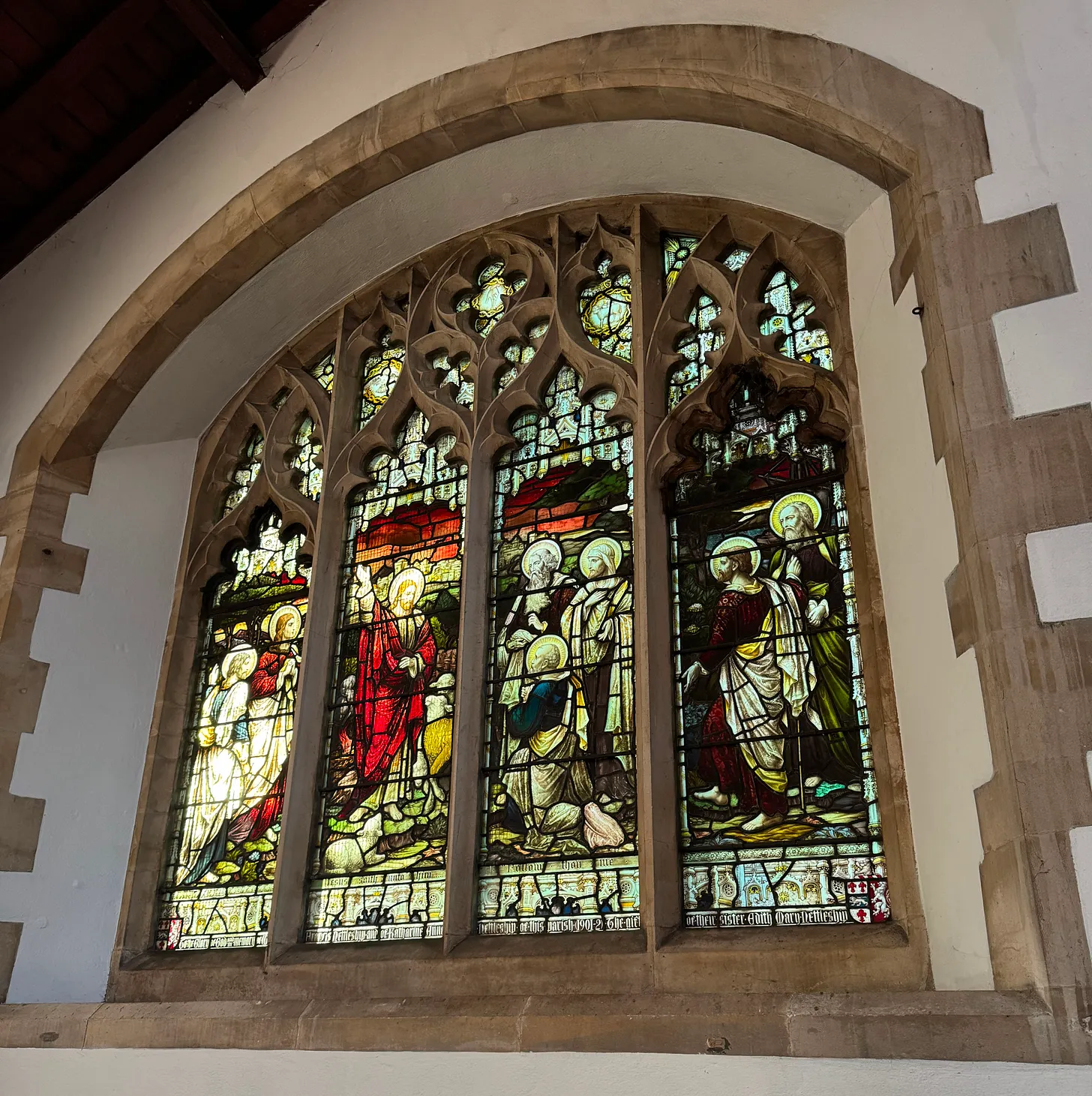
There was a deep calm in the room.
A sense of time stretching backward through centuries of prayer, ceremony, and quiet reflection.
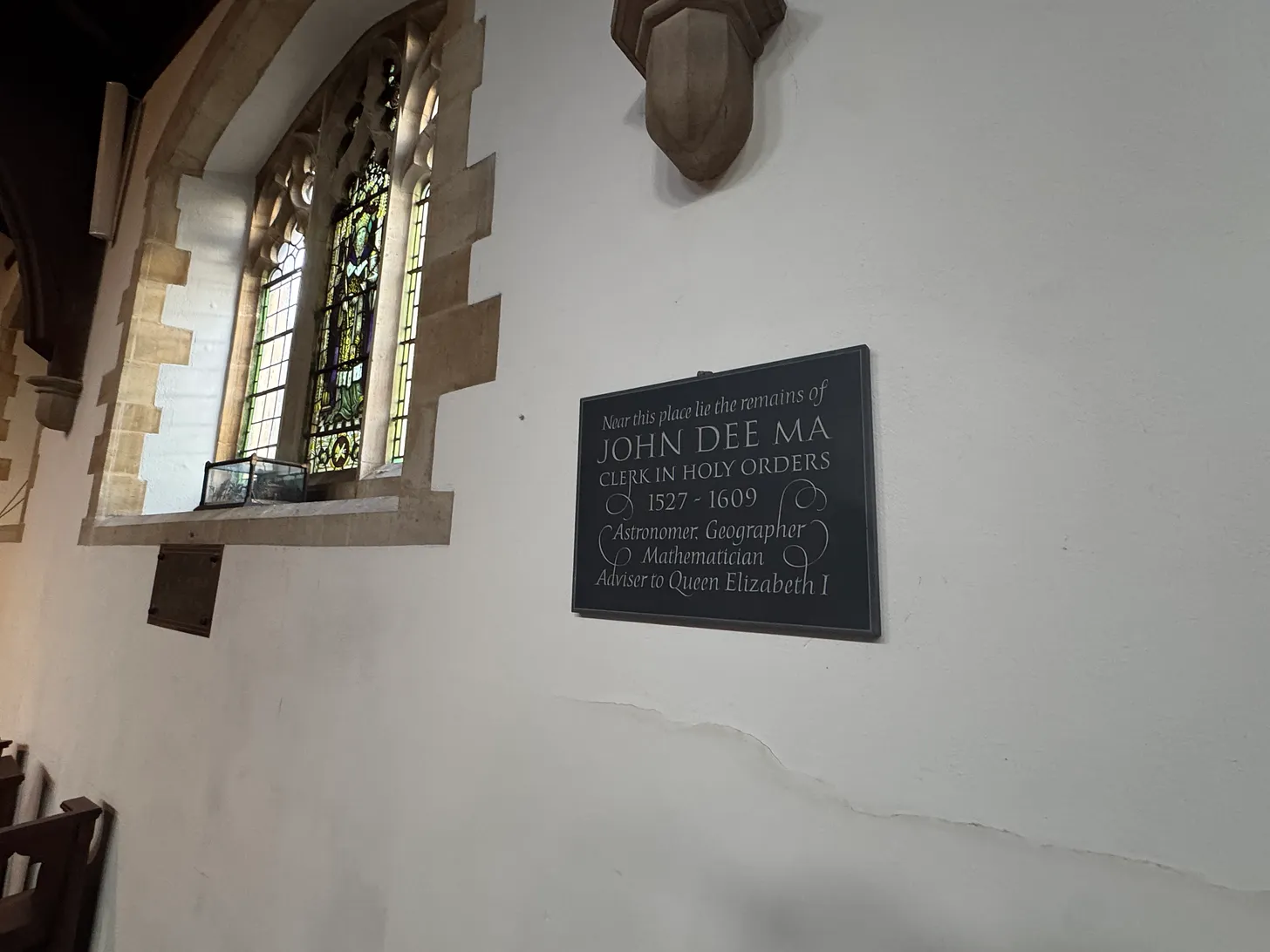
On one of the walls I found the plaque commemorating John Dee, marking the place where he is believed to be buried.
I stood there for a moment in silence.
It felt important simply to acknowledge him.
Not as a historical curiosity.
But as a fellow traveller in the long human search for knowledge, truth, and the unseen patterns of the universe.
Next to the plaque, another stained-glass window caught my attention.
Among the saints and biblical figures in the church, I believed I was seeing King Solomon, holding the Temple in one hand.
In Renaissance thought, Solomon represented the archetype of the wise king — the builder of the Temple, the master of sacred knowledge, the ruler who understood both the material and spiritual worlds.
John Dee would certainly have known those traditions well.
Seeing Solomon present here, beside the resting place of a man who had devoted his life to divine mathematics and angelic conversation, felt strangely fitting.
But there was something else.
Something subtle.
Most of the figures in the church carried halos of pale white or gold.
Yet one of them — this Solomon figure — glowed with a green halo.
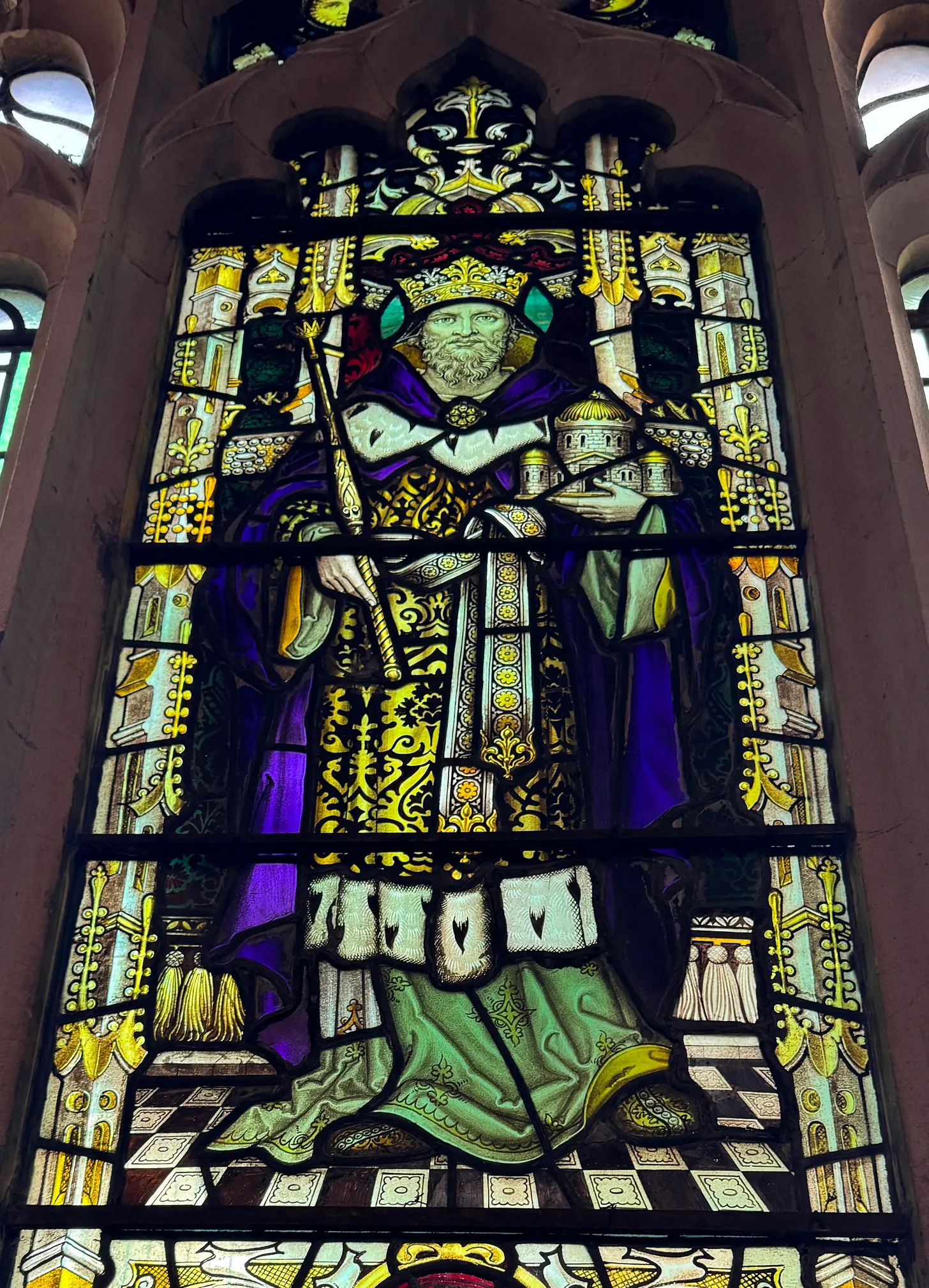
The colour stood out immediately.
Alive.
Almost luminous.
I couldn’t quite explain why it caught my attention so strongly.
But the image stayed with me as I stepped back outside into the fading light of the afternoon.
Back toward the river.
Back toward the earth.
And toward something waiting quietly in the mud.
The Gift
When I stepped back onto the Thames Path, the river had retreated much further than before.
The brief flooding had washed a thin layer of mud away from the edge of the path, exposing small patches of ground that had been hidden earlier.
Naturally, my eyes were drawn downward.
A few years ago I had discovered the strange and wonderful pastimes of mud-larking and digging for Victorian bottles in the woods near my home. Old glass bottles, fragments of history, forgotten objects — the thrill of retrieving something lost to time delighted me.
And one of the objects I had secretly hoped to find someday was a Victorian playing marble.
I had seen them discovered.
But I had never found one myself.
Not once.
Until that moment.
Just ahead of me, half revealed where the water had washed away the mud, something small and luminous caught the light.
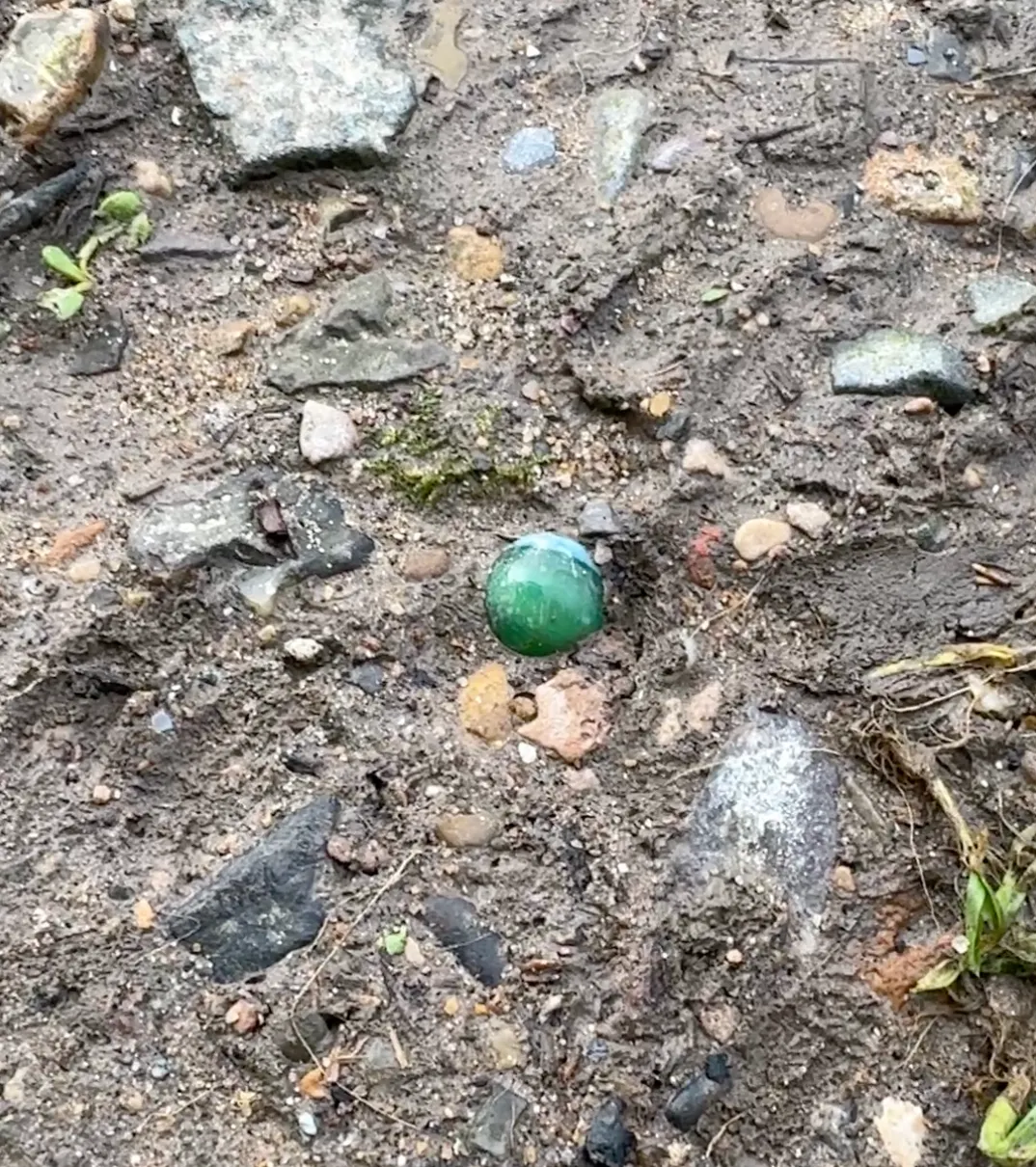
A perfect little sphere.
Green.
For a second I simply stared.
Then I crouched down and gently dug it free from the damp earth.
A glass marble.
More than a century old.
I can’t quite describe the joy that rushed through me in that moment.
It might sound silly to some people — a small glass toy discovered in the mud beside a river.
But for me, it felt like finding treasure.
My inner child was absolutely delighted.
I stood there laughing quietly to myself, turning the little green marble in the light.
As I rolled it between my fingers, another thought surfaced — one that made me laugh even harder.
John Dee has often been remembered not only as a mathematician and mystic, but as the archetypal magician who strayed too far into the unknown. For centuries, he has been portrayed by many as the man who had quite literally “lost his marbles.”
And here I was, standing on the banks of the Thames beside the place where he had once lived...
...and I had just found one.
For a moment, I could almost imagine him laughing too. As though, across the centuries, he were sharing a private joke.
My friend, I never truly lost mine. And neither have you. In fact, the next time someone tells you you've lost yours, you can tell them about the one you found when you came to visit me.
A perfect green sphere.
Not unlike the crystal ball displayed among Dee's artefacts in the museum I had never managed to enter.
It felt like a gift.
A small, playful talisman from the river itself.
I held it up to the light again.
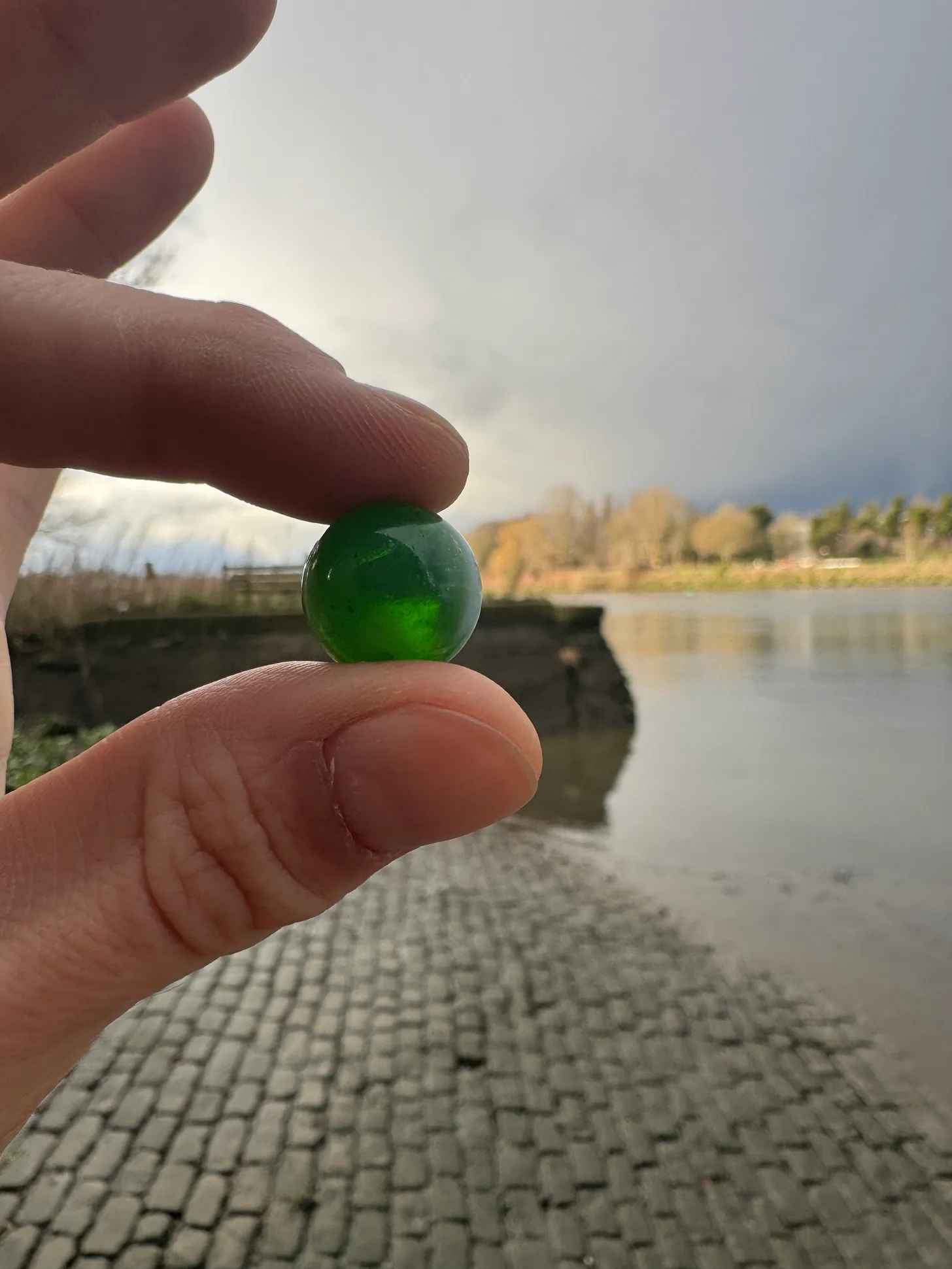
The glass glowed softly, revealing tiny inclusions within — little imperfections that spoke of age and craftsmanship from another time.
For a moment I simply stood there beside the Thames, feeling an overwhelming sense of gratitude.
Everything that had seemed to go wrong that day had led me precisely here.
To this small moment of joy.
But the river had one more surprise waiting.
The Love Letter
A few steps beyond where I had found the marble, the receding tide had revealed a small stretch of cobbled foreshore — the old landing place where boats would once have met the riverbank.
Something bright lay among the stones.
A red tassel.
Curious, I stepped down from the path to take a closer look.
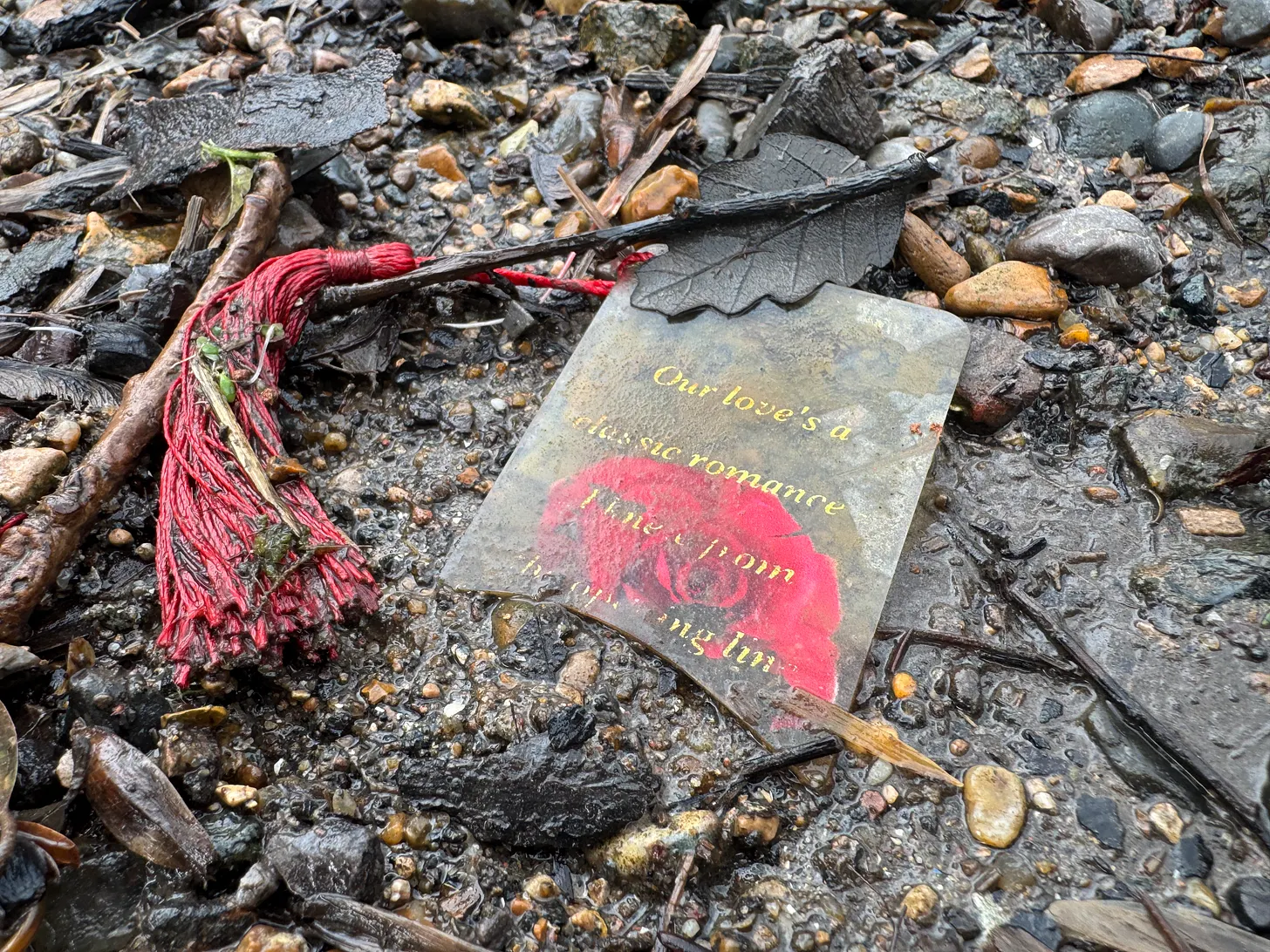
At first, I assumed it was nothing more than a piece of litter caught in the mud. And, in truth, I suppose that is what it was. But as I knelt down, I realised it was attached to something else — half a bookmark, worn and weathered by the river.
Printed on it was the image of a rose.
I stared intently at it trying to make out the gold lettering that had faded slightly with time.
Eventually I read:
“Our love's a classic romance.
I knew from the opening line.”
I smiled.
The words felt strangely familiar.
After all, the entire journey had, in a way, begun with a single line of its own — the moment, years earlier, when I typed my name into an Enochian gematria calculator and watched the words Parousia: The Second Coming appear on the screen.
It had been the opening line of a story I didn’t yet understand.
Standing there beside the Thames, on the ground where John Dee once lived, it felt almost as though he and the angels were quietly acknowledging the beginning of that story.
There was something strangely perfect about the words appearing here, on the banks of the river, at the end of such an unusual day.
The rose immediately made me think of Venus — the ancient symbol of love and beauty, and a planet whose movements trace a remarkable geometric pattern in the sky.
I had recently learned that every eight years, as Venus dances between Earth and the Sun, five key alignments form a near-perfect pentagram.
Over many repeating cycles, those lines soften and overlap, gradually revealing the shape of a rose — a celestial flower drawn slowly through time.
What fascinated me even more was that the first sweep of this celestial dance is often seen as a heart shape, as Venus loops gracefully across the sky.
Each looping motion traces another curve of that great pattern, slowly building the pentagram and the rose over time.
The image of the rose carried an extra resonance for me. Only a few months earlier, I had enacted a simple personal ritual dedicated to Venus, with roses surrounding me — a quiet rite of inception in which I acknowledged and blessed the pentagram tattooed on my back in Sydney nineteen years before, honouring what that symbol had gradually come to mean in my own life.
Perhaps that was why the appearance of the rose here felt so strangely intimate. The connection was playful, almost poetic — another one of those small moments where life seemed to be quietly weaving symbols into a conversation.
Still curious, I lifted the tassel to examine the bookmark more closely.
And that’s when something unexpected happened.
From behind the bookmark, previously hidden from view, a small golden heart swung forward into the light.
For a moment I simply stared at it.
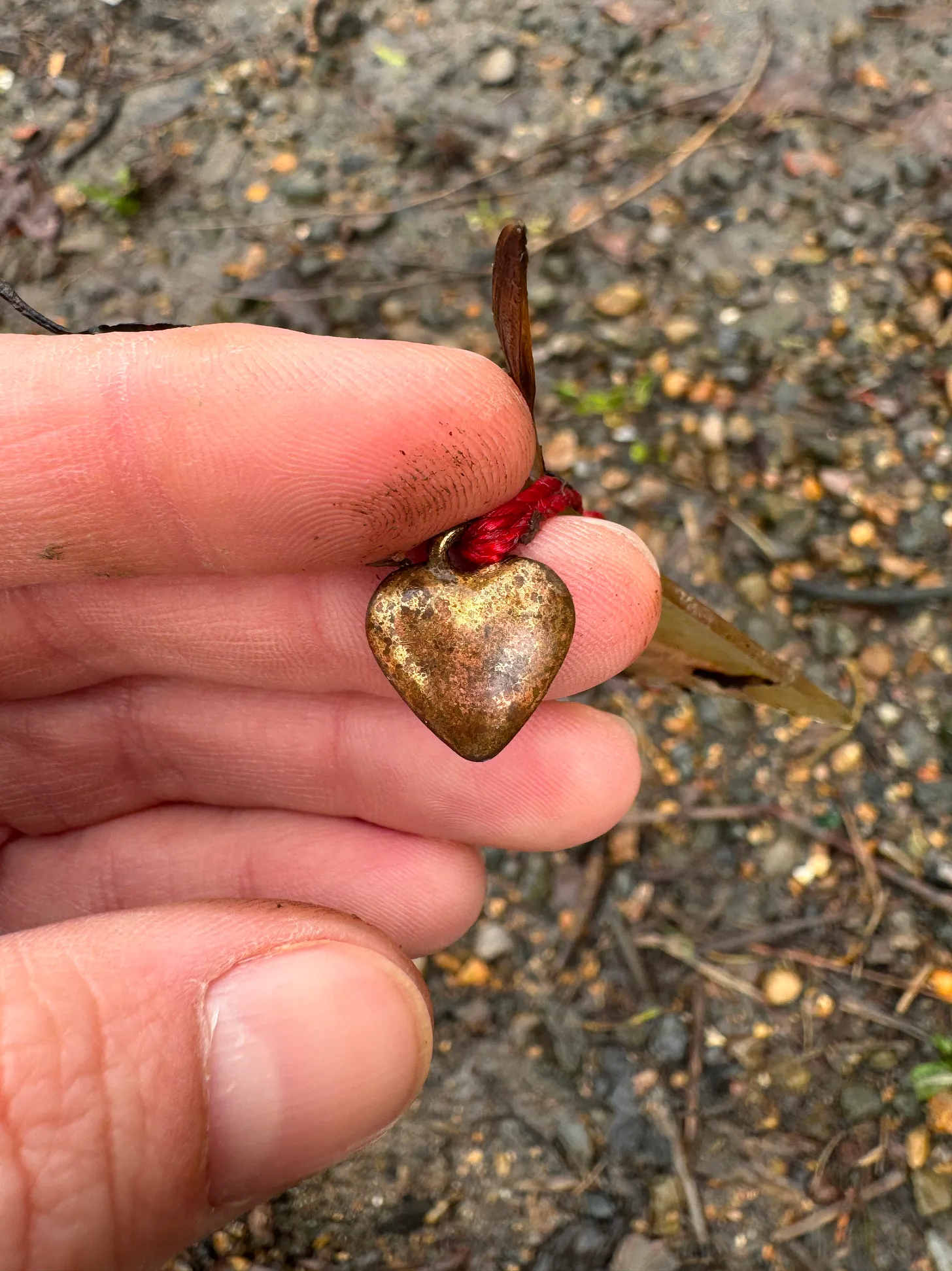
The metal had been kissed by the Thames — slightly dulled, carrying the faint marks of time and water.
Yet it was still beautiful.
A rose.
A heart.
A message about love.
And somewhere in the back of my mind I couldn’t help noticing the familiar geometry of it all — the rose, the pentagram of Venus, the same five-pointed star that sat at the centre of John Dee’s wax sigil on his Holy Table.
Another quiet thread folding itself neatly into the pattern of the day.
All revealed just moments after the river had offered me the green marble.
Standing there on the foreshore, I felt a quiet sense of wonder.
The whole sequence had unfolded with such strange precision — the delays, the redirections, the flooded path, the marble revealed in the mud.
And now this.
It felt less like random coincidence and more like the day itself had been carefully arranged.
A series of small gifts, waiting patiently to be discovered.
The Return
With the marble and the valentine bookmark safely tucked into my pocket, I slowly made my way back along the Thames Path.
The river had fully reclaimed its calm rhythm now, the brief flooding already feeling like a passing moment — a small disturbance that had revealed more than it had hidden.
I paused for a moment to look back along the path.
The light was beginning to soften as the afternoon leaned gently toward evening.
It had been an extraordinary few hours.
And yet nothing about it had felt dramatic.
Just a sequence of small redirections — each one nudging the day slightly off course, until eventually I found myself exactly where I needed to be.
What had initially felt like a series of inconveniences now seemed more like quiet guidance.
The pilgrimage had begun not by following the plan…
…but by letting go of it.
From Mortlake I made my way back toward the station and caught the train into central London.
The journey back felt peaceful.
I spent most of it simply turning the small green marble in my hand, watching how the light moved through the glass.
By the time I reached the city, night had begun to fall.
I caught sight of the London Eye glowing red against the darkening sky — the great wheel slowly turning above the river.
It felt like a fitting image to end the day.
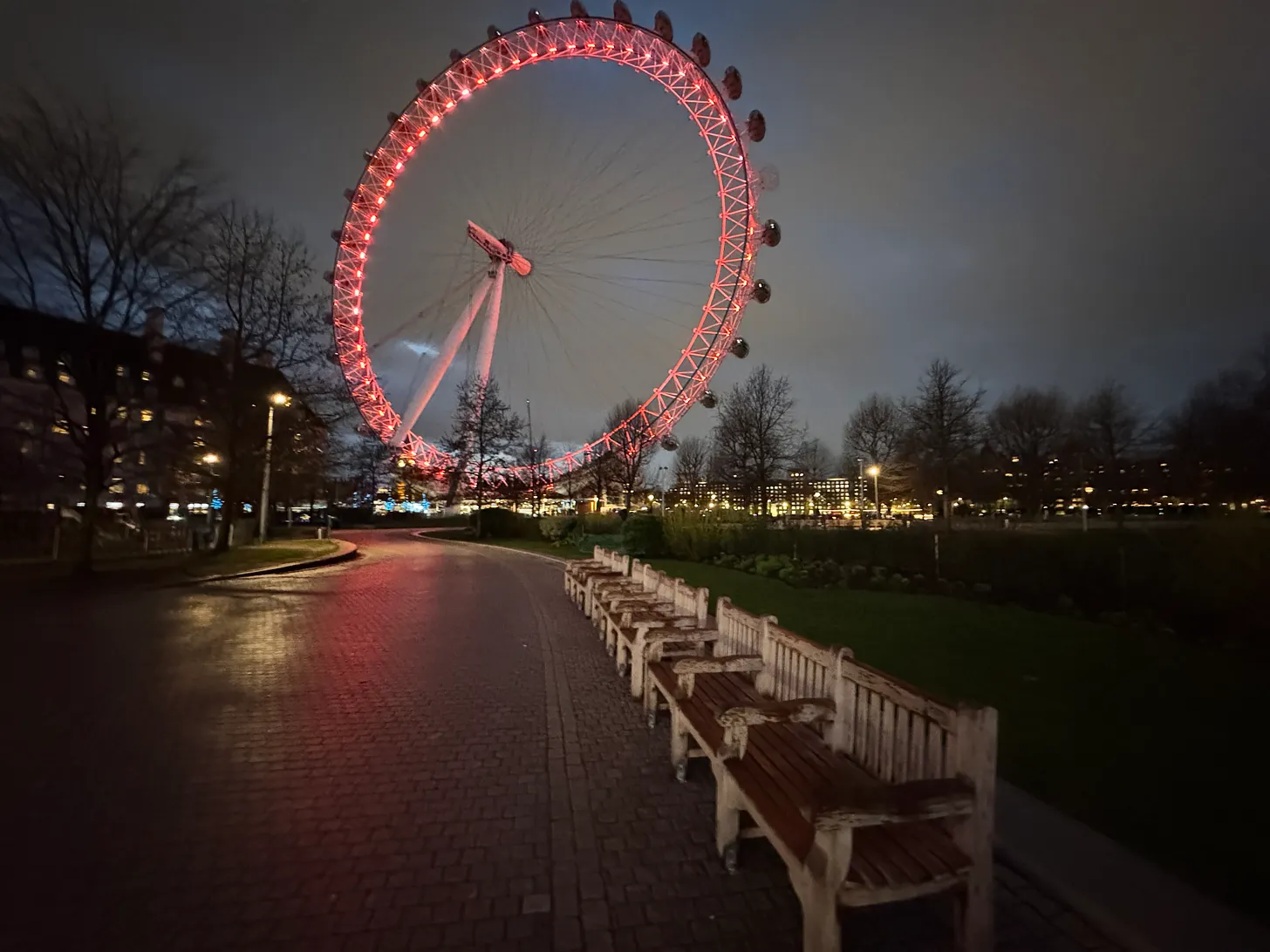
A wheel.
A cycle.
Something turning quietly through time.
Soon I was back at the station where the journey had begun that morning.
The crowds had thinned, the pace of the city settling into its evening rhythm.
I boarded the train home feeling deeply content.
So much of the day had gone “wrong.”
And yet everything about it had been perfect.
But the pilgrimage had one final surprise waiting.
And it would reveal itself later that evening…
inside the marble.
The Marble Revelation
That evening, back home, I found myself still enchanted by the little marble.
I placed it under a bright light and turned it slowly between my fingers, studying the tiny imperfections within the glass.
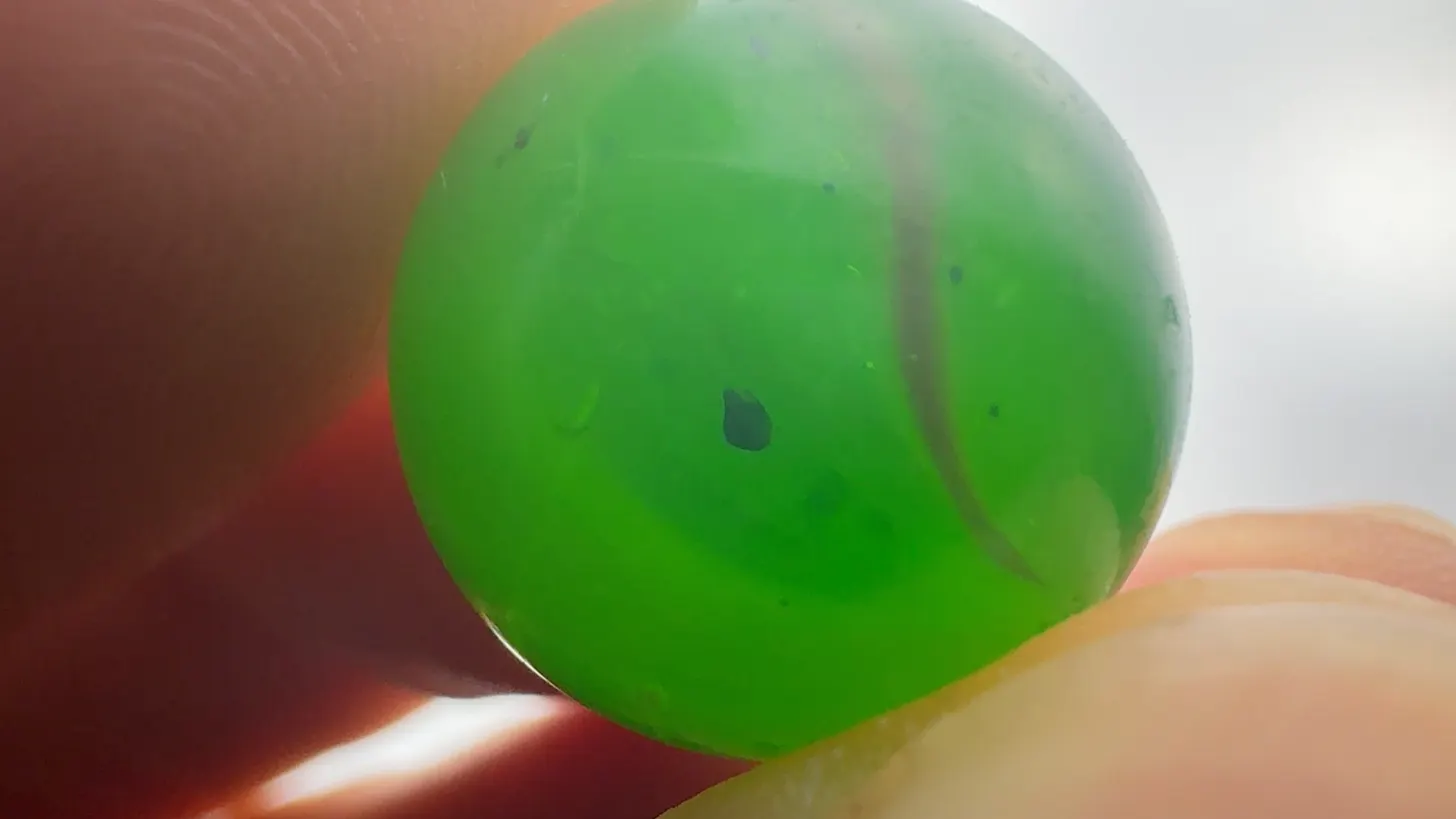
Old marbles often reveal their age through these small inclusions — bubbles, specks, and faint irregularities left behind during the glassmaking process. They are the fingerprints of the past, tiny traces of the moment the object first came into being.
This one was no exception.
Under the light, the green glass glowed softly, and within it I could see a darker fragment suspended in the centre.
Curious, I decided to try something.
I held my phone camera directly against the marble and took a photograph through the glass.
When the image appeared on the screen, I burst out laughing.
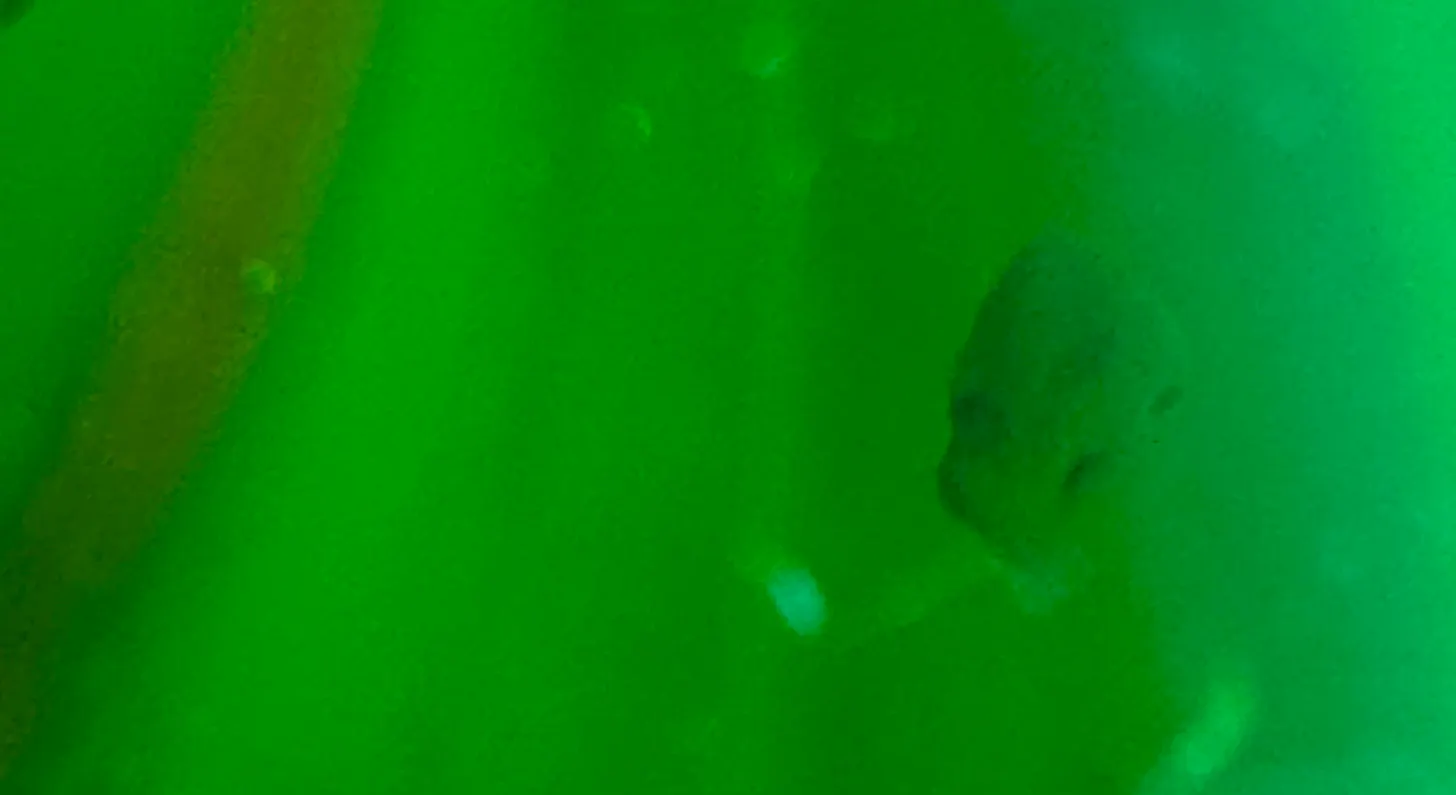
The inclusion looked exactly like a tiny comet, suspended in green space.
Which felt strangely appropriate.
After all, the strange sequence of events that had eventually led me toward John Dee’s work had begun months earlier with the appearance of an interstellar comet, 3I/ATLAS.
I sat there for a moment admiring the image.
A little green universe contained inside a toy marble.
But when I took a second photograph — adjusting the angle slightly — something else appeared.
Suddenly the inclusion looked less like a comet…
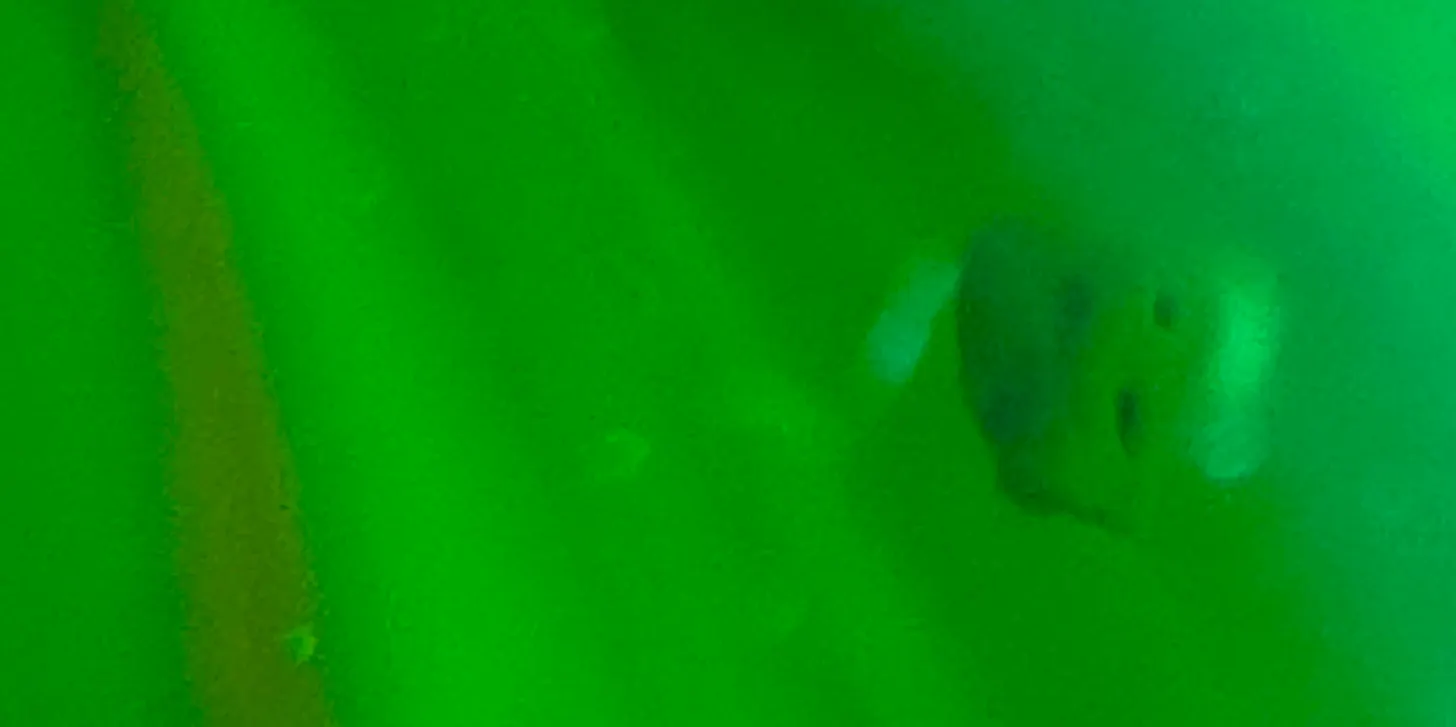
…and more like a tiny face.
Two dark eyes.
An open mouth.
The unmistakable expression of surprise.
O. M. G.
I couldn’t stop laughing.
Because earlier that very morning — just before boarding the train to London — my attention had been drawn to the number plate across the platform that read exactly the same thing.
OMG.
It felt like the perfect punctuation mark at the end of the day.
Another playful little signature from the universe.
I placed the marble back on the table and sat for a while, letting the events of the day settle.
The pilgrimage had begun with delays, detours, and unexpected turns.
Yet each one had led exactly where it needed to.
A flooded path had revealed the marble.
A missed museum visit had delivered me to the river just in time.
A strange knife charm had quietly foretold the change in plans, easing the transition.
Which lead to a tiny glass sphere — lost more than a century ago — finding its way into my pocket.
Later, while editing the footage from the day, I noticed something I hadn’t seen at the river.
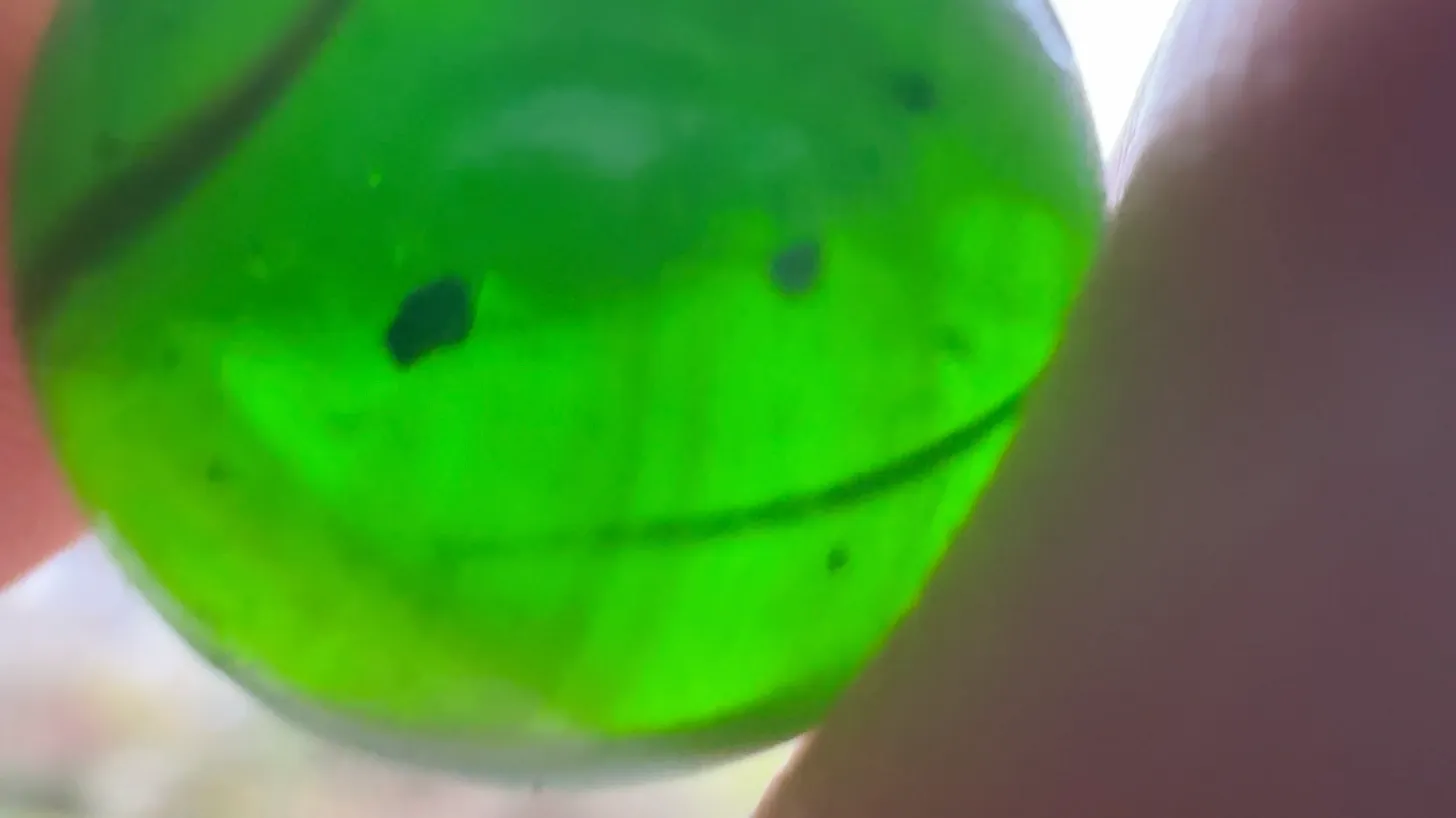
When the light passed through the marble at just the right angle, the tiny inclusions inside the glass arranged themselves in an unexpected way.
A smile.
The marble, it seemed, had been smiling the whole time. ✨
Sending divine love and blessings
from one very happy pilgrim. :)
Next in the Pilgrim’s Journal
Tomorrow the journey continues at one of Britain’s most mysterious ancient sites:
Uffington — The White Horse.